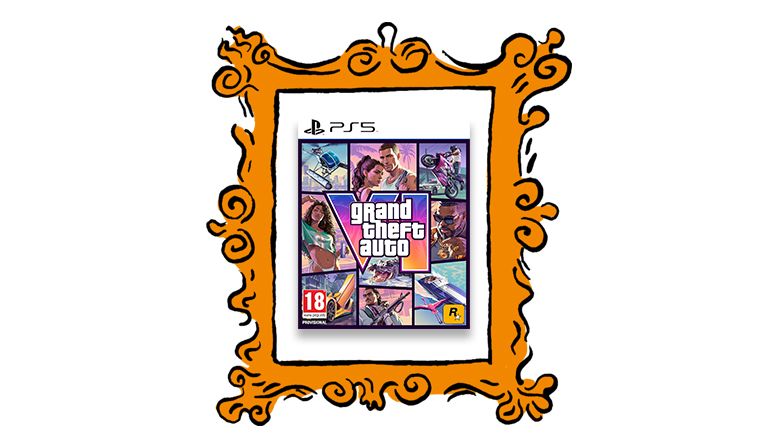
It used to be the case that, when talking to people who don’t play video games, I had to convince them of how big and successful the industry is. “It makes more money than movies and music combined!” I’d say, looking to both surprise and impress. “No single entertainment product has ever grossed more than Grand Theft Auto V!” “The number of people who play Minecraft each month is greater than all but seven countries’ populations!”
Nowadays, though, the problem is the other way around: I have to convince the uninitiated of how weak and vulnerable the industry is. Sure, video games are still big business and big entertainment—the release of Grand Theft Auto VI (GTA VI) later this year will be behemothic in both financial and cultural terms—but rarely have the Sonys and Microsofts, with their PlayStations and Xboxes, faced such excoriating headwinds and bowed so low. As I put it in an edition of this newsletter from March, “The most successful form of entertainment is failing”.
I touched on some of the causes and effects in that earlier newsletter: the multi-$billion acquisitions that haven’t (yet) paid off; the AI-catalysed hike in chip and memory prices that’s sending console costs soaring. But now that a few months have passed, it’s high time we checked in with video games again. Perhaps there’s better news out there?
Ah, no—no there is not. A couple of weeks ago, under its new leadership, Microsoft’s Xbox division announced that it would be laying off 3,200 workers, or about a fifth of its staff. It’s a number that’s shocking even to an industry that has grown accustomed to job losses in recent years, after the hiring sprees of the pandemic (when everyone was indoors and spending time and money on games) became the firing sprees of today (when they are not). Xbox’s axe extends to entire games studios acquired during the times of plenty—and which are now being cast off to face the future, and try to continue their current projects, without Microsoft’s long-term support.
Then there is Sony’s announcement, also at the beginning of the month, that it is going to end the production of physical discs for new PlayStation games from January 2028—which also suggests that the forthcoming PlayStation 6 will be a discless device. This development may not compare to Xbox’s layoffs for human misery, but it is, in its way, even more emblematic of where video games are at in 2026.
First, there is the necessity of it all. In my newsletter in March, I noted that the price of DDR5 RAM, a type of memory used in consoles, had risen by about 300 per cent since September last year—all because our new AI infrastructure requires it (and much else) too. Well, now that number is somewhere between 400 and 500 per cent. Thanks to these price shocks, console makers, including Sony, are desperate to cut back where they can—and the humble old disc drive presents a tempting target. Not only would disclessness save on the drive hardware, it would also save on the manufacturing and distribution of the discs themselves. A digital game is, in effect, a single copy on a server that people download to their home consoles.
Besides, many of those people have already gone digital. According to Sony’s financial reporting, almost 80 per cent of the games they sold last year were digital rather than on disc—a reversal of the ratio from ten years before. This has not gone unnoticed by games companies. A week before Sony made its own announcement, Rockstar Games revealed that the boxed “physical” editions of its GTA VI won’t actually contain discs—but download codes instead.
Facts, however, are not the same as feelings. Ever since Sony confirmed its discless future, the internet has been aflame with complaint. Look at any of the company’s social media posts from July—for any product, any game—and you will find thousands of comments underneath, all griping about the demise of physical PlayStation games. One such comment, technically responding to a promotional video for a new controller, spelt out “Fuck Sony” in disc cases. At the time of writing, it has been viewed 1.2m times.
Social media revolts oughtn’t to be equated with public sentiment, of course, but there remains a sizeable group of people who buy physical games. As the industry analyst Daniel Ahmad puts it, “the digital ratio is set to surpass 80%, but that 20% is still 10s of millions”—indeed, almost 70m PlayStation discs were sold last year. And these gamers do have cause to be disappointed—or angry—beyond mere nostalgia. After all, discs do many things that downloads do not. They can be borrowed, shared or sold once you’ve finished with them. They can be picked up for pennies in charity shops, or for free in libraries. They can be admired for their artwork, their instruction manuals, even for the soothing way they slide into a console’s disc drive.
Perhaps the greatest benefit of discs, though, is their permanence. With most digital media, you’re not actually buying ownership rights to the thing itself, but a licence to use it—and that licence can be rescinded. Sony could, in theory, pull a game from your PlayStation because it no longer meets the standards of a more censorious culture. Or because it’s fallen out with the game’s makers. Or because it simply can’t be bothered to support older releases anymore. There are dozens of reasons why your game library could start unexpectedly shrinking; it’s happened to me before.
Which is not to say that your PlayStation games will vanish wholesale in future. But at a time of rising console prices—and the PS6 is likely to be more expensive than ever—these are not idle considerations. Between layoffs and digitisation, complaints and bad will, there is something going wrong with video games at the moment. How many players are going to ignore the next shiny thing and make do with the simpler pleasures of what they already have? The hottest console of 2028 may end up being the current PlayStation 5.