Companies want to win at video games. Why wouldn’t they? The biggest form of entertainment in the world isn’t just an immense source of immediate revenue, it’s also a place to breed new converts. Here are millions of (mostly) young people who will then grow up attached to particular characters, franchises and technologies. Resulting, of course, in more revenue in future.
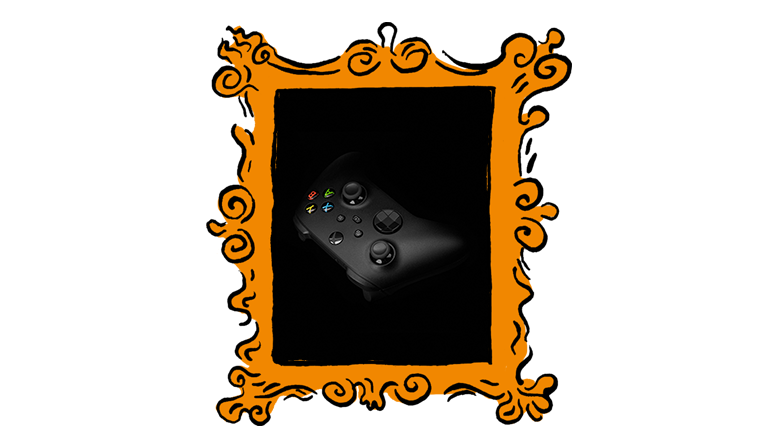
Which is why the recent goings-on at Xbox, the gaming arm of Microsoft, are deserving of attention. Last week, it was announced that the division’s chief executive, Phil Spencer, would be departing along with his heir apparent, Sarah Bond. The new boss, Asha Sharma, has been drafted in from Microsoft’s Core AI business. It now falls to her to fix an ailing operation.
The internet has opinions about these developments, many of them inflected by—or just plain shot through with—misogyny. Spencer was regarded as gaming’s presiding uncle, a senior figure who was nonetheless chummy, approachable and good with a controller in his hands; he knew his Dragon Quest from his Dragon’s Dogma. Whereas Sharma has already faced criticism for having a short Xbox playing history (as if that matters) and for her background in AI (actually, that might come to matter, though she has already denied that Xbox will start resorting to “soulless AI slop”).
Nothing much has been confirmed about Spencer’s departure, though it is surely not unrelated to the fact that—for all his playing hours and online bonhomie—Xbox is struggling terribly. Microsoft’s attempt to win at video games has been absurdly well funded; to give just one example, in 2023 they bought out Activision Blizzard, the company behind Call of Duty and World of Warcraft, for over $70bn, one of the top 20 largest acquisitions—in any industry—in history. And yet: total sales of the latest generation of Xbox console, the Series X/S, which was first released in 2020, are currently around the 35m mark, which is less than half the number of Sony PlayStations sold across the same period. Some major retailers have even stopped stocking the Xbox, given its relative unpopularity.
There are numerous reasons for this; perhaps even some justifications. Over time, the Spencer and Bond regime focused less on hardware and more on software. They introduced the Netflix-style subscription service Xbox Game Pass, which gives its users access to a vast library of games for a monthly fee—and it is glorious. But Game Pass also gnawed away at Xbox’s underpinnings. Since the service’s games can be streamed from numerous devices, including PCs and mobile phones, the console itself has lost its previously privileged position, plugged into your telly. A recent advertising campaign—“This is an Xbox”; meaning, everything is an Xbox—tried to make a virtue of this variety, but was widely scorned.
The broad point, though, is that, in this thing that people unhelpfully call “the console war”, this long-running scrap for dominance between the Xbox and the PlayStation, between Microsoft and Sony, the Xbox has been roundly defeated. Or at least it has been defeated in the current console generation. Sharma, who has already hinted that the physical Xbox will again become central under her tenure, will be hoping that the future is indeed unwritten—or rewritable.
Except there is an even broader point. A couple of weeks ago, the most reliable reporter in gaming, Bloomberg’s Jason Schreier, revealed that Sony is considering pushing back the release of its next generation of console, the PlayStation 6, from 2027 to 2028 or 2029. By that point, the PS5 will have been out for almost a decade, a considerably wider gap than the six- or seven-year ones that have usually obtained.
Partially, this decision would be made from a position of strength. With the PlayStation so far ahead of the Xbox, Sony is under little pressure to act swiftly. Besides, they are secure in the knowledge that the sequel to 2014’s Grand Theft Auto V, the most financially successful entertainment release in history, will come out in the next year or so—and is, again in the words of Schreier, “kind of like a PlayStation exclusive”. Sony is going to sell a lot of consoles on the back of GTA VI, so why worry?
Though the decision would also be made from a position of weakness, or at least of uncertainty. One consideration behind Sony’s calculations is the current spike in memory and other chip prices, brought on by the AI industry laying claim to every scrap of computational power it can get. The price of what’s known as DDR5 RAM, a type of memory used in the PS5, has risen by about 300 per cent over the past six months. Given that the PS6 would have to be even more powerful than its predecessor—for that is the point of new consoles—these costs threaten to be overwhelming for Sony, which would inevitably have to pass the burden on to consumers whose wallets are already straining at the demands of daily life. In these circumstances, the waiting game may be the only game available to play.
All of which is to say… well, what? The biggest form of entertainment in the world faces tremendous challenges. Some of these are intrinsic, like those at Microsoft. Some are extrinsic, like those at Sony. There are closures, layoffs, various affronts and, all the while, Nintendo is managing to sell its own latest console, the Switch 2, at a record pace. It’s all very messy and hard to grasp. Which—if there’s anything that can be said about it—is very 2026, isn’t it?