“Should I read Wuthering Heights?” asked my 17-year-old son last week, a rhetorical question, you’d think, given the book-pushing nature of our relationship. Despite being published almost 180 years ago, it’s the novel du jour, for which, thank you, Hollywood and Emerald Fennell, whose “take” on Emily Brontë’s 1847 classic about Cathy and Heathcliff’s doomed passion is finally out.
The literary purist in me longed to say: yes—and run and grab my copy, dated “Summer 1993”, a heavily annotated, pastel-hued Penguin Classics edition, which I bought for £2.75 to read on a beach in southern France ahead of upper sixth English with Mrs Bowie. (In a pro-schoolgirl move, it’s covered in sticky-back plastic so has held up well; my 11-year-old daughter is impressed.)
He’d be on trend: bookshops sold more than five times as many copies last month (10,670) as in January last year (1,875), according to publisher Penguin. I counted ten different editions in my local bookshop, Review, in Peckham, south London. Sales were strongest a month ago, manager Ben Pope told me, slowing down now that “Wuthering Heights” (the quotation marks doing heavy work heading off EB pedants) has hit cinemas. I marvelled at the range on display, from an abridged Puffin Classics version aimed at 9 to 12-year-olds that one hopes is light on the original’s brutality to a suggestive Emerald Fennell presents: Wuthering Heights version from Simon & Schuster’s new Female Filmmakers Collection, a photograph of a bridle indicative of Fennell’s take on the novel’s inherent sadomasochism.
But could I really compel someone in the throes of revising for his own A-levels to read something one friend with a PhD in English Literature said she’d “never touch again”? (“Too bleak, too brutal, too unpleasant.”) Contrary to a recent newspaper feature about Gen Z being “too dumb” to read Wuthering Heights, I don’t doubt my son’s ability to ingest the Gothic romance. It’s more that if Fennell’s film, all 136 minutes of it, isn’t intended for someone like him—young, into films, in the heady throes of a first relationship—I’m not sure why she bothered.
Granted, Fennell isn’t fussed about the subtleties of Brontë’s text, which the director first read aged 14. “It cracked me open,” she told the Brontë Women’s Writing Festival last autumn about first encountering Brontë’s creation. In a foreword to the Simon & Schuster edition, she elaborates, writing: “It is too slippery, too wild, too good to distill into two hours of film. Instead what I have attempted to do is adapt my own experience of reading it for the first time. It is an adaptation of a feeling: my first disemboweling by the baby god.” That feeling being horny, it’s clear from watching the film, which is heavy on lust and light on the novel’s psychological depth.
I’m all for Fennell taking liberties with the plot. Gone is Mr Lockwood, the novel’s misanthropic narrator, and good riddance. She also gets rid of Cathy’s vile brother, Hindley, merging his bullying character with that of Cathy’s father, Mr Earnshaw (played by a grotesque Martin Clunes), who brings home the young, abandoned Heathcliff (Owen Cooper) to be brought up with his daughter. Instead of Edgar and Isabella Linton, who live at nearby Thrushcross Grange, being brother and sister, Fennell makes Edgar (Shazad Latif) the much older ward to the fanatical Isabella (brilliantly played by Alison Oliver). I’m guessing much of this is to make sense of her casting choices: Margot Robbie for Cathy and Jacob Elordi for Heathcliff, who at 35 and 28 years old respectively, are almost a different generation to Brontë’s thwarted teenage would-be lovers.
I’m also fine with the wild aesthetics, which swap period costumes for “an imagined version of a period costume”, referencing contemporary fashion and Old Hollywood as well as the actual period, as costume designer Jacqueline Durran explained ahead of the film’s release. Cathy’s corseted catwalk is great fun. Who wouldn’t want to stomp across the snowy moors in a red hooded cape, hands thrust deep into a white furry muff?
Fennell’s job wasn’t to recreate Brontë’s world but to make something that excites and appeals to audiences more than 200 years after the book was set. As her first two films, Promising Young Woman and Saltburn, showed, the actor-turned-director is skilled at capturing ephemeral vibes, and “Wuthering Heights” only strengthens her reputation in this regard. “Fun but depressing,” was the entirely fair women’s loo queue verdict, on opening night at my local cinema.
The great folly with this frothy, frilly, romantically filthy adaptation is that Fennell ignores the gothic madness at the heart of the novel. Where were the ghosts? Where was the grave scene with Heathcliff digging up Cathy’s coffin? Wuthering Heights is a depraved novel, ripe with abuse, torture, sadomasochism, and incest, but Fennell’s focus is frocks and fripperies.
Worse, her storyline doesn’t add up. Casting Australian actor Elordi, who also starred in Saltburn, as Heathcliff whitewashes Brontë’s “dark-skinned” creation, thus removing one of the main reasons his relationship with Cathy was doomed from the outset. He also isn’t nearly vile enough. If Fennell had really been up for a challenge, she wouldn’t have stopped in the middle of the novel. Witness one disappointed cinemagoer’s lament as the credits rolled: “I thought they both had kids and the kids got together and it was redemptive?”
But maybe that was Fennell’s masterplan. To leave audiences wanting more and to get our post-literate society reading again. I guess my answer to my son’s—or anyone’s—question was only ever going to be, yes, always read the book.
The rights and wrongs of this ‘Wuthering Heights’
Liberties are taken by Emerald Fennell, which is all well and good. But don’t expect anything like the genius and subtlety of the book
February 19, 2026
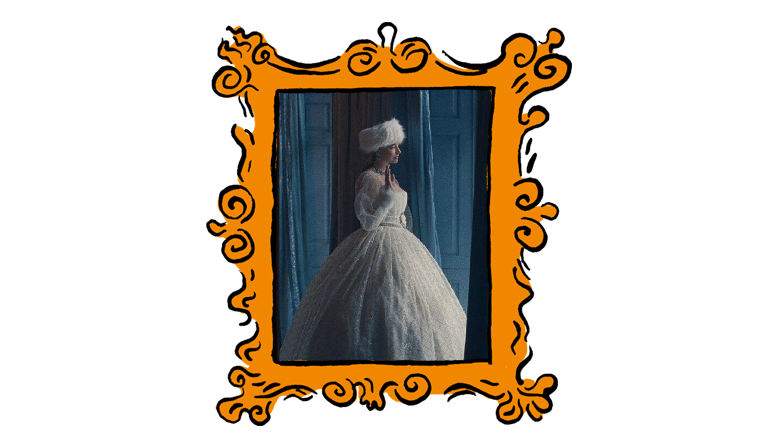
Image: Ent-Movie