It’s been fashionable to yearn for the childhoods of the past since the Romantics enshrined the idea of childhood as being not just a necessary early stage on the way to being a full human, but a phase of life complete in itself, a period of innocence and perception before adulthood closes in. Every generation since then seems to have had its own version of blue remembered hills, but there are elements that feature regularly—the families that stayed together, the freedom of the street, the kindness of strangers, the community spirit, the lack of interference by grown-ups or the grown-up interventions that saved lives (depending). More recently, the locus of nostalgia has been the summer holidays, that six- or eight-week stretch out of a 20th-century childhood which felt so long that, by the end of it, you had gone up a whole shoe size, ready for a new school year.
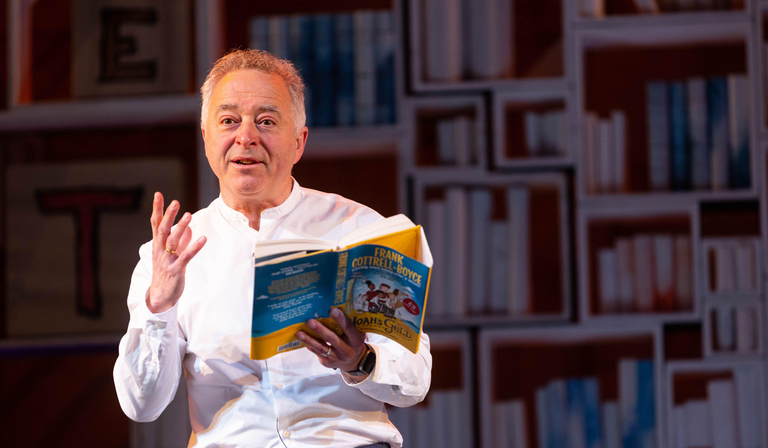
Yet something has changed. We feel it, even if we can’t pinpoint exactly where it comes from. What will the current generation of British children look back on as adults? What will the world of their childhood look like to them? The outgoing children’s laureate Frank Cottrell-Boyce kicks off his book on modern British childhood with an observation by one of the teachers he encountered on a visit to a primary school. “Don’t talk about summer holidays,” she warns him. “They don’t like the summer holidays.”
Cottrell-Boyce’s book is mainly about reading and how to encourage it in a world that seems increasingly in opposition to all that is valuable and nourishing in the slow pleasure of stories. When a child opens a book, a new window of the imagination also opens—so what happens, he wonders, to the child who never opens a book? Cottrell-Boyce helped run a campaign called Reading Rights with the literacy charity BookTrust: it was prompted by the news that 50 per cent of children starting school had never been read a bedtime story.
Infants start early with words. “Lullabies and stories are our earliest encounters with culture,” as Cottrell-Boyce writes; small children learn through endless repetition—“upsadaisy” or “swishy, swashy” or “the wheels on the bus go round and round”. A baby’s brain grows at top speed, doubling in size in its first year—repetition is one way that the child learns to focus amid the huge amount of data its brain works hard at absorbing. And the repetitions continue in different forms. Word games, knock-knock jokes, old saws, funny sayings, skipping games—all these run through childhood and beyond like background music.
The predictability of fairy tales, the top-and-tailing formula of “once upon a time” and “happily ever after”, is part of the magic: familiarity signals the intimacy of shared experience, of stories told, absorbed, retold. And at each telling, the story is forged again by both teller and listener. Many of the archetypes found in folk and fairy tales have an almost supernatural universality. The folklore scholar Maria Tatar, for example, has written how the elements of the story of Snow White—wicked stepmother, poisoned apple, seven saviours and a handsome prince—are found in folk tales from almost every country in the world.
Early stories are written into our imaginations, far deeper than books read in adulthood
So anyone who belongs to a generation that has habitually read knows, without even thinking about it, how important these early stories are: they are written into our imaginations, far deeper than books read in adulthood. And the memories of them are solace and deliverance and comfort. In the trenches of the First World War, soldiers made landmarks in the mud with the titles of the children’s books they had loved.
If children are deprived of these stories, then they are imprisoned in the lonely and anxious present. Cottrell-Boyce quotes Graham Greene on how, in childhood, “all books are books of divination, telling us about the future, and like the fortune teller who sees a long journey in the cards or death by water they influence the future.”
So when and why did British children lose the reading habit? The most obvious answer lies in the steady encroachment of screens, which are now ubiquitous. Living and reading used to be intertwined, but now reading is seen as a bolt-on to life and increasingly associated with time and effort. The modern child can go through school downloading from the internet all they need to pass an exam, but research suggests that information gleaned from reading a book is far more likely to sink in.
Screen anxiety is not a new phenomenon: when I was growing up in the 1970s, adults fretted about us going square-eyed on one hour’s television a day. Mike Teavee in Roald Dahl’s Charlie and the Chocolate Factory is depicted as an idiot because, as Cottrell-Boyce points out, it is being glued to cowboy films on television that prevents him engaging with the wondrous real-life gift of Willy Wonka’s golden ticket.
But children’s television is not designed to stop children engaging with the world, even though it may be used as a kind of technological sedative. The smartphone is different—its very purpose is to keep its user looking, checking, scrolling, swiping. The phone creates a bubble-world of the self, quite literally disembodied, recycling back only what the child wants, or thinks they want, while mining them for data on their fears and longings. In the childhoods of the past, stretches of boredom were a necessary condition of play or creativity. The smartphone offers a remedy for boredom, but only in the sense that smoking a cigarette relieves the itch of wanting one. And adults don’t necessarily help, being mostly similarly addicted. Cottrell-Boyce reminds us, in another context, of the story of the Pied Piper of Hamelin: apparently, the rats were a late edition to the tale—in the medieval original, the townspeople were simply annoyed by their children and commissioned the piper to make them go away.
But the problem isn’t just about technology. It’s also about the catastrophic closure of hundreds of local libraries after 2009. If you can ignite a love of reading in children of primary-school age (and Cottrell-Boyce meets many inspiring people doing just that), without accessible libraries it is almost impossible to encourage it into their teens. Among its many joys, A British Childhood is a hymn of praise to all the frontline workers, the teachers and youth detention workers, the health workers, counsellors, prison literacy workers and librarians who must battle to bring children to books against austerity cuts, funding shortages, bureaucracy, parental resistance and paperwork mountains.
‘A British Childhood’ is a hymn of praise to all the frontline workers who must battle to bring children to books
And then there is the Covid-19 pandemic. For Cottrell-Boyce it is, after library closures, the most important reason that the reading lives of so many British children are so impoverished. He is more hesitant, however, on the Covid effect—and he has surprisingly little to say on the effects of online learning from home. In a recent interview, he mentioned that his younger children (now grown up) were homeschooled; it was a while before Covid, but it would nonetheless have been interesting to hear his take on it now. Nevertheless, he sent a survey on pandemic effects to teachers and some shocking answers came back. Children, they reported, have stopped being able to do things for themselves; they find it difficult to engage with any activity when the focus is not on them; they litter the classroom with lidless pens.
But even without the pandemic, there has been a steady decline in children’s independence in recent decades: in the 1990s, nine-year-olds walked an average of half a mile to school; now it is an average of 300 yards. Increasingly, teachers are caregivers as well as educators, with children arriving at school not potty-trained and unable to use a knife and fork. And for those children who fear summer holidays, there are vanishing opportunities to find refuges outside home or school. In 2005, there were 100 youth clubs in Liverpool; now there are five. In 2005, there were 80 full time and 250 part-time social workers in the city; now there are 10 full time and fewer than 50 part time.
Despite depressing statistics like these, A British Childhood is infectiously high on its author’s indefatigable optimism and woven through with Cottrell-Boyce’s memories of growing up in a family full of love in Catholic working-class Liverpool. It’s a book of observations rather than analysis—but ideas and images shoot off and cross-pollinate in lovely profusion. Cottrell-Boyce describes the current moment in Britain as waging a “war against childhood”. If that is so, then he is a standard bearer for the nation’s lost children—in the battle to return them to the wonder and enchantment of stories that is their birthright.