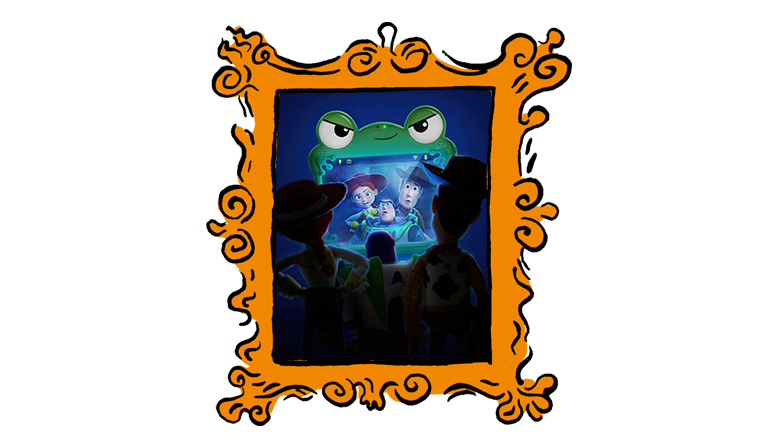
To date, the latest Toy Story film has grossed over a billion dollars at the global box office. Not at all bad, if hardly the triumph of the little picture that could—both of its predecessors accomplished the same feat—but what made its success at the cinema all the sweeter was that it celebrated the need for invention and play over the brain-sapping tyranny of screens. The quasi-antagonist in the new picture is a perky tablet called Lilypad, or “Lily”, which promptly replaces the eponymous toys in the affections of eight-year-old Bonnie, which leads to what the BBFC judiciously calls “mild bad language and rude humour”.
Toy Story 5, like all its predecessors, is a precision-engineered exercise in keeping as many people as happy as possible. Even Lily is presented not as a true villain but as a potentially misused tool who, by the film’s redemptive close, brings about proper, in-person connections between children rather than allowing them to exist in solipsistic bubbles of isolated misery. Critics pointed out that the film thus attempts to have its cake and eat it—observing that screens and social media are dangerous while also being aware that this will soon be one of the key attractions on the Disney+ subscription app—but this is in keeping with a lack of consistency in contemporary cinema when it comes to children’s entertainment.
The difficulty that films aimed at pre-teen audiences have traditionally had is that they need adults to buy the tickets and accompany children to the cinema. Often, this means that pictures aimed at very young children become a Dantean torment for anyone over the age of puberty. I cannot imagine watching the likes of Super Mario Bros or Sonic the Hedgehog through choice, and thankfully my 10-year-old daughter Rose has no interest in their bangs and whistles either. Yet now that she is increasingly beguiled by the equally mindless “delights” of YouTube and its fast-talking, attention-demanding stars, it is harder to find old-fashioned live-action cinema that can cut through to children and parents alike.
There have been some shining examples over the past few years, mostly directed by Paul King, including the first two Paddington pictures and the excellent, oddly underrated Wonka. But the more tepid critical and commercial response directed towards the third Paddington film—in which the bear heads to Peru, thus losing the culture-clash comedy of his life in London—suggests that even a much-loved brand such as this can struggle. And well-meaning pictures such as 2016’s Arthur Ransome adaptation Swallows and Amazons, which amps up the drama of the original with spies and seaplane chases, attract strong reviews from nostalgic critics but little interest from childish audiences, who believe, rightly or wrongly, that such thrills are old hat when compared to whatever MrBeast is selling on YouTube.
The exception this year in live-action cinema has been the Enid Blyton adaptation The Magic Faraway Tree, which was both well-received and, crucially, made a great deal of money when it was released in March in Britain. (It takes its chances in the US next month.) What makes the film distinctive is less its admittedly well-executed production design and special effects and more its determined rejection of all things modern. The storyline revolves around the Thompsons, a couple who leave London to get back to nature and begin a tomato sauce business. As played by Andrew Garfield and Claire Foy, the pair are less Tom and Barbara from The Good Life and more just rejecting the trappings of the rat race in favour of a simpler, happier way of life.
Their children, especially the smartphone-addicted Beth, react angrily to the withdrawal of their wifi (leading to one of the film’s funniest jokes, courtesy of Paddington screenwriter Simon Farnaby’s canny script) but are soon seduced by the supernatural world that lies in the nearby woodland, which is depicted in terms that are half Terry Gilliam surrealist fantasy and half Wonka-esque colourful wish-fulfilment, complete with a crack cast of British character actors doing various shades of zany. All this is highly enjoyable, and if the film lacks a satisfying last act, worse things have happened.
Yet when it came to its heartwrenching close, based around the adage that “you can never go home again”, I was struck by something salutary. Most of the adults in the cinema, myself included, were quietly sobbing, struck by the evocation of how painful it can be to grow up. But our children, for whom adulthood looms far and distant in the future, did not find it affecting, for their excitements are those of the here and now.
And this, sadly, is why screens and social media are going nowhere for the young. They cater to instant gratification, mindlessly and easily. When these grown-up children potentially come, one day, to regret wasting their time—and sob at their generation’s Magic Faraway Tree—it might well be far too late.