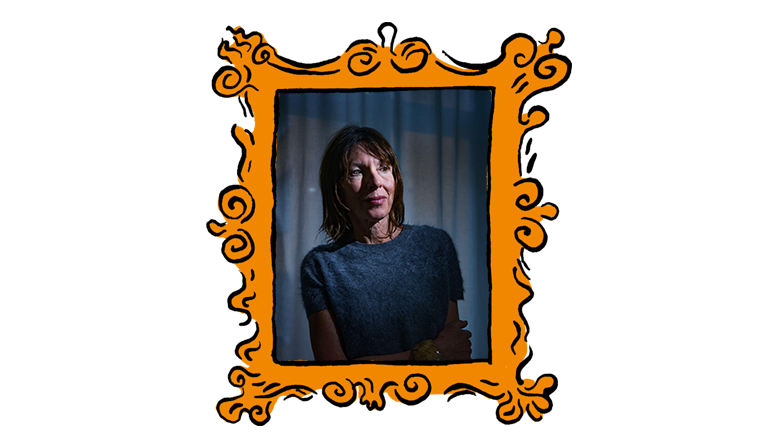
The Oscar-winning film star Natalie Portman has said she gets “really starstruck by writers”, and of meeting the author Rachel Cusk: “I get really in awe of them, because writing beautifully is just, like, the greatest gift.” After the publication last week of Cusk’s 13th novel, Life of M, she may feel differently, as the book is widely assumed to be a thinly veiled portrait of the actor. The New York Times has gone so far as to say: “Whether or not M resembles Portman is hardly a question.”
The evidence seems fairly conclusive and has been covered extensively elsewhere, but in short: the novel is about a famous film star, “one of the most recognisable faces of our time”, who starred in a film that “immediately brought her childhood to an end”. This tallies with what Portman has said publicly about filming Léon (1994). The so-called fictional actress is then in a highly acclaimed film about a ballerina—surely this is Black Swan (2010), for which Portman won an Oscar. And to seal the deal, Cusk’s character is the face of a major brand and appears in adverts “wreathed in the pink flowers of spring”, just as Portman does on billboards promoting the perfume Miss Dior.
Cusk, of course, has form with this sort of thing: in previous books (albeit non-fiction), she has exposed her own experience of motherhood (A Life’s Work, 2001), divorce (Aftermath, 2012) and what could be described as “meeting people on holiday” (The Last Supper, 2009)—the last of which resulted in the first print run having to be pulped, for legal reasons. No one who knows all this would expect her to approach a novel about her alleged friendship with a celebrity any less brutally. The Times has quoted a publishing executive who knows her as saying: “she’s burnt every bridge.”
The question is no longer whether Cusk has written a novel about Portman, but whether Portman minds—and whether it matters if she does. Portman’s camp has officially said nothing. Cusk has not issued a denial, but has described the rumours as “very stressful”, going on to say: “It’s taking the novel that I’ve created into almost a sort of courtroom or a factual fight.” Parul Sehgal in the New York Times put it this way: “The only person directly involved in this affair to publicly express any distress or outrage has been, in fact, Cusk herself. An author justly acclaimed for her inventiveness has produced a scandal like no other. She is its perpetrator, victim and beneficiary.”
It has also been reported that a source close to Portman has said Cusk’s team “are certainly leaning in” to the rumours, the implication being that celebrity gossip won’t hamper book sales. I’m not so sure. While the speculation is hardly likely to stop anyone reading Life of M, I doubt that many readers of the celebrity gossip outlet Page Six, which has called it “a thin, 100-page book that unpicks the concept of fame”, will be led to discover Cusk’s oeuvre if they weren’t already interested in it. In a world where MailOnline’s wretched sidebar of shame is such a driving cultural force that even the Booker Prize winner Bernardine Evaristo has confessed to a penchant for it, we may all be celebrity-watchers now. But even those of us who’ve been known to pay for the LRB and the National Enquirer in the same shopping trip don’t, as a rule, buy hardback fiction on the off-chance it might tell us something about one of our favourite A-listers.
Reviews of the novel itself have been wildly mixed, and many of them have expressed personal views about Cusk as a human being, not just as a writer. On her prose, David Sexton in the Standard wrote that “Cusk’s sentences remain exhilaratingly clear and precise, every word chosen and placed with lapidary decision”, while Becca Rothfeld in the New Yorker called it Cusk’s “weakest novel yet”. I feel duty-bound to acknowledge here that at least some of the many people commentating on Cusk’s work have had their own run-ins with her—she has accumulated more of those than the average established novelist—so it’s quite hard for her to get a fair hearing.
Someone at pains to give her just that is the critic and Cusk admirer John Self, whom I spoke to for this piece. I’ll leave the last word to him: “In a way I feel sorry for her. She has such a tremendous comic gift that she has just shut off… where does that energy go? Still, it does keep me wondering how much further down this austere road she can continue—so that will probably keep me reading her books if nothing else.”