Betrayal is Luke Harding’s 10th book. The Guardian foreign correspondent has built a reputation for investigative nonfiction that reads like a political thriller, charting the Kremlin’s use of assassination, espionage and disinformation. From A Very Expensive Poison (2016) on the murder of Alexander Litvinenko to Collusion (2017), Shadow State (2020) and Invasion (2022), he has chronicled the steady expansion of Russian power abroad. Betrayal does not quite have the revelatory force of Shadow State, Harding’s painstaking dissection of the Kremlin’s covert influence networks in the post-Cold War era, but it brings that story into the present, examining how Russia’s war against Ukraine and Donald Trump’s return to the White House have reshaped the global order.
You get the impression that Harding doesn’t rest on his laurels. Betrayal opens with the author atop a watchtower in the demilitarised zone between South and North Korea, looking across at brightly coloured apartment blocks set against camouflaged entrances to artillery-filled tunnels on the northern side.
It is from this vantage point that he tells the story of a 20-year-old North Korean soldier, called Ri Chol-nam, who served in the Korean People’s Army. In autumn 2024, Ri’s unit was sent to Russia on what was supposed to be a special training exercise. This is how he soon found himself fighting in Ukraine and captured on his very first mission. Ri was transferred to Kyiv together with a 21-year-old rifleman, Paek. In October 2025, Harding managed to secure access to these two prisoners of war and found them in limbo: neither Russia nor North Korea was willing to take them back. Both prisoners reflected on the great shame of being captured, a deeply ingrained cultural belief. At the same time, they felt grateful to be well fed and to have access to satellite TV. They spent much of their time watching South Korean series and entertainment shows. Being thrown into someone else’s war and stranded in a foreign land, their lives and stories illuminate both the global scale and the senselessness of the Russian invasion.
Harding’s gift has always been to connect individual lives to grand geopolitical happenings. In Betrayal, he describes Hrodivka, a small Ukrainian village to which he travelled in May 2024. At that time, it was just 18km away from the Russian front line. “Hrodivka consisted of a main street, a shop and a church. The school had been closed for two years, with lessons taught online.” Harding talked to teenagers, whose families were preparing to leave. In 2022, they left their village after the fullscale invasion, then they returned. Now they were departing again, “this time probably forever”. One teenager said: “We are not happy. Of course
I want the Ukrainian army to prevail. But I am a realist.” Harding observes that Hrodivka “would vanish”, becoming “a recollection of childhood, of what had been before the big war, and of late-afternoon card games played in dappled light”.
His narrative moves from everyday bleakness to the events that make headlines. One of the book’s accomplishments is to bring the defining global events of the last few years into sharp focus, juxtaposing the politics of the United States with the battlefields of Ukraine. “The idea of American exceptionalism,” writes Harding, “was once something of a role model,” founded on a commitment to freedom, the defence of allies and international cooperation. That changed with Trump. “On the night of Trump’s election victory, Russia bombarded the Ukrainian capital for eight hours.” It is a poignant reminder that the choices made by American voters can reverberate far beyond their own borders, with immediate consequences for those fighting and living through the war in Ukraine. Harding emphasises that Trump’s pivot towards the Kremlin has allowed Putin to continue the war with less external pressure—and keep on increasing drone production. In the words of Ivan Liptuga, a member of Odesa city council whom Harding interviewed, “Russia is very happy with Trump. He has re-legitimised them.”
Harding explores several explanations for Trump’s curious relationship with Putin without endorsing any single one. He considers ideological convergence between Putin’s Russia and supporters of the Maga movement, arguing that both embrace traditional families, social conservatism and define themselves against liberal “woke” politics. He also entertains the possibility of “dictator envy”—Trump’s admiration for leaders unconstrained by democratic institutions—and revisits the long-running speculation surrounding alleged Russian kompromat dating back to Trump’s 2013 stay at Moscow’s Ritz-Carlton hotel, when he was attending a beauty pageant. Harding ultimately leaves the question open, declining to say whether Trump should be regarded as a Russian asset.
Regardless of the reasons behind Trump’s approach, Harding argues that the resulting shift in US policy weakened Ukraine’s position by reducing intelligence-sharing and signalling a less confrontational stance towards Moscow. The US also withdrew funding from a three-year project helping to trace Ukrainian children abducted by Moscow. Some of the best Ukrainian independent media outlets reporting on the war—as well as Radio Free Europe/Radio Liberty, an independent Russian media platform—lost their funding when the US Agency for International Development was dismantled. Trump’s assertion that Ukraine “didn’t have the cards” became, in Harding’s telling, a self-fulfilling prophecy.
Harding also draws broader parallels between Trump and Putin. Beneath their obvious differences, he argues, both display a similar mix of imperial ambition, overconfidence and contempt for institutional constraints. “There was a shared pattern of folly and imperial hubris, overreach and magical thinking, arrogance and assumption,” he writes. Both leaders described their respective attacks on Ukraine and Iran as “operations” rather than wars, expecting swift victories over supposedly weaker opponents. Instead, “both aggressor states found themselves quickly bogged down, fighting against an unexpectedly dogged adversary whom they had completely underestimated.”
Quoting the Guardian’s business editor, John Collingridge, Harding suggests that the world has grown accustomed to “the emperor’s new clothes”: behaviour once regarded as shocking has become strangely routine.
Turning his attention to Britain, Harding reminds us that, since 2022, the Kremlin had portrayed the UK as its number one enemy, “a greater foe than even the US”. In the Soviet days and in Putin’s Russia, the Kremlin seeks to bring chaos to the west. The KGB’s successor, the FSB, finds its collaborators among the anti-migrant, anti-EU politicians of the far right. In 2025, former Ukip member of the European Parliament Nathan Gill was jailed for ten-and-a-half years after pleading guilty to eight charges relating to the acceptance of bribes from a former pro-Russia Ukrainian journalist and one-time diplomat, Oleg Voloshyn, to make pro-Russian statements in the parliament and to the media. That case, scrupulously described by Harding, reveals messages exchanged between Voloshyn and Gill, “ventriloquist and dummy”.
“No problem. Let me know where and when,” writes Gill to his fixer. Prosecutors said Gill received around £40,000 in total.
This should be a cautionary tale. In the words of academic and writer Anton Shekhovtsov, quoted in the book: “I presume Gill is not the only politician who took bribes, but he is the one who got caught. The affair is only the tip of the iceberg in a broader web of influence operations.” Yet, successive British prime ministers, including Boris Johnson, writes Harding, “flatly refused” to launch “a wider investigation into Russian interference in British politics”.
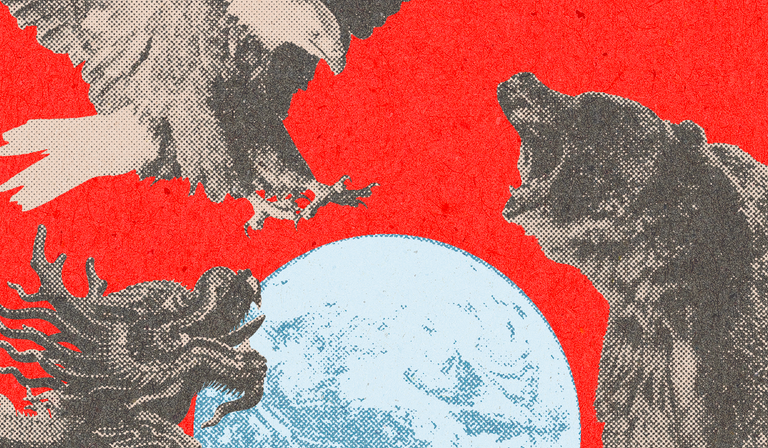
Betrayal portrays a world in which autocracies increasingly work in concert, while the post-1945 international order is weakened from within. Trump, Putin and Xi pursue imperial ambitions with little regard for international norms, while well-meaning democracies struggle to respond with comparable speed or resolve. Trump’s attack on Venezuela, his threats towards Greenland and his war with Iran become, in Harding’s account, further signs of an international order under strain. Yet Harding refuses to end on despair.
Volodymyr Zelensky had not just survived the infamous Oval Office encounter with Trump and JD Vance in spring 2025—he emerged stronger. Harding suggests that growing up in Kryvyi Rih, a gritty industrial city notorious for organised crime in the 1990s, prepared Zelensky for dealing with bullies. While European leaders rallied behind him after Trump’s public rebuke, Zelensky focused on something more consequential: transforming Ukraine from a country dependent on western arms into a world leader in defence innovation. Ukraine developed inexpensive interceptor drones capable of bringing down Iranian-designed Shaheds at a fraction of the cost of a $3.9m Patriot missile. Soon, Saudi Arabia, Bahrain, the UAE and Jordan were turning to Kyiv for advice, rather than the other way round. Zelensky even received a phone call from Washington. Harding relishes the geopolitical irony.
Betrayal also carries an obvious lesson for the UK. As the government commits to higher defence spending, Ukraine’s wartime experience suggests that innovation may matter as much as the size of the budget. Having deterred a far larger aggressor for more than four years with a fraction of the resources available to larger states, Ukraine has become a laboratory for modern warfare. Harding puts it bluntly: “there is no question that Ukraine was emerging as the continent’s leading military power.” As Ukraine becomes indispensable to Europe’s defence, he argues that Europe and Canada may have to shoulder the responsibility of preserving the postwar democratic order “until American voters [return] to sanity”.
Harding is an effortless writer. His prose is lean and cinematic, moving briskly between eyewitness observation and geopolitical analysis. I found myself wishing for more stories like those of the two North Korean prisoners of war, whose predicament gives the book its emotional centre. Yet the pace of world events has forced Harding’s gaze upwards. Betrayal is ultimately less about individuals than about the political forces shaping their lives.
At the end of the book, Harding briefly puts his reporter’s notebook aside. “Ukraine,” he writes, “continued to defy expectations,” while “Trump, in his presumption and stupidity, had badly overestimated the US’s military capabilities and steered the nation into a quagmire.” It is an unusually personal conclusion, but one that feels earned. After all, betrayal is rarely the end of the story.