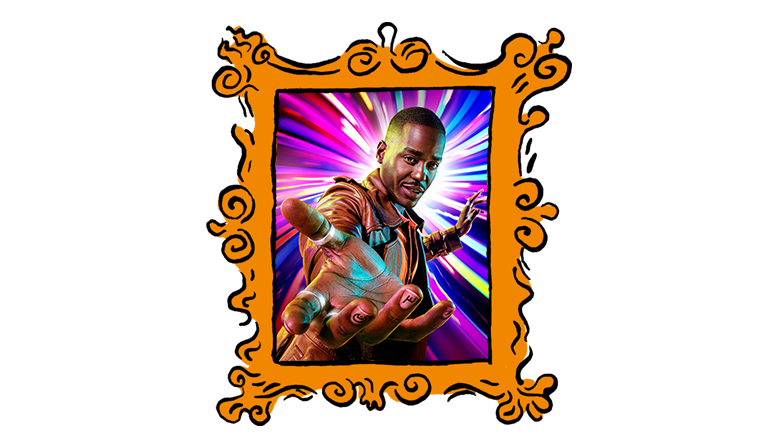
Not with a bang, but a whimper… Doctor Who seems to, for all intents and purposes, have reached the end of an era once again.
A year after the last episode aired, featuring Ncuti Gatwa as the 15th incarnation of the time-travelling Gallifreyan known only as the Doctor, the announcement that there would be no more Doctor Who for, well, the time being emerged in a rather odd fashion. The BBC issued a formal statement on the matter while showrunner Russell T Davies gave his own account on his Instagram. There was some slight discrepancy in tone between the two.
Davies hit the ground with what, for all the world, felt like a speech from a vaguely villainous character: “There won’t be a Christmas Special – we only cooked that up to guarantee a future when no one knew what would happen, but now we do know, there’s no need for it. You’ll have to wait a bit longer for new Doctor Who… but you’ll be waiting for MORE Doctor Who than a one-off. So it’s worth it! For the record: there was no script, I never wrote it, and no actor was ever approached to play the next Doctor.”
The BBC’s wording was a little more corporate: “After careful consideration, the BBC, Russell T Davies and Bad Wolf [the production company behind the show] have collectively decided not to go ahead with the previously announced Doctor Who Christmas episode.”
But it all boils down to the same thing. After 21 years of so-called “New Who”—the reboot that began in 2005 with actor Christopher Eccleston breathing new life into a character that had not been seen on TV for the previous 16 years—the show’s future is now in a state of flux.
The official line is that it is being “put out to tender”—which, for an old local newspaper hack like me, summons up things like running a leisure centre or supplying spoons to canteens, rather than taking control of what is essentially a British institution.
But this is how the BBC works nowadays, not making original programming in-house as used to back in the days of old Doctor Who, but rather contracting outside companies to do it for them.
It wasn’t that long ago that the BBC had growing ambitions for Doctor Who: it was in the hopes of bringing the Doctor’s adventures to a more international audience that it got into bed with Disney, to bump up budgets and have the show streamed online alongside its traditional Saturday teatime slot. But the world of streaming is a brutal one, with shows being axed (or, at least, not re-commissioned) even before the first series has properly aired. Last October, it was revealed that Disney was discontinuing its partnership with the BBC just two years after it began.
Perhaps the warning signs should have been more apparent then, though it was at this point the BBC offset the Disney breakup news with the very definite promise that a Christmas special of Doctor Who, written by Davies, would happen in 2026—which, we now know, is definitely not happening. There was also the extra curveball in Gatwa’s last episode, in which he regenerated—as is the Doctor’s wont when a new actor is required to take over control of the Tardis—into what we assume to be Billie Piper’s Rose, the Doctor’s companion introduced in the very first episode of New Who, two decades ago.
So it all leaves us with a bit of a cliffhanger. No confirmed new Doctor, no date for any new episodes and no actual production company behind the show going forward. The question is, can someone just pick up where the Davies era ended and carry on as before? Or is it, in fact, time for a third era of Doctor Who?
What we might refer to as “Classic Who” began in 1963 and evolved, over years and several Doctors, to become a patchwork mythology of monsters, time travel and companions. Classic Who ended in 1989 after what is, by anyone’s estimation, a pretty good run. Aside from a 1996 TV special designed to appeal to the US market and starring Paul McGann, Doctor Who was dead until the bold Davies regeneration in 2005.
New Who has now run for 21 years, not much short of the original, which might now seem like a natural resting point. Indeed, recent audience numbers have shown a clear decline in the show’s popularity; more recent series have garnered only about half the number of people watching at the revival’s peak in the mid-2010s.
It feels as though the big legacy franchises in general aren’t getting as much traction on TV and cinema as they once were. Paramount has cancelled Star Trek: Starfleet Academy, meaning there is no Star Trek universe TV show in the pipeline for the first time in years. A planned TV reboot of Stargate, which began with a movie in 1994 and has spawned several series since, was cancelled by Amazon before it got off the starting blocks. The latest Star Wars outing, The Mandalorian and Grogu, received mixed reviews and had the lowest opening weekend box office for a movie from the franchise.
Perhaps what people are wanting is more original stuff. The big cinema and streaming hitters are new movies from younger directors, such as Backrooms and Obsession, and series such as Widow’s Bay and The Burroughs. Another thing those productions all have in common is that they’re scary. This is something Doctor Who used to be in the classic era, but in more recent years has dropped in favour of an appeal to the “family audience”—something as mythical in the 2020s as many of the monsters in the show. Families just don’t sit down together to watch water cooler TV anymore.
As a first priority, whoever takes on Doctor Who would be well advised to think deeply about exactly who the show is for. The short, pat answer is: “Everyone.” If someone can pull that off, then I take off my fedora to them. For my money, I’d like to see something scary and less drenched in lore and backstory, while at the same time honouring the past as they move it forward into something brand new and startling.
Not a lot to ask, is it? It might take us many, many years to get there… but wouldn’t a fallow period do the show some good? Wouldn’t that allow another, genuinely new, generation to come in and completely rewrite the rulebook in the same way Davies once did? Good things always take time—and the third era of Doctor Who, whenever it arrives, should be worth the wait.