Books don’t get much more Welsh than Liam Higginson’s folk-horror debut, The Hill in the Dark Grove, which is published by Picador today. Set on a hillside sheep farm, deep in the mountains of Eryri, North Wales, this darkly atmospheric novel is infused with centuries of Welsh history, myth and legend. The ageing couple at the centre of the tale are shaped by their cynefin, or habitat, growing up in the shadow of the mighty Yr Wyddfa, which I vow never again to call Snowdon.
As a young boy, Carwyn Gwynnant, the novel’s 65-year-old sheep farmer protagonist, would listen to his nain’s fireside stories about the gwyllion—fairy hags who would lure unsuspecting shepherds to their doom—or the afanc—“a foul, slithering leviathan down in the muddy riverbed, whose rages caused almighty floods,” Higginson writes. Rhian, his wife, was brought up by her father, a second home-burning Welsh nationalist incensed by the failed devolution referendum in 1979. “The young were being driven out of their ancestral villages. It was, he said, a cultural genocide by stealth.”
Superstitious stories and pagan traditions abound, with the narrative proper centring on a chance discovery that gives the book its title: a stone circle, long buried, in an overgrown spot on the Gwynnant farm. Carwyn excavates the mound in an increasing frenzy, galloping backwards through time. Although Higginson peppers his text with Welsh words, rarely providing a translation, he writes in English.
It’s a cracking, if creepy, read that left me hungry for more Welsh literature, something I realised I have neglected when I came across Ann Morgan’s account of Kate Roberts’s seminal 1936 novel Feet in Chains in her own recent book, Relearning to Read. Roberts was a giant of Welsh writing for much of the 20th century. “She was the queen of our literature,” says Fran Rhydderch, a novelist and academic who heads Swansea University’s MA in Creative Writing. Feet in Chains, which was translated from the Welsh (Traed mewn cyffion) by Katie Gramich, is set deep in Gwynedd, Roberts’s home county, and tells the story of a slate quarrying family, like her own.
Is there a distinction between books that are written in Welsh and those written in English, I wonder? Well, no and yes, says Rhydderch, explaining: “There are two Welsh literatures: Welsh literature in English and Welsh literature in Welsh.” Both are changing as writers from many different places make Wales their home. “That is reshaping Welsh literature as we speak,” she adds.
“One of the things that my book grapples with is that question of identity, and can you be Welsh without speaking Welsh?” Higginson tells me. “I think there is an understanding that Welshness doesn’t require you to speak Welsh.” His own Welsh, learnt at school growing up in North Wales, is rudimentary. “I could probably read a children’s book, but that’s it,” he says.
Gary Raymond, a novelist, critic and broadcaster, says Higginson’s book fits into the tradition of Welsh writing that uses the earth “to get into the symbology of mythologies and what myths mean to cultural and individual identity”. Raymond’s own book Abandon All Hope (2024) is a comprehensive sweep through the history of Welsh literature, bursting with gems about all the biggest names in Welsh writing—from Bloomsbury author Dorothy Edwards to John Cowper Powys, a Derbyshire-born writer who settled in Wales where he wrote medieval adventure-romances such as Owen Glendower, about the nationalist leader.
“Welsh literature is whatever the Welsh establishment thinks is okay,” adds Raymond. “Historically, it’s depended on whether they approve of you as a writer and a figure. Someone like Powys was very much welcomed because he took a very small-c conservative view of Welsh culture and history and turned it into huge bestseller.” Even so, Raymond says that Wales failed to exploit the success of Powys’s vision for its own ends, lamenting that he never became the Welsh version of Sir Walter Scott, who helped to shape a modern Scottish identity through his writing. “Wales didn’t take some vital opportunities in the last 100 years to make its mark as a country of novelists and playwrights.”
One reason someone like Roberts isn’t better known is, like many writers, much of her work remains in her mother tongue. “Not enough of the great stuff has been translated. There are a lot of writers I’d love to read who haven’t been translated,” says Raymond.
Two Welsh-speaking writers to have done particularly well over the past few years have published books in English, he points out. Manon Steffan Ros won the 2023 Carnegie medal, the UK’s most prestigious children’s books award, for her YA novel The Blue Book of Nebo, which she translated herself into English. Drift, a beautiful love story about a young Welsh woman and a Syrian refugee, by Caryl Lewis, was awarded Wales Book of the Year in 2023. “There is a Team Wales attitude to the Welsh language. But writers want to be read,” explains Raymond.
And I want to read them. Whether that’s in English that has or hasn’t been translated first.
The place of Wales and its literature
Liam Higginson’s new folk-horror, ‘The Hill in the Dark Grove’, made us wonder: do Welsh books need to written in Welsh to count as, well... Welsh?
January 08, 2026
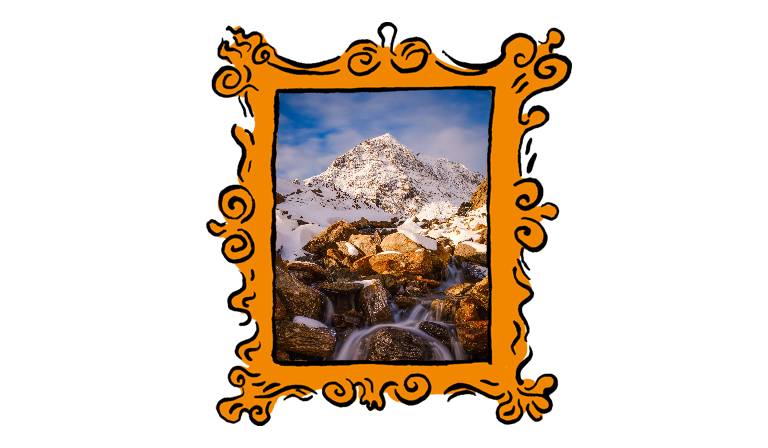
Image: Nigel Wilkins / Alamy