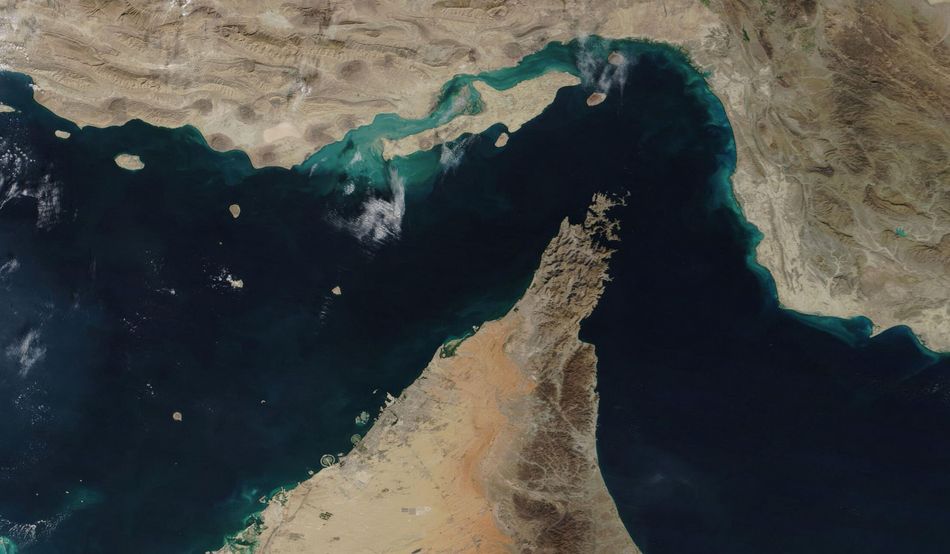
In early March, Iran's Revolutionary Guard effectively shut down the Strait of Hormuz, allowing only approved vessels through this critical energy chokepoint. Until recently roughly a fifth of the world’s oil production and a big chunk of global liquefied natural gas (LNG) flowed through this strait. Hundreds of vessels came to a standstill. Oil prices soared.
President Trump, meanwhile, said he wanted to “take the oil in Iran”, and threatened destruction not just of Iran’s energy infrastructure but Iranian civilisation if a deal with Tehran was not reached. Despite this week’s ceasefire agreement, the security of the Strait remains uncertain, and most ships are not expected to start moving again.
Whether these were acts of skilled geopolitical brinkmanship or of national self-harm remains unclear—but they certainly reflect an increasing willingness among states and other actors to treat natural resources either as a tool for geopolitical leverage or as a motive for asserting themselves aggressively in foreign lands.
Across the sweep of history such approaches are nothing new. Conquest by colonial powers was often motivated by resource acquisition, just as wresting back control of and wielding resource exports was often a focus of nationalist movements in previously colonised nations. But after several decades of relative abeyance, these approaches are becoming popular once more.
Around the time of its full-scale invasion of Ukraine in 2022, Russia throttled gas flows to Europe, gambling that this would help fracture western support for Kyiv. In 2025, China borrowed the tactic, retaliating against US tariffs by imposing stringent export controls on rare earth elements and on products made using them. And the US administration has been focused hard on foreign resource acquisition. Trump has threatened to acquire Greenland partly for its minerals, pushed hard for and secured a high-profile resources deal in Ukraine, and engineered regime change in Venezuela with an eye on that country’s huge oil reserves.
What is driving this trend? Partly it is a function of geopolitical division and the erosion of the rules-based international order. Amid the fracturing, states are using all geopolitical levers to assert or defend themselves. For non-western countries whose economies are focused on commodities and manufacturing, control of resource exports and flows through nearby chokepoints are among the most powerful levers available.
Globalisation has, paradoxically, contributed to today’s vulnerabilities. Decades of economic integration built complex webs of interdependence, including in energy, minerals and food. Those webs were designed for a world of co-operation. In a world of rivalry, they have become tripwires.
Many current world leaders—notably Trump and Putin—are inclined to see control of natural resources as a root of geopolitical power and to pursue them accordingly. Importantly, each act of resource weaponisation or coercion by one actor also emboldens others: it normalises the tactic, weakens the international norms against it, and encourages rivals to defend their interest with equivalent aggression or to engage in a zero-sum scramble for control.
This approach can create short-term leverage, and many governments and regimes reach for it because of the lure of immediate gains in wealth, economic security or military deterrence. But it can also backfire—and governments also often underestimate, or are careless about, the long-term consequences.
Consider the weaponisation of resource exports. When a state achieves a genuine economic chokehold, as Russia briefly did over European gas and as Iran now seeks to do in the Strait of Hormuz, the immediate impact can be severe. Prices spike. Economies wobble. Politicians scramble for solutions.
But the very severity of the shock triggers powerful countermeasures. It forges political unity among the targeted nations rather than the capitulation the aggressor expected. It prompts an urgent search for alternative supplies—and in most commodity markets, alternatives exist, even if at a cost. Most importantly, it catalyses long-term structural change: new infrastructure, diversified supply chains, accelerated substitution.
History makes this pattern painfully clear. My colleagues and I recently surveyed past attempts by nations to weaponise their resource exports, and found these moves were often both ineffective in achieving their geopolitical goals and also seeded some form of blowback.
Here are a few examples. The US oil embargo on Japan in 1941, designed to halt Japanese expansion in Asia, instead helped trigger the attack on Pearl Harbour. The OAPEC (Organisation of Arab Petroleum Exporting Countries) oil embargo of 1973 quadrupled oil prices but largely failed to shift US policy on Israel—and spurred the opening of major new oil provinces in Alaska and the North Sea, eroding OAPEC’s stranglehold. The US grain embargo on the Soviet Union in 1980, imposed after Moscow’s invasion of Afghanistan, ended up hurting American farmers more than Soviet consumers, who simply sourced grain from Argentina and Canada instead; President Reagan lifted it the following year.
Geopolitical competition for certain resources looks set to heat up—for example, over critical minerals needed for the defence and clean energy industries, and also over water supplies
Russia’s weaponisation of its gas exports to Europe is a stark recent case. Though suffering economic pain from the crisis, Europe has diversified significantly away from Russian gas, whilst maintaining generally staunch support for Ukraine. For Russia, it was an episode of striking economic self-harm. Europe was once by far its largest gas export market. In the words of Fatih Birol, head of the International Energy Agency (IEA), “Russia lost this client forever”.
Similar patterns of blowback can be seen from past attempts by states to gain control of resources abroad using military or other strongarm tactics. From Latin America to the Middle East to Africa, history is littered with examples of powerful national resistance movements eventually overthrowing or curbing the activities of foreign resource controllers, whether private companies or foreign states. So-called “resource nationalism” remains a driver of government behaviour in many countries across these regions.
Geopolitical competition for certain resources looks set to heat up in the decades ahead—for example, over critical minerals needed for the defence and clean energy industries, and also over water supplies in climate-stressed regions. Based on the historic patterns above, expect more national flexing of muscles over resources, much of it self-destructive in the absence of wise, long-term leadership.
Meanwhile, the current crop of nations seeking to weaponise or coercively control resources and resource exports will likely face predictable consequences.
For example, the US should not expect the currently welcoming attitudes of both Venezuela and Ukraine to foreign investment by US mining or oil and gas firms to be a permanent fixture—over time, backlash will likely build. Similarly, should the Iranian regime fall and be replaced by one open to US energy firms investing and “taking the oil”, this would surely be a temporary arrangement until historic Iranian resentments over foreign resource meddling rise (and potentially explode) again.
For Iran itself, its short-term success in economically wounding the US and others by blockading Hormuz could trigger a blowback of devastating proportions were it to try it again. One form of retaliation which the US threatened, but didn’t carry out in full, was to strike the Kharg Island export terminal, an economic lifeline for Iran through which almost all of its own oil exports flow.
Even if the current Iranian regime survives, the long-term economic harm it will have inflicted on the country through the blockade should not be underestimated. Every day of disruption was a day in which importing nations in Asia and Europe were dusting off plans for alternative routes: Saudi pipeline capacity to the Red Sea, expanded Omani and Emirati export facilities, accelerated LNG deals with non-Gulf producers.
As for Beijing’s restrictions on its rare earth exports last year, while these appear to have tempered US tariff escalation, they have also accelerated US (and other countries’) moves to diversify their critical mineral supply chains. Beijing spent decades establishing global dominance over these. Bit by bit, this strategic advantage is now beginning to be dislodged.
None of this is likely to alter the calculations of decision-makers in Tehran, Beijing, or Washington in the weeks ahead. Urgent situations and national emergencies sometimes do require desperate measures. But the historical record is clear: in geopolitical contests that involve weaponising or asserting control over natural resources, the biggest losers long-term are often those who reach for their weapons first.
Chris Melville and Ben MacLeod of Resource Resolutions contributed to the research for this article.