Predicting the future is never easy, especially when it involves the Middle East and Donald Trump. But few would disagree that Iran finds itself at a historical turning point; in other words, things are about to change. The Islamic Republic has survived many a premature obituary and just celebrated its 47th birthday, yet the core policies that have defined the revolutionary regime now face unprecedented challenges. Whoever holds on to power in Tehran will either have to abandon this agenda or transform it.
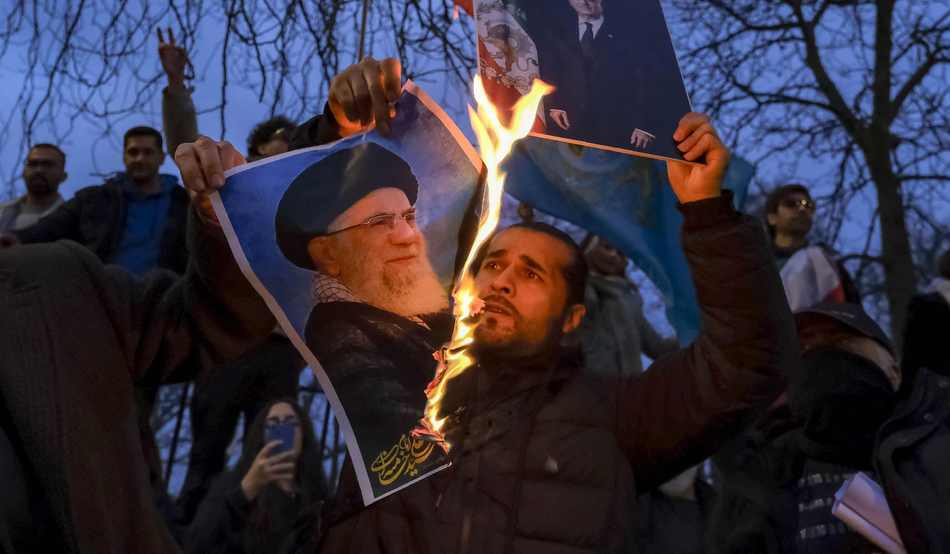
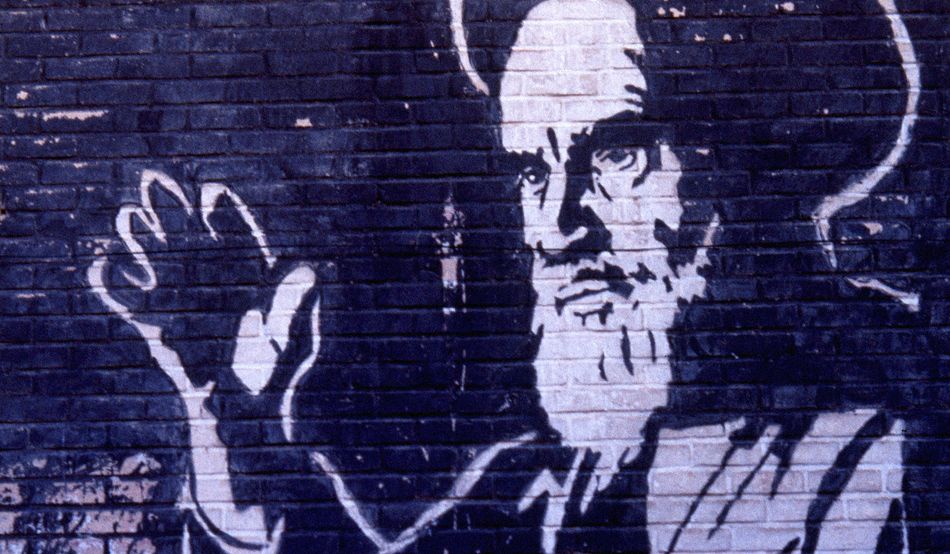
These policies reflect three goals that came out of the 1979 revolution: the Islamisation of Iranian society; a firm rejection of the United States; and the destruction of Israel. During his 36 years in power, former supreme leader Ali Khamenei rigidly held to these goals. He did this despite their unpopularity with Iranians—and despite Iran paying the cost of international isolation and economic degradation to pursue them. In the end, after years of making “Death to America” and “Death to Israel” his central aims, Khamenei was killed by his nemeses. The regime has proved resilient, replacing him with his shadowy son, Mojtaba Khamenei, as a defiant signal of continuity. But signals won’t fool anybody: Mojtaba, who was injured in the airstrike that killed his father and has still not appeared in public, won’t easily consolidate his rule. Iran has entered not the age of Khamenei the Second, but an interregnum.
What follows is unclear. Like many Iranians, I have dreamed of a democracy all my life. This is not impossible. Iran has a 120-year-long parliamentary tradition and, even under the draconian Islamic Republic, has held limited but meaningful elections. It won’t have to start from zero. We could have a new constitution or even a constitutional amendment to fuse the positions of supreme leader and president and allow for free elections, thus ushering in democracy.
Such an outcome remains hard to imagine because those who favour it lack organised power. Iran’s trade unionists, feminists, democracy activists and other members of civil society fill up many cells in the country’s prisons. Years of repression mean that they haven’t been able to build a coherent alternative that could dislodge the regime. Iranian activists in the diaspora have also failed on this front. The most prominent opposition figure, Reza Pahlavi, son of the late shah, remains restricted by a dearth of organised support, along with infighting within his own camp and between it and other opposition movements. Further, although he claims to stand for democracy, Pahlavi’s major advisers and the rhetoric of his supporters hardly paint a democratic picture.
In the absence of a credible alternative, Iran could still democratise. Perhaps mass uprisings could bring down the regime and pass power to democratic leaders. Perhaps the regime could collapse under the weight of prolonged warfare, and whoever remains in power will opt for democratic elections to shore up domestic and international legitimacy.
Alas, such scenarios remain unlikely. The crude rule of history suggests that fortune favours the organised which, in Iran, means the factions inside the regime that have money and guns. Men such as Mohammad Bagher Ghalibaf, Iran’s speaker of the parliament and (at the time of writing) perhaps the strongest regime man left standing, or other figures in the Islamic Revolutionary Guards Corps would be prime candidates. Still, they will likely be forced to reconsider the three revolutionary policies that have defined the Islamic Republic, whether they maintain the regime or replace it.
The new rulers, be they democratic or authoritarian, will also have to define a new place for Iran in the region. The war started with Israel and the United States but has come to include dozens of countries, including Turkey, Saudi Arabia, Qatar and the United Arab Emirates. Although all host US bases, they are independent actors in an emerging multipolar world. These states often feel caught between the sabre-rattling of Iran and Israel. As conflicts between these countries (almost all of whom are majority Sunni Muslim, thus sharing an important commonality in the face of Shia-majority Iran) subside, they’ll likely work together to help solve the “Iranian problem”. They might even help shape the coming transition in Iran.
Iranians like to think of themselves as an ancient civilisation. We don’t think in terms of years but in decades and centuries. As the next chapter of our long history begins, we can be cautiously hopeful that the worst of Khamenei’s legacy will be discarded, for good.