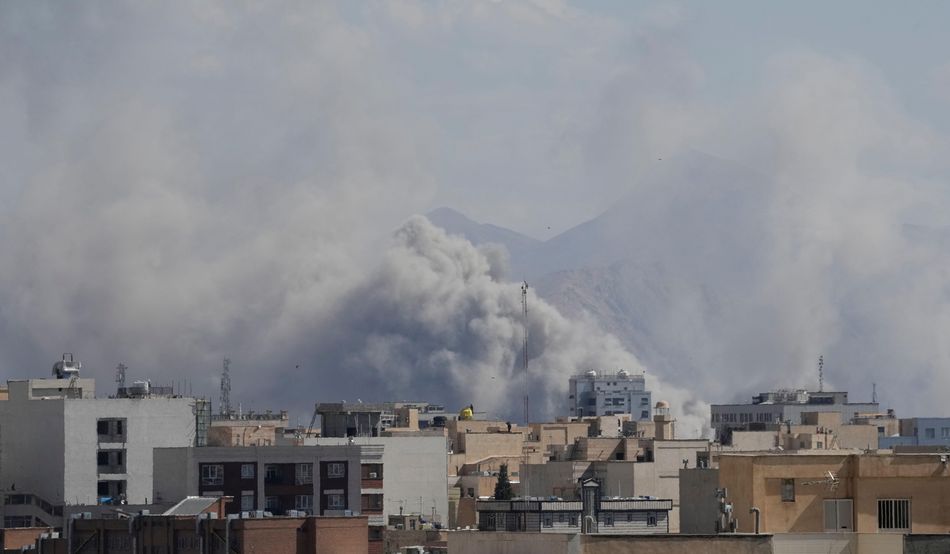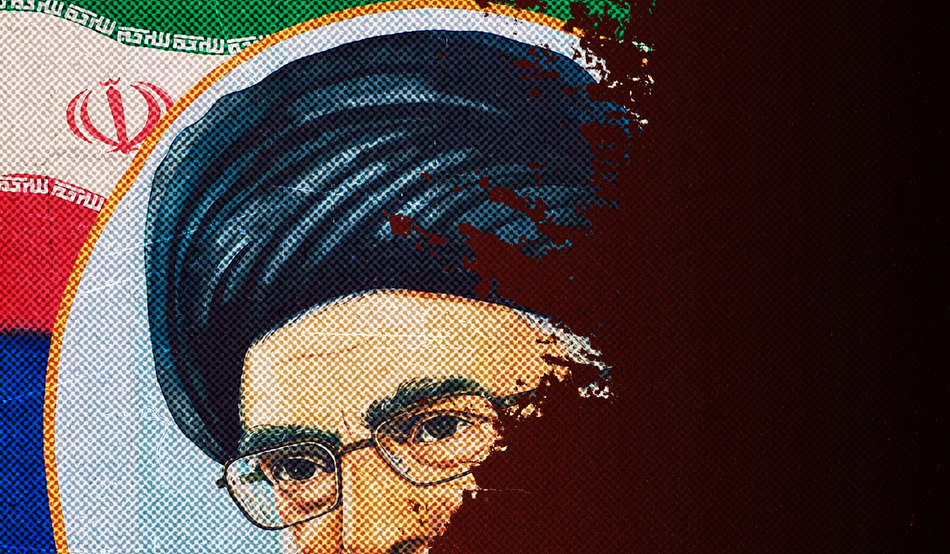
Less than two months after the Islamic Republic killed thousands of Iranians who opposed the regime during a nationwide uprising, the country faces another existential crisis. On 28th February, the United States and Israel launched a coordinated military strike against Iran, killing Ayatollah Ali Khamenei, the Supreme Leader of the Islamic Republic, along with more than 40 senior commanders from Iran’s military and security institutions. The strikes also targeted strategic facilities connected to Iran’s nuclear enrichment and missile programmes, significantly weakening the regime’s long-term military capabilities.
Khamenei’s assassination has created the most serious leadership vacuum in Iran since the death of Ayatollah Ruhollah Khomeini in 1989. According to the Iranian constitution, if the Supreme Leader dies or becomes unable to perform his duties, a temporary leadership council must govern until a new Supreme Leader is selected by the Assembly of Experts. An interim council, which includes the president and the chief justice, has assumed leadership responsibilities until the Assembly can convene.
The situation quickly became more complicated after reports indicated that Israeli forces had also targeted the Assembly of Experts as its 88 members gathered to discuss the succession process. If accurate, the strikes may have eliminated or injured some of the clerics responsible for choosing the next Supreme Leader. As a result, the succession process has become highly uncertain, and the Islamic Republic now risks losing not only its most powerful political figure but also parts of its religious and political elite.
The simultaneous removal of the Supreme Leader, senior military commanders and influential political figures has created deep uncertainty about Iran’s future. The country’s political system relies heavily on centralised authority and powerful security institutions. When both are weakened simultaneously, the regime becomes vulnerable to internal struggles and external pressure. The direction of Iran’s political future will depend on the continuation of the conflict, the ability of the remaining institutions to maintain control, and the choices made by surviving political elites.
Several possible scenarios for Iran’s future can therefore be imagined.
The first scenario is the survival of the Islamic Republic under a new hardline Supreme Leader. One of the most frequently discussed candidates is Mojtaba Khamenei, the second son of the late Supreme Leader. Although he has never held a formal senior political position, Mojtaba Khamenei is widely believed to have strong relationships with the Islamic Revolutionary Guard Corps (IRGC) and influential clerical networks. Because of these connections, he could emerge as a leading candidate for the position.
Some media outlets have already reported that the Assembly of Experts appointed Mojtaba Khamenei shortly before the attacks, although this remains unconfirmed. Even so, the possibility of his leadership reflects the preferences of the most hardline factions within the Islamic Republic.
If Mojtaba Khamenei becomes the next Supreme Leader, the regime will likely continue along the ideological path established by his father and may become even more securitised in response to the assassination and foreign attacks. Iran would likely experience a new wave of political repression, and hardline leaders may interpret the open celebrations of many Iranians about the death of Ayatollah Ali Khamenei as signs of disloyalty. In response, the regime will likely intensify surveillance, arrests and harsh punishments to restore fear and deter further dissent, particularly among younger generations who have repeatedly challenged the system.
The leadership will also frame the killing of the Supreme Leader as a national humiliation and an act of aggression against the Iranian state. Such narratives may be used to mobilise religious and nationalist sentiment while suppressing domestic opposition.
Under this leadership, the Islamic Republic would likely pursue revenge against those responsible for the attacks and expand its support for proxy forces and Shia militias across the region. Hostility toward Israel and the US would likely intensify, accompanied by a more confrontational foreign policy.
Another likely consequence would be the acceleration of Iran’s nuclear programme. Hardline leaders may conclude that nuclear weapons represent the only reliable deterrent against foreign intervention and may therefore abandon remaining restrictions on nuclear development. This would significantly increase regional tensions and could trigger a wider arms race in the Middle East.
Such a scenario would be extremely dangerous for both the Iranian people and regional stability. Continued confrontation between Iran, Israel and the US could escalate into a broader conflict, while prolonged instability might benefit powers such as Russia and China by weakening western influence in the region.
The second scenario involves the Islamic Republic’s survival under more moderate leadership. If recent attacks eliminated a significant number of hardline figures within the political and military elite, the balance of power inside the regime could shift, and the Assembly of Experts might select a leader who is perceived as more pragmatic and willing to negotiate with external powers.
In exchange for security guarantees, the regime could agree to policy changes such as limiting the nuclear programme
Possible candidates could include Hassan Rouhani, president of Iran from 2013 to 2021, or a symbolic clerical figure linked to the legacy of Khomeini, such as his grandson Hassan Khomeini. Although both individuals remain committed to preserving the Islamic Republic, they may present themselves as moderate leaders capable of reducing tensions with the outside world and opening limited social and political space.
A moderate leadership might attempt negotiations with the US to end military attacks and stabilise the country, while reducing hostile rhetoric towards Israel. In exchange for security guarantees, the regime could agree to policy changes such as limiting the nuclear programme, restricting missile development, reducing support for regional militias and introducing limited social reforms.
These reforms could include easing some social restrictions, allowing greater cultural freedoms and expanding limited political participation. While such measures would not transform Iran into a democratic system, they could create the perception of gradual change and provide temporary relief for Iranians exhausted by repression, economic hardship and war.
At the same time, the new leadership would likely attempt to weaken remaining hardline factions within the regime. Military commanders and security officials who oppose compromise with the west could be marginalised or removed from positions of influence. Although this restructuring might create internal tensions, it could also help stabilise the political system and reduce external pressure.
The third scenario, favoured by many Iranians, is the collapse of the Islamic Republic and the return of the Pahlavi monarchy. If the war continues and the regime’s leadership structure collapses, large numbers of Iranians may take to the streets and seize control of state institutions. In such a situation, opposition forces outside the country may attempt to organise a transitional political process. One of the most prominent figures in the Iranian opposition is Crown Prince Reza Pahlavi, the son of the last Shah of Iran.
In the event of regime collapse, Pahlavi could return to Iran as a transitional leader and call for a national referendum on the country’s future political system. Given his name recognition and support among certain segments of Iranian society, voters might support the restoration of a constitutional monarchy.
Under such a system, Iran could adopt a model similar to a European constitutional monarchy, in which the monarch serves as a symbolic national figure while political authority remains with elected institutions. Although the transition could create a brief period of instability as the Islamic Republic’s security networks are dismantled, broad public participation could gradually stabilise the country.
Such a transformation would likely bring Iran closer to the western political and economic sphere. Iran could rebuild relations with the US, potentially join the Abraham Accords, and once again become a major regional partner for Israel. A post-Islamic Republic Iran aligned with the west would represent a significant geopolitical shift in the Middle East and weaken Russia’s and China’s influence in the region.
The final scenario, the most dangerous but also the least likely, involves prolonged conflict leading to the collapse of the Iranian state and the emergence of regional warlords. If the central authority breaks down and security forces fragment, different regions could fall under the control of competing military groups. Such a situation would create severe instability inside Iran and across the Middle East, potentially turning the country into a battleground for proxy conflicts like those in Syria or Libya.
However, this scenario is unlikely because of Iran’s historical and social structure. Iran has existed as a recognisable political entity for more than 3,000 years, and despite invasions and political crises, the idea of a unified Iranian state has remained strong. Unlike several countries in the region, Iran is not organised primarily along tribal lines. Although the country contains ethnic diversity, Iranian national identity remains powerful across different communities.
Iran also possesses a highly educated and socially connected population. Today, 11m Iranians hold university degrees, creating a technologically literate and politically aware society with strong expectations for political participation and personal freedoms. Many Iranians increasingly reject political Islam and seek a secular political order.
Moreover, one of the major sources of instability in Iraq, Afghanistan and Syria during the 21st century was the Islamic Republic itself and its military arm, the IRGC. Through its support for militias and proxy forces, Tehran helped prolong conflicts and weaken state authority in those countries. If the Islamic Republic collapses, this external source of instability would disappear.
For these reasons, although the current crisis represents one of the most dangerous moments in the history of the Islamic Republic, the complete fragmentation of the Iranian state remains unlikely. But whether the country moves toward deeper authoritarianism, limited reform, or a complete political transformation will depend on the US and Israel’s policies, the balance of power among the remaining elites and the reactions of Iranian society itself. What is clear is that the political order that existed before 28th February has already been fundamentally shaken. The coming months can determine the fate of the Islamic Republic, the Middle East and the world.