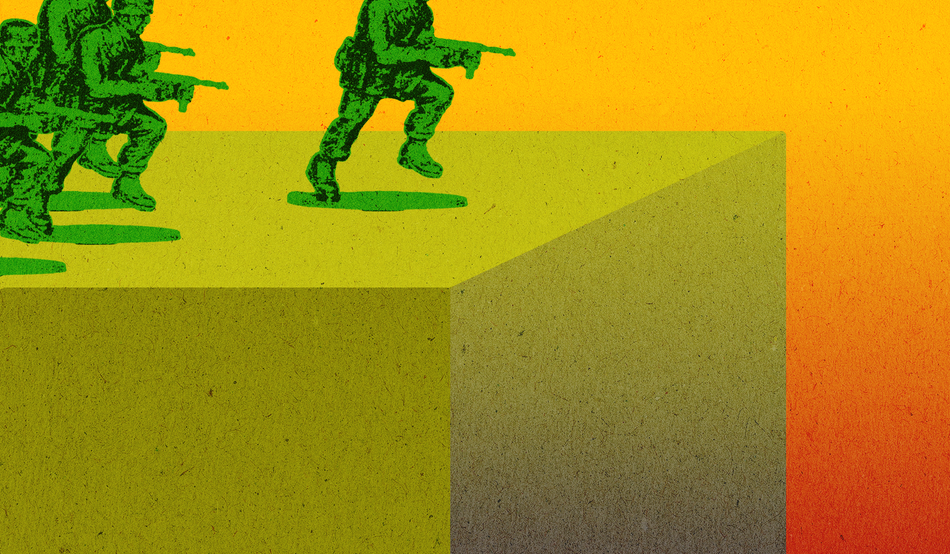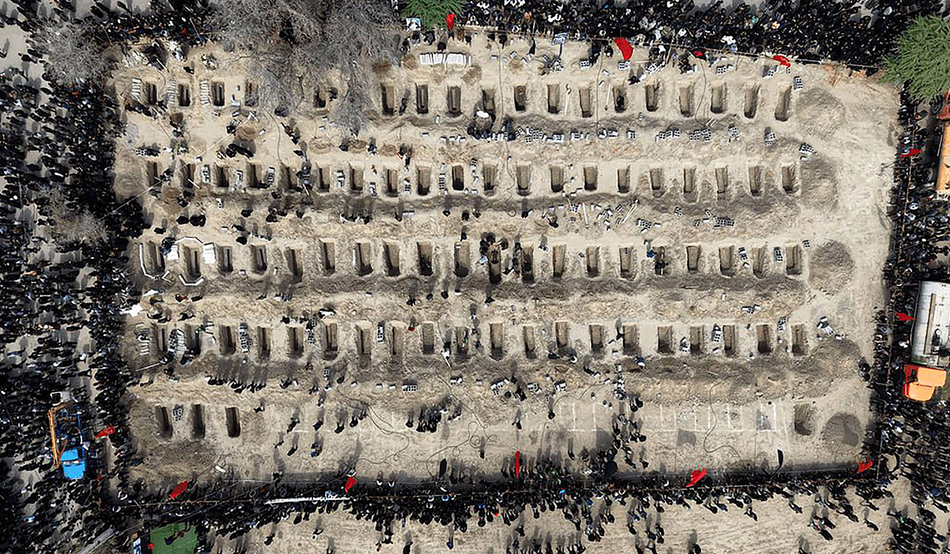
Donald Trump has been singularly unclear about his plans or expectations for the war against Iran. Piecing together his inconsistent daily posts on Truth Social, it appears he wants to deny Iran any nuclear weapons capability, destroy its ballistic missile programme and weaken Iran’s capability to threaten its neighbours, particularly Israel. He talks on and off about regime change, but this does not seem uppermost in his mind. As little as we know about what motivated the US president to start this war, at the time of writing we know even less about how he intends to end it or what follows.
This comes against the backdrop of two opportunities for positive change inherited by Trump when he took office. He built on the Biden administration’s outreach to the new Syrian government by engaging in direct talks with the president, Ahmed al-Sharaa, and lifting many of the sanctions previously imposed by the US on the Assad regime. The Trump administration also arranged quiet negotiations between Syria and Israel over security issues after which, despite significant differences in demands, the chances for an understanding on security appear promising.
Trump additionally inherited a ceasefire agreement in Lebanon. That truce led to the election of a president and the appointment of a prime minister committed to disarming Hezbollah and moving the Iran-backed Shia militia away from the south, to be replaced by the Lebanese army. Progress toward these goals has been limited, however, as Hezbollah has foot-dragged and Israel has acted unilaterally against it while expanding its own presence in south Lebanon. During this war with Iran, Hezbollah made a strategic error by launching missiles against Israel, prompting an overwhelming Israeli response including expanded ground operations and strikes on Beirut and elsewhere. The Trump administration has been silent on this, casting doubt on the viability of achieving the goals of the 2024 ceasefire when the current fighting ends.
The president’s interest in building on these shifts in the region waxes and wanes, his short attention span driving him from one topic to another. He does not think systematically or strategically, stating that this war will end “when I feel it in my bones”.
We are thus left with four metrics that might guide him. The first is the location of the 450kg of uranium enriched to 60 per cent, unaccounted for since Israel launched its war against Iran last June. If Trump cannot say that this stockpile is no longer in Iranian hands, the war will be seen as at least a partial failure—but getting hold of the stockpile means the deployment of ground forces in Iran, widening the conflict in a manner that will cost Trump support in his own base.
The second is how much pain Arab states can suffer until they press Trump to stop. There have been reports that the Saudis and perhaps others are encouraging Trump to fight on but, if attacks against oil, gas and financial assets continue, this could change.
The third metric is the Strait of Hormuz and the impact of its blockage on oil and gas supply and prices. Until ships can pass through the Strait safely, global energy markets will remain roiled. Trump is being reminded daily of the US public’s sensitivity to the price of petrol. Food prices will also rise as the cost and availability of fertilisers are impacted, just as the spring planting season begins.
The fourth is whether Trump will have a plausible narrative of victory. The credibility of statements by the president and defence secretary Pete Hegseth declines daily. When Trump decides to end the war, his assessment of success and his justification for spending billions of dollars on it will be tested at home and abroad.
Trump is surrounded by advisers who stroke his ego and will not challenge him; whatever advice he takes seems to come from unhinged outsiders. To an American public tired of military adventures and increasingly opposed to this war, more chest thumping from Trump—and the absence of a serious explanation about either why the war was started or what will happen afterwards—will not sit well.
Given the president’s mercurial governing style, his inability to moderate his tone and propensity for self-congratulation, it is hard to imagine him making a sober cost-benefit analysis between continuing or ending the war. Looking further ahead, Trump is most likely to move on to some other pet project, perhaps regime change in Cuba, and leave sorting out the Middle East to his envoys, Steve Witkoff and Jared Kushner. Given their lack of progress either there or in the Russia-Ukraine crisis, the prognosis is bleak.