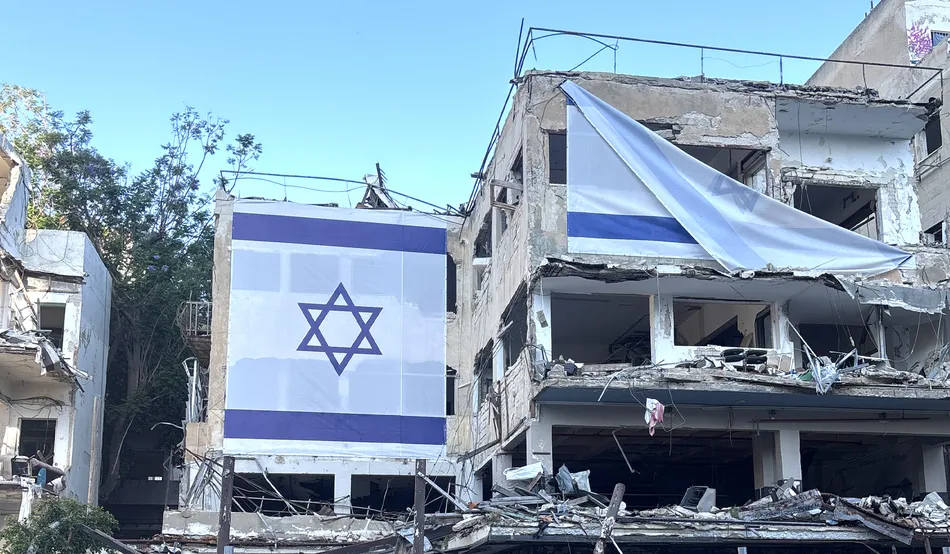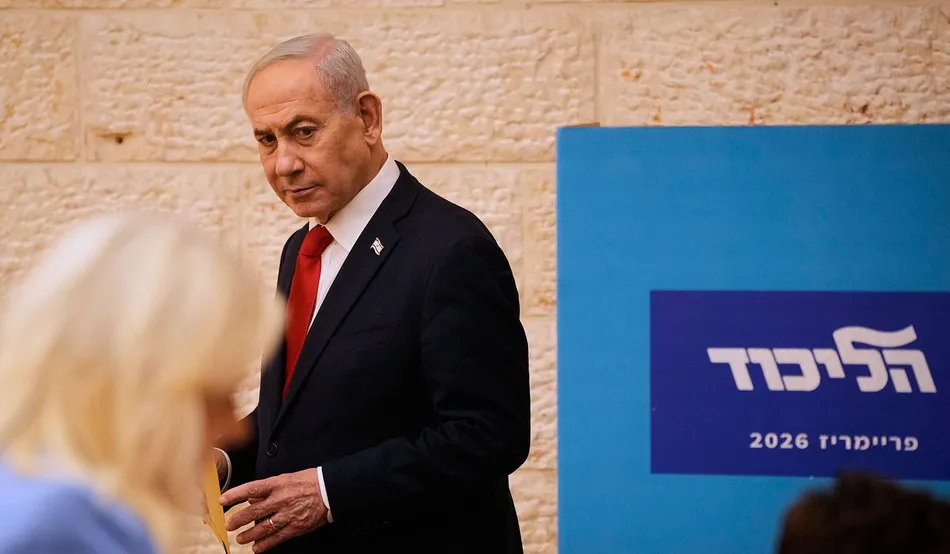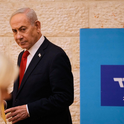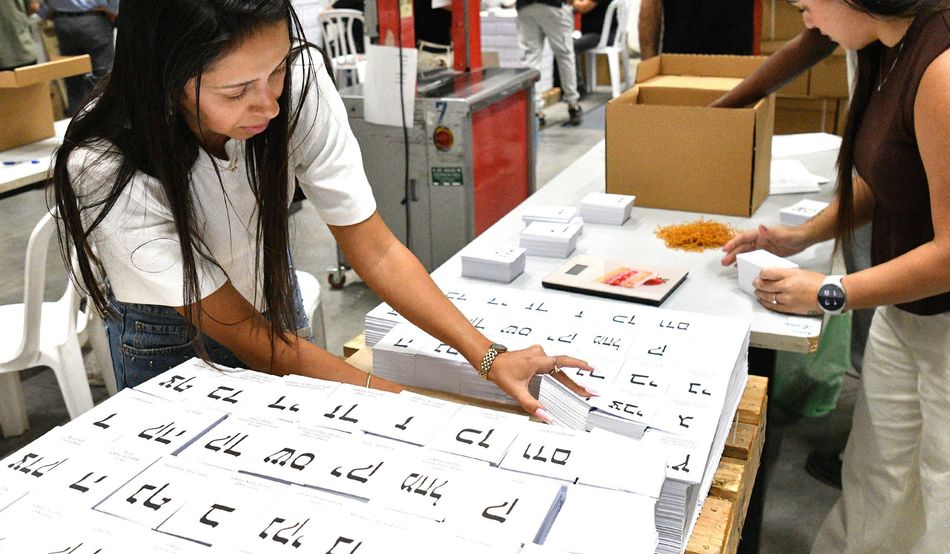
The Israeli election takes place tomorrow, 27th October, and it is still far from clear what the outcome will be, let alone whether the most extreme, right-wing and religious government in Israel’s history will be voted out of office.
Outside observers might wonder how this could be possible. After all, Israel’s current prime minister, Benjamin Netanyahu, led the government responsible for Israel’s greatest-ever security failure, the Hamas attack on 7th October 2023, in which 1,200 citizens and soldiers were killed and 251 people taken hostage, and after which Israel launched an onslaught on Gaza (which many experts agree has been genocidal). Despite an official ceasefire, this has yet to end.
Netanyahu has spent the past three years refusing to take any responsibility for the state’s failings that day, even though various reports have indicated that Israel had been passed intelligence that Hamas was planning an attack. And yet, for months, polling has indicated that the Netanyahu Bloc (the parties currently in the governing coalition) and the Opposition Bloc (the Jewish-majority parties looking to unseat the government) are roughly neck-and-neck.
The country has a proportional representation system. There are 120 seats in Israel’s Knesset parliament, and at least 61 are needed to form a coalition. Negotiations can take weeks and involve much wrangling and horse-trading. Before Netanyahu formed a government with far-right parties in December 2022—turbocharging the country’s descent into illiberalism, or, as some argue, competitive authoritarianism, or even fascism—Israelis had gone to the polls five times in the space of four years. Each vote yielded broadly similar results, and opposition campaigning centred on being “just not Bibi” (Netanyahu’s nickname). The reason for this Groundhog Day scenario was that neither bloc had been able to garner a much greater majority than the other. And Netanyahu, Israel’s longest-serving political leader, in power since 2009 with only a year or so in opposition before managing to get back into government, has expertly manipulated his peers and the system to stay put.
And so, even though many claim—and convincingly—that this election is no less than existential if Israel hopes to claw its way back from the extremes that its politics has reached, the campaign has been shaped by the shared quirks of those other recent Israeli elections.
The parties in the Opposition Bloc have campaigned broadly on removing Netanyahu, as well as on ensuring accountability for 7th October through a commission of inquiry, alongside other issues such as whether ultra-Orthodox Jews, traditionally exempt from conscription, should be made to join the army. But they have struggled to unite and set aside their egos. This explains why on 26th September—just one month before polling day—the heads of the leading Jewish opposition parties signed a pledge “to work together” despite “ideological differences” to form a “Zionist, statesmanlike” government. The five men posed for a photograph in a typical Israeli flat, wearing a typically casual Israeli uniform of T-shirts and jeans. Their parties range from hard-right to what passes for the Israeli moderate right and centre, with one, the Democrats (Democratim), being on the left. According to the latest polling average, between them, they are currently polling at around 54 seats, 7 seats shy of a clear majority. The Netanyahu Bloc, meanwhile, is on 50.
Talk to Israeli politicians looking to unseat the current government, or their advisors, and many point to the victory of Péter Magyar over Viktor Orbán in Hungary this year as an example to follow. The problem is that they have learned the wrong lesson: namely, that the key to removing an illiberal populist like Orbán, or indeed Netanyahu, in a country where the building blocks of liberal democracy, such as a free press, have been sabotaged, is for a right-wing leader to lead the challenge. What Israeli politicians should have learned is that merely having an alternative right-wing leader is not sufficient. What’s needed is broader unity across the spectrum of the opposition.
Which brings us to who was missing from that 26th September photograph: the political parties that represent Israel’s Palestinian citizens and which will attract the majority of the votes from that community. According to the latest polling average, these parties are currently on 14 seats. Fifty-four plus 15 makes 69 .
Outside observers might also wonder why Israel’s opposition doesn’t truly follow in Magyar’s footsteps, uniting all the parties that wish to unseat Netanyahu. That would make it much more difficult for the incumbent prime minister to retake power. The last time the opposition managed to unseat him was, after all, by working together with Mansour Abbas, leader of Islamist party Ra’am, which joined a governing coalition led by the right and centre in June 2021, making history. This time, Ra’am again made history by appointing a Jewish former senior police officer and secular Zionist, Yoav Segalovitz, as number two on its list. In the 2021 election, Ra’am, with its four seats, became kingmaker. So, when the results come in later this week, watch for the smaller parties who may end up holding outsized leverage.
On the current polling, we are looking at a number of possible scenarios, none of which is necessarily all that much more likely than the others: the opposition might manage to form a government; Netanyahu might manage to form a government, even if he doesn’t win more seats than his nearest rival. In 2009, Tzipi Livni’s Kadima party won more seats than Netanyahu’s Likud. But, ultimately, he formed the next government, as he was able to cobble together a coalition, and she wasn’t. If no one manages to form a coalition, the country could even find itself holding another round of elections.
We might even end up—as has happened in the past—with some form of national unity government. This latter option would also enable Netanyahu to continue avoiding responsibility and a possible prison sentence, at the expense of a country long on fire. The 77-year-old has been on trial over charges of fraud, bribery and breach of trust since May 2020. Donald Trump himself has tried to intervene on his behalf, urging Israel’s president, Isaac Herzog, to issue a pardon. On top of these criminal proceedings, Netanyahu would have to face accountability for 7th October (not to mention various other scandals that have engulfed his administration). His electoral rivals have pledged to set up a state commission of inquiry on the Hamas attack if they manage to form a government.
Given this, Netanyahu has gone to some lengths to ensure removing him won’t be easy. For years, he has sown division between Arabs and Jews, leftists and right-wingers, “traitors” and “patriots”. “The poison machine” is the name Israelis have given to the pro-Bibi ecosystem of media, social media, bots and commentators that attempts to drown out any opposition to him. Polling by Channel 14, Israel’s Netanyahu-allied equivalent to Fox News, has consistently accorded a higher number of seats to the Netanyahu Bloc in recent months, making it look like his path to power is more straightforward than it is. This, numerous experts have told me, could help ready the ground for the discrediting of results. Earlier this year, when I visited Israel and the West Bank to report ahead of the election, more than one interviewee expressed concerns that polling day, and its aftermath, would be marred by violence or attempts to disrupt the election, whether online or in real life.
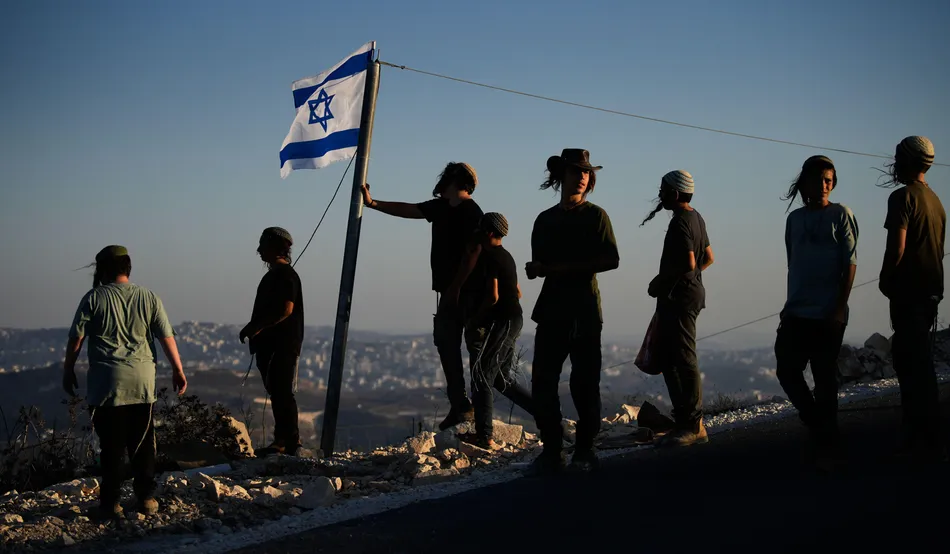
It is difficult to overstate the chaotic state Israel finds itself in as it heads to the polls. If Netanyahu wins, we can expect the fraught status quo to continue, at the very least. His government would most likely include those far-right parties who have played a leading role in pushing government policy to harmful extremes. We could expect to see: more violence and annexation by stealth in the West Bank; further lawlessness in, and neglect of, Palestinian communities in Israel; a continued Israeli army presence in an already annihilated Gaza; not to mention the ongoing wars with Hezbollah, Iran and the Houthis in Yemen, alongside the presence of IDF soldiers in Syria.
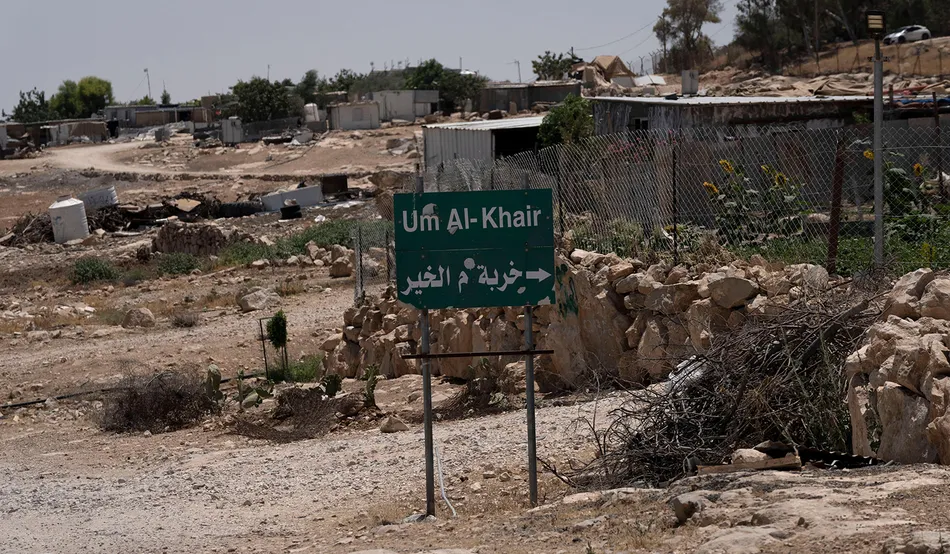
Overall, it’s likely that there would be a doubling down of the Spartan, insular politics that have so destabilised the region. Over the weekend, after Palestinian gunmen killed two soldiers near Hebron in the West Bank on Friday, the Israeli army demolished homes in the city, forcibly displacing hundreds of families. Also on Friday, Netanyahu told an interviewer that he was “working on” setting up a “bypass economy” in case Israel faces further international sanctions over its treatment of Palestinians, with cyrptocurrency and blockchain a possibility. In an open letter, more than 100 Israeli economists decried the idea.
But what happens if Netanyahu does lose? Parties of the far right would, thankfully, be out of government, as would a self-interested and damaging leader. But when it comes to Israel’s security doctrine, to the long-term prospects for a new relationship with the Palestinians, the Jewish parties that form the bulk of the opposition bloc are not all that different. Gadi Eisenkot, who leads opposition to Netanyahu with 22 seats to Likud’s 20, is a right-wing hawk who has expressed his opposition to a Palestinian state. Meanwhile, former prime minister Naftali Bennet, who co-leads another of the main rivals, Together (Beyachad), is a former settler leader; Avigdor Lieberman is a hard-liner who has proposed transferring Israel’s Palestinian citizens to a future Palestinian state.
Only the Democrats, led by Yair Golan, openly back a two-state solution and a peace process. Which means the question remains the same since I first asked it in July: would the opposition, if brought into power, meaningfully change the security doctrine that so endangers Israel and the wider region? Most likely, Israelis and Palestinians will still desperately need the support, and pressure, of the international community to end the violence—whoever triumphs this week.