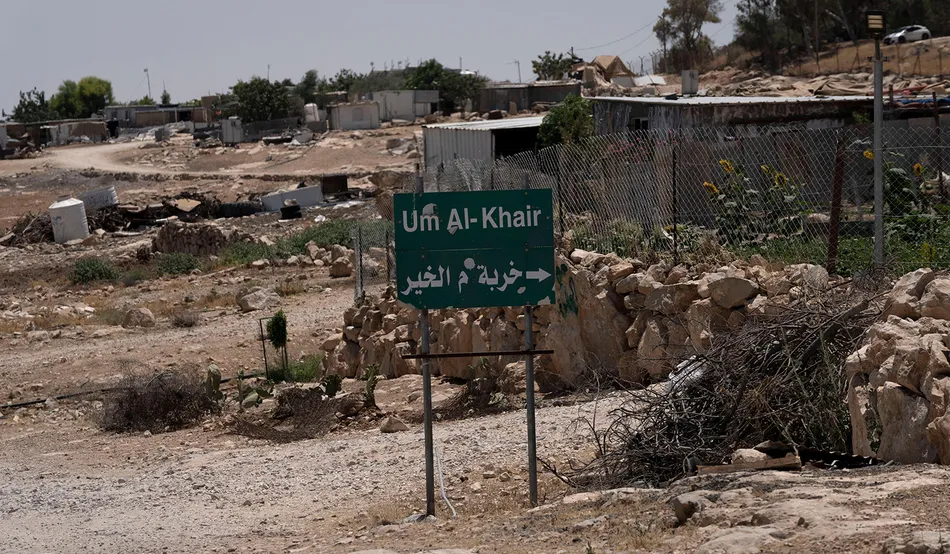
In late July 2026, Dan Turner received an anguished call from the Abu Jihad Bedouin community, a small Palestinian hamlet in the West Bank close to the ancient city of Jericho. Israeli Defense Forces (IDF) soldiers had corralled the men, women and children of the community into one hut while they searched shack after shack.
“I know everyone in this small community personally, and have developed close friendships with them,” says Turner, an Israeli pediatric gastroenterologist and vice-dean of the faculty of medicine in the Hebrew University of Jerusalem. For the past two years, he said, the community had endured daily harassment, terror and theft by armed Jewish settlers from a nearby illegal outpost, “shining bright lights into their windows at night, drones blasting music after dark, threats, and an ongoing intimidating presence.”
After listening to their distress calls, Turner contacted the army. A senior officer informed him that this was a “routine inspection”. During the “inspection”, soldiers discovered a single fingerless military glove, and arrested the owner of the hut. Blindfolded, slapped and humiliated in front of his children, he was taken away with his hands tied behind his back to the military base in Jericho. After several hours of questioning, he was released.
“It takes so little to arrest Palestinians and violate basic human rights,” says Turner, a founder of “Friends of Jahalin,” a group of volunteers who work to protect the Jahalin Bedouin communities of the West Bank. “I support security measures, and if there is intelligence or genuine suspicion, they absolutely must be acted upon.” The officer had told him that “these operations make us safer after 7th October.”
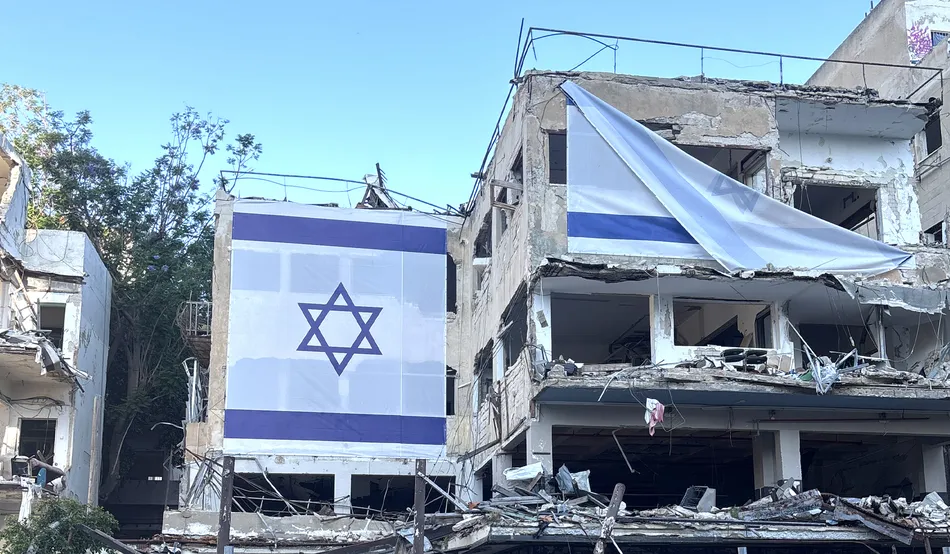
As the third anniversary of Hamas attacks of 7th October approaches, and 20 days out from an election, safety and security top the list of priorities for Israelis. Many will be attending solemn memorial ceremonies, holding a moment of silence, and demanding a state commission of inquiry into the massacre, in which 1,200 Israeli soldiers and civilians were killed. In the wake of the attacks, and having lived through three years of war on multiple fronts, Israel is a trauma-ridden society. Studies show “dramatic increases in PTSD, depression, and anxiety” among the Israeli population since that day.
Less of a priority for most Israelis, if the concern exists at all, is facing up to the death and devastation that Israel has inflicted on Palestinians in Gaza in the past three years, or indeed the record rates of settler violence in the West Bank. According to OCHA, the United Nations Office for the Coordination of Humanitarian Affairs, between January 2023 and August 2026 there were 6,199 settler attacks on Palestinians in the West Bank. Forty-nine Palestinian communities there have been fully displaced.
According to Gaza’s Ministry of Health, more than 74,000 Palestinians—most of them civilians—were killed during the war, including 1,145 people killed since a nominal ceasefire was implemented on 10th October 2025. About 61m teetering tonnes of rubble, concealing uncounted dead bodies and unexploded bombs, are spread across the Strip.
Meanwhile, the IDF still occupies at least 60 per cent of Gaza, where nearly one million people live in tents, and rats and other vermin run rampant. Sanitation services are dire, water delivery is minimal, and there are critical shortages of medical supplies including cancer drugs and dialysis materials, according to a 25th September report by the OCHA.
As a Jewish woman living in Israel, I make my way through life wondering why most of the people surrounding me not only fail to speak up about the atrocities that Israel has inflicted on Gaza, but seem utterly unable to perceive the extent of its desolation. This denial persists despite clear evidence, such as the new Google Maps images showing neighbourhoods reduced even further to ruins.
Polls conducted by the Israeli Democracy Institute reflect this. In August 2025, its surveys showed that a majority of Jewish respondents on the political right and in the political centre said “that they are not troubled by the reports of famine and suffering among the Palestinian population in Gaza.” (A majority on the left did say that they are “personally troubled by these reports.”)
In my perplexity, I sought out the rare Israelis who do speak up and act. Notable among them are members of Standing Together, the Jewish-Palestinian grassroots activist group, who stood in Tel Aviv’s Habima Square in the summer of 2025 holding photos of emaciated children in Gaza, the victims of Israel’s 11-week blockade on food and medical aid in the spring of last year.
Dan Turner organised the delivery of two truckloads of baby formula, thousands of cans, to Gaza, as well as the transfer of thiamine, vitamin B1, an essential medicine to prevent refeeding syndrome, in which serious complications, including brain damage, can follow when food is reintroduced too fast after malnutrition. Turner is now organising large shipments of donated “biologics,” advanced medications that target specific maladies, including Crohn’s disease and rheumatological conditions.
Not everyone has the wherewithal to organise truckloads of medicine to Gaza. Others sign petitions or protest in the streets. Ya’ara Peretz describes herself as a political-environmental activist fighting for climate justice. In the summer of 2025, she signed a petition launched by Israeli environmentalists calling on the government “to halt the war, secure an immediate hostage deal, and move out of this hellscape toward a diplomatic process.”
Peretz notes that the genocide in Gaza一a word she uses intentionally even though the petition did not一is as much an environmental catastrophe as a human one. “As environmental justice activists, we try to put an emphasis on the impact of this genocide on all living beings and all life itself in Gaza but also in this whole land,” she says.
One reason why Israeli environmentalists have been reluctant to speak out, Peretz says, is the fear of being branded a “leftist,” a term that in Israel is considered almost an insult. To this day, Peretz says, the wider Israeli environmental movement, “meaning the big organisations with the majority of resources”, has done nothing to protest the violence and destruction in Gaza. Moreover, she adds, “they have not come out against the settler violence and ethnic cleansing in the West Bank, which has clear environmental implications一settlers and military cut down and burn old olive trees, destroy Palestinian natural water wells, and kill livestock. They keep their heads down while the land burns.”
In Israel protesters may face violence from counter-demonstrators or arrest for denouncing war, as in April of this year when mounted police in Tel Aviv violently dispersed a crowd of 1,000 people protesting the US-Israel war on Iran. They can also face societal censure, itself often vicious. Recently, the two cdirectors of Naza, a documentary about Israeli war crimes in Gaza, faced death threats and the revocation of their citizenship.
Some Israeli activists insist that their role should not be overplayed. “It’s always somehow easier for Israelis to get exposure, for Jewish-Israelis to get accepted as someone who has a voice,” says Michal Sapir, a writer, translator and musician. She worries that focusing on Israeli activists diverts attention from the real issue, which is that Palestinians in Gaza are still enduring dire conditions as Israel intermittently bombs the Strip一and indeed, seems to have increased its airstrikes ahead of Israel’s election on 27th October.
In the summer of 2025, Sapir joined a small group of women who stood silently in different locations in Tel Aviv, holding empty pots to protest starvation as a war crime in Gaza. (At one vigil in Habima Square, one counterprotester leered at the women close-up, shrieking “you’re all over 80, you’re ugly, you’ll end up in the cemetery soon, enjoy”.)
Last year, Sapir and her fellow-musicians from the band Afor Gashum (“Rainy Grey”) produced an album titled Voices from Gaza, “inspired by texts written by residents of Gaza under Israel’s attack, 2023-2025.” As the album’s cover notes, “we felt a pressing need to echo the voices of the women, children and men who were suffering and getting killed in Gaza, voices almost completely unheard in the Israeli public discourse.”
“Among people like myself,” Sapir admits, “there’s a big sense of helplessness and powerlessness, and so you cling to whatever you can do,” such as standing in a vigil with an empty pot. You might not be able to stop the starvation, she says, “but it’s just a feeling that it’s so wrong that you have to show you that you don’t agree with it.”
But activism can be something brighter, too. This year, on the Jewish festival of Sukkot, in which Jews build festive booths outside in which to eat and sometimes sleep, Turner and fellow activists from the group Tag Meir organised a party with Palestinian friends in a “sukkat shalom”一“a sukkah of peace”一in the West Bank village of Khan Al-Ahmar, whose residents are facing expulsion.
At the celebration, children waved tinsel decorations as food was served, music played and people talked. “It was really wonderful, so touching and moving, and proof that we can do differently,” Turner says. “A bit of hope.”