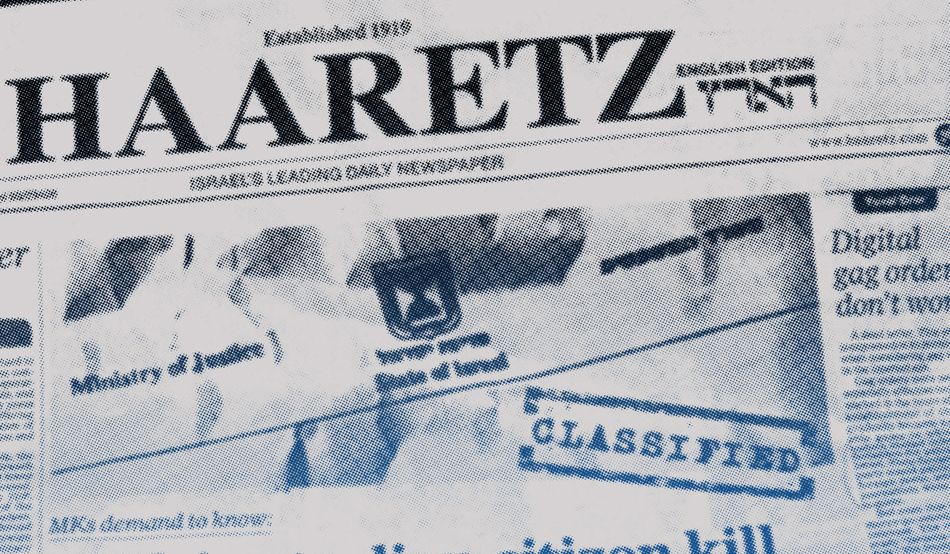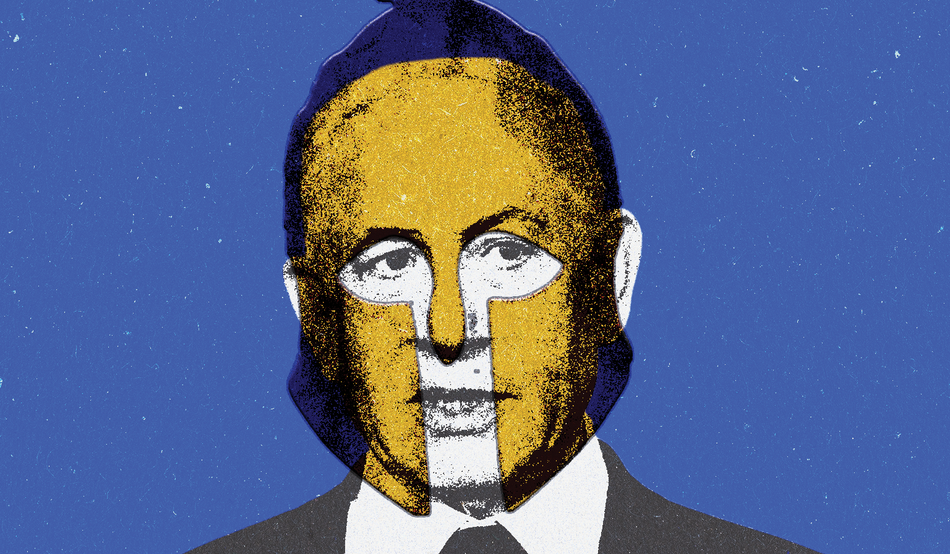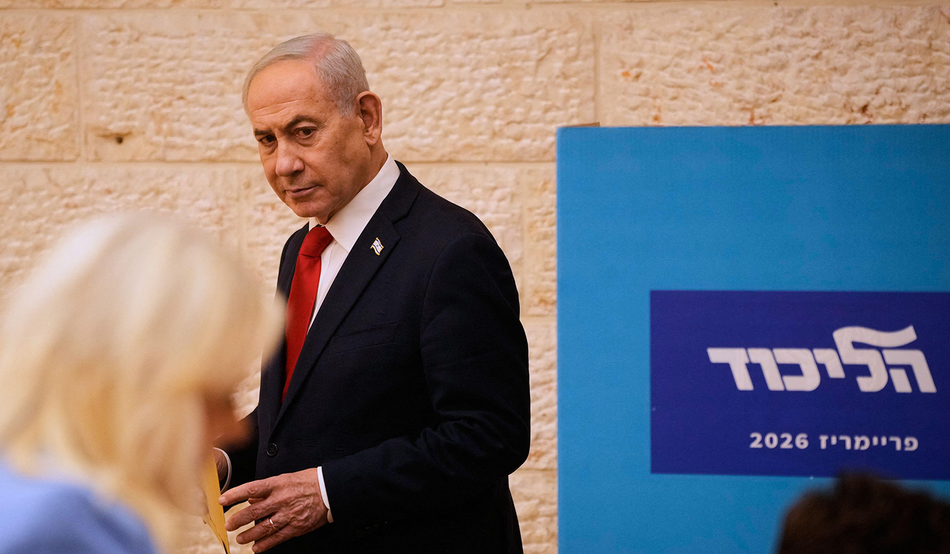
In an image from a 2022 gathering of Likud, Israel’s dominant right-wing party, the current defence minister, Israel Katz, sits with a gold medallion around his neck bearing an image of Benjamin Netanyahu’s face. An activist had placed it there as a declaration of loyalty. Katz, visibly uncomfortable, slipped the chain off and passed it down the table.
At the time, the image was mocked as kitsch. Four years later, after another term has laid bare Likud’s internal decay, it deserves another reading. Katz had been ceremonially decorated before the party with an insignia of personal fealty to Netanyahu. The scene did not quite belong to party politics. It belonged to the politics of a household.
The Netanyahu years—he has served as prime minister almost continuously since 2009, longer than anyone else in Israel’s history—have been described as an era of democratic decay, cronyism, institutional vandalism, state capture, personalist rule and corruption; as the refusal of accountability for 7th October, the worst security catastrophe in Israel’s history; and as the conversion of war without end into an instrument of political survival. All are true as far as they go. None quite names the structure beneath them. Likud has become what the Hungarian sociologist Bálint Magyar calls an “adopted political family”, organised around loyalty to a patriarch.
Likud has not abolished the democratic structures within the party, but it has subordinated them. The primaries on 17th August showed how this works: Members voted for candidates standing for inclusion on the party’s list in the upcoming parliamentary elections, but Netanyahu had already drawn the boundaries of the contest, reserving places for his chosen loyalists. Katz did not have to submit his place to the members and was handed a slot near the top. American readers will recognise something of the same transformation in Donald Trump’s Republican party, where institutional forms survive even as loyalty to the leader increasingly determines who may flourish within them.
Likud, a party rooted in the liberal tradition of right-wing Zionism, once contained figures with standing independent of Netanyahu such as Benny Begin, son of Menachem Begin—Likud’s founding leader and the prime minister who made peace with Egypt. One by one, they were pushed out or left of their own accord.
Netanyahu produces not merely loyalists but adherents. That is his gift. Men he has humiliated return to his orbit. The pull is not quite ideology or ambition, but the authority of the patriarch.
Nir Hefetz, Netanyahu’s former media adviser, described the Netanyahu family in testimony as acting “as a single person”. Yair Netanyahu, the prime minister’s son, sits at the centre of an online ecosystem targeting perceived enemies. The Qatargate scandal, in which senior aides were investigated or arrested over alleged paid work connected to Qatar while it mediated hostage talks with Hamas, added another layer. Whatever the investigations ultimately establish, the affair showed how porous the line between public office and private service had become.
Once the household becomes the organising form of power, institutions that constrain it begin to look illegitimate. The government’s judicial overhaul, denounced by opponents as an illiberal coup; Netanyahu’s attempt to fire the Shin Bet security agency chief while his agency was investigating Qatargate suspects; and the cabinet’s attempt to dismiss Israel’s attorney general all fit the pattern. To the ruling circle, law appears less a constraint than terrain: something to be captured, bent, postponed or delegitimised.
The 7th October attack gives the household form its moral meaning. Senior military and intelligence officials resigned, gave notice or accepted responsibility for the catastrophe. Netanyahu has not. He has refused a state commission of inquiry. A normal democratic government produces accountability not because its leaders are virtuous, but because the structure compels it. No institution has yet forced the reckoning Netanyahu has so far refused.
The mafia analogy is most useful where it breaks down. Mafia power depends on omertà, or silence. But Israel has one of the loudest democratic cultures on earth, with its incessant political disputes. Netanyahu’s system cannot rely on silence as its principal means of protection, so instead its answer is saturation. The facts need not disappear; they need only lose their power to settle an argument.
The household has its machine: Mekhonat ha-ra’al, or “the poison machine”, is the term widely used in Israel for the media and social-media ecosystem that coalesced around Netanyahu during the criminal investigations against him and expanded through the judicial overhaul and the war. It is made up of pseudonymous accounts, activists, partisan commentators, WhatsApp groups, aligned media and suspected bot networks all working together to overwhelm whatever voice the household needs to neutralise.
Targeted saturation works differently to conventional censorship or propaganda, though it can serve both purposes. The machine need not prevent the Supreme Court from ruling; it need only ensure that a ruling enters a public sphere prepared to dismiss it.
The former attorney general, Avichai Mandelblit, was not silenced; he indicted Netanyahu in 2019. But the campaign against him, which included demonstrations outside his home, threats against him and his family, and incitement online, turned the prosecutor into the accused and advertised the cost of institutional defiance. Some hostage families encountered similar when their demands for a hostage release deal became politically inconvenient.
So courts in Israel do still sit. Prosecutors still bring cases. What the household contests is the public meaning of what they do. The institutions still stand but the noise makes their findings and judgments easier to survive for those members of the household accused of transgressions.
Italian history offers a warning. Mani Pulite, or “Clean Hands”, the anti-corruption investigations of the early 1990s, shattered an old party system without eliminating the networks and practices of personalised power beneath it. Silvio Berlusconi gave those networks and practices a new vehicle. Netanyahu’s system may prove less transferable because it depends on his particular alchemy: American polish, Israeli grievance politics, the mythology of security competence, media cunning, historical fatalism, sheer endurance and shamelessness.
Netanyahu has cultivated in his political base the conviction that he is the nation and the nation is him, and this is more durable than loyalty. A successor can inherit a party or a base, but they cannot inherit that. For adherents, Netanyahu’s survival is Israel’s survival, his enemies the enemies of the Jewish state.
Here the Italian precedent may cease to guide us because Netanyahu’s fall may leave a vacuum. Without him, Likud will be left with no independent talent, with the right-wing base habituated to a leader no successor can reproduce, and a media apparatus built around one man. The system that corrupted the right also disciplined it. Without Netanyahu, the right may fragment and radicalise before it relearns how to govern democratically.
Netanyahu’s system thrives on saturation. The question that follows him is whether a political culture trained for years to mistake saturation for politics can recover the ability to hear what matters through the noise.