Last September, Benjamin Netanyahu gave what became known as his “Sparta speech”. Nearly two years after the start of the Gaza war, Israel was increasingly isolated, the prime minister told a conference in Jerusalem. The country would have to become a “super-Sparta”, with a self-sufficient, “autarkic” economy, where the domestic arms industry could produce what Israel needs.
The next day, after a backlash that included Israeli arms companies clarifying their reliance on global markets, Netanyahu told the press that his Sparta comment had been misunderstood, that Israel’s economy was as strong as ever.
But the idea of Israel as Sparta, the highly militarised city-state of ancient Greece, does not seem that far off the mark today, with the Netanyahu government launching a war against Iran alongside the United States only eight months after the operation in June 2025 which, according to the White House, had “obliterated” Iran’s nuclear programme.
The jingoism of many Israelis last June is evident again this time around. On Saturday, opposition leader Yair Lapid, a centrist who often votes with the government on security and foreign affairs, was quick to voice his approval in a series of interviews with international media. Yair Golan, leader of the left-wing Democrats party and a former army deputy chief-of-staff, also lent his support (to the army, if not the government). On Israel’s main news channels, hosts and panellists made frequent use of the epithet “historic” in discussing developments, even as their countrymen were forced into another indefinite period of running in and out of bomb shelters or safe rooms (if they are lucky enough to live near one). Needless to say, Gaza and the rampaging settler violence against Palestinians in the West Bank were off the news agenda.
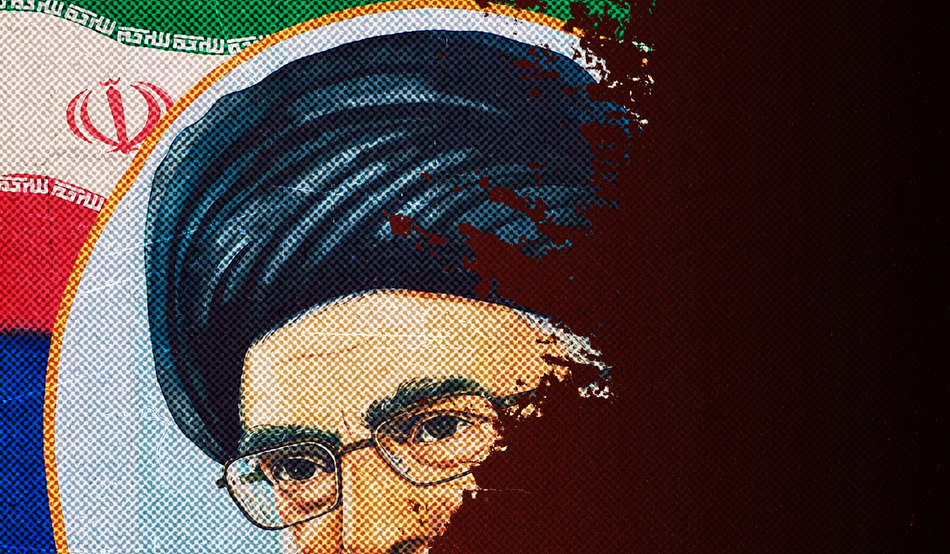
Channel 14, Israel’s Fox News equivalent, a place of right-wing-religious politics and blind loyalty to Netanyahu, was, unsurprisingly, the happiest of the TV studios. On Saturday, one panellist described the war as greater than Moses parting the Red Sea. This was a historic event of such weight that people would talk about it 1,000 years from now. Early the next morning, Iran would confirm that, among the Iranian leaders targeted by Israel, the Supreme Leader Ali Khamenei had been killed. Also killed that day: more than 100 children at a girls’ school in Minab, located near an Iranian Revolutionary Guards Corps base (Israel has said it isn’t aware of operations in that part of Iran; the US army is looking into the report).
As the war continued, Iran retaliated not just against Israel, not merely through performative strikes on US military bases, but with attacks on countries around the Gulf (and later even Cyprus, Nato member Turkey and Azerbaijan). Major questions remained. A former Mossad chief, Danny Yatom, asked on Israel’s Channel 11 on Monday whether anyone recalled what Netanyahu said at the end of the 12-day war last June? Namely, that the “existential threat” from Iran’s nuclear and ballistic missiles programmes had been removed. “What changed?” asked Yatom. “We are back facing the same threat.”
Indeed, last June, nuclear experts were insistent that there was no military solution to the nuclear threat from Iran. Institutional knowledge decades in the making would not be so easy to obliterate, no matter how many nuclear scientists Israel killed or how many bunker buster bombs America dropped on underground facilities.
At least back then, the US involvement in the war, which Israel launched, had a very clear aim: to bomb certain underground nuclear sites. This time, US goals are less apparent. Israel’s goals, on the other hand, are clearer: regime change, if it’s possible, and if not then at the very least the destabilisation and fragmentation of Iran. There has been no indication yet that Israel has any intelligence regarding an Iranian figure who could lead the opposition against the regime from within the country, Sima Shine, an Israeli analyst formerly of the Mossad and National Security Council, said at a press briefing on Thursday. As one source who has long worked in the region, and is in regular contact with government officials put it to me, western governments are much more worried now than they were last year. Back then Germany’s chancellor, Friedrich Merz, said of the war: “This is dirty work that Israel is doing for all of us.”
On the day that this year’s Iran war began, the historian Timothy Snyder, suggested a framework for understanding why the US had started it: “Foreign war as a mechanism to destroy democracy at home; and a foreign war as an element of personal corruption by the president of the United States.”
What happens if we apply this thinking to Israel? A cynic might ask whether the prospect of Israeli elections, which will happen no later than the end of October this year (and will now likely happen as soon as June) have any bearing on Netanyahu’s war. True, Iran’s government has spent decades spewing anti-Israel invective while funding and arming terrorist groups such as Hamas, Hezbollah and the Houthis in Yemen. Netanyahu has made it his career’s mission to convince the west that Iran’s government is a dangerous, destabilising force. The prime minister has long dreamed of a war of regime change in Iran. He seems to believe, with some fervour, that the country needs him to vanquish this enemy.
Yet it is also true that losing an election would bring Netanyahu closer to a reckoning over the military, intelligence and policy failures of his government that led to the 7th October 2023 Hamas attack on southern Israel, and everything that has happened since. Netanyahu is still on trial for criminal charges of fraud, bribery and breach of trust, too. (On 5th March, Donald Trump urged President Isaac Herzog “to give Netanyahu a pardon today”. Trump told Israel’s Channel 12 news that he “doesn’t want for there to be anything that worries Bibi apart from the war with Iran.”)
Given the general state of the country, exhausted from war and divided politically, cobbling together a coalition under Israel’s proportional representation system will be difficult, though not impossible. Success in the war against Iran, which is widely supported by the Israeli public, would certainly help. According to an August 2025 survey by aChord, an Israeli non-profit organisation, nearly half of right-wing voters think Netanyahu should resign, and more than half of the public (53 per cent) believe the war in Gaza serves political interests more than security ones. Another survey from last year found that 78 per cent of Israelis “felt exhausted and wished to return to normal life”.
In the most recent polling before the Iran war began, Netanyahu’s Likud was the single party forecast to win the greatest number of seats, but his bloc of right-wing and religious parties was polling between 49 and 53 seats, while the anti-Netanyahu bloc, currently widely seen as being led by Naftali Bennett, a right-winger and former settler leader, is polling between 56 and 60 seats, according to most polling. There are two surveys in which the Netanyahu bloc has 64 and 65 seats, and the Bennett bloc has 42. Sixty-one seats are needed for a coalition, and much rests on whether Bennett and other Israeli Jewish parties are willing to work together with Arab-majority parties. The last time the opposition managed to get Netanyahu out of power was the government formed by Bennett in 2021, with Islamist party Ra’am joining a governing coalition (a historic first in Israeli politics). If the Knesset does not pass a budget by a 1st April deadline, elections will be held on 30th June.
It is too soon to know whether Netanyahu will benefit from the war. The pollster Dahlia Scheindlin tells me that, given that last June’s war “did not significantly move his poll numbers”, there is reason to think this one won’t either. Even though a majority of Israeli Jews support the war and trust Netanyahu to run it (there is no such majority among Palestinian citizens of Israel, who tend not to support the war), polls still show “very low levels of trust for the government and for Netanyahu in general, which have barely seen just a tiny little lift of a few percentage points—the opposite of what we would normally see in a typical wartime rallying effect”. Of course, much could change, depending on how long the war lasts, what its outcome is and, crucially, when elections are held.
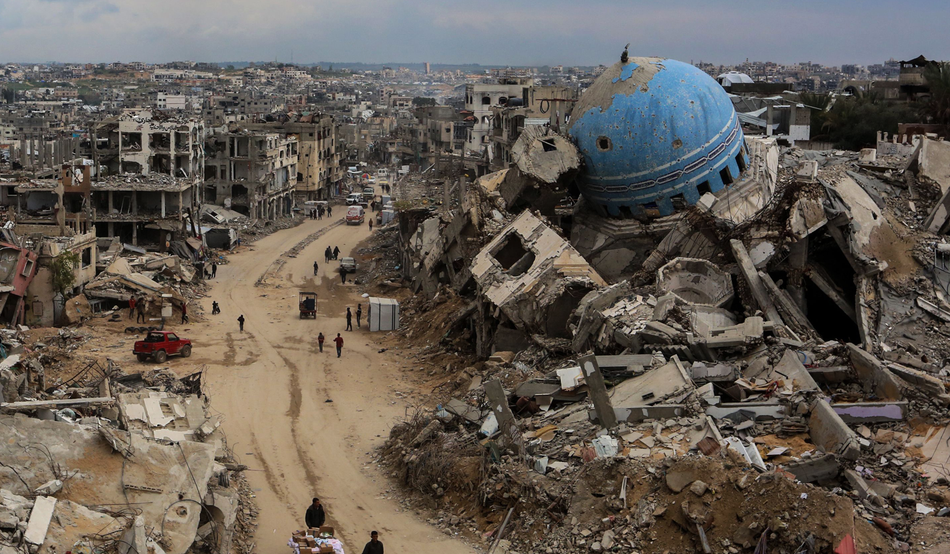
Israel has been in a defensive-offensive crouch since 7th October, with no sense of long-term stability, safety or peace beyond operations launched ostensibly to protect itself. When the latest operation—named “Epic Fury” by the Americans, “Lion’s Roar” by the Israelis—launched last Saturday, Israeli troops were still in Gaza amid a so-called second ceasefire, under which Hamas had yet to disarm. And two days later, after Hezbollah joined the fray at Tehran’s behest, Israel also launched what would later become a ground incursion against the Shia militia in Lebanon, with dozens killed in strikes on the first day of that operation. Since then, the death toll in Iran has been in the hundreds, 120 have reportedly been killed in Lebanon, and 11 people have died in Israel in strikes right across the country, including three children from one family in Beit Shemesh, a town near Jerusalem.
Mainstream Israel seems doomed by a certain groupthink, in which force is an answer to the country’s problems.
In times past, Netanyahu was seen as relatively war-averse. Since 7th October, however, his government has launched wars against Hamas and the Palestinians in Gaza, military operations ostensibly against terrorism in the West Bank, against Hezbollah in Lebanon, and against Iran, as well as striking the Houthis in Yemen and deploying troops in southern Syria. Netanyahu’s is a Spartan politics: he leads a nation in perpetual war; and war is the political campaign that money can’t buy.
Mainstream Israel, meanwhile, seems doomed by a certain groupthink, in which force is an answer to the country’s problems. For many, the current fighting is a “war of no choice”, the sticky matter of how this ends or what happens next is for the birds. If there is no regime change, a serious possibility is civil war in Iran, if the Kurds or the Balochis join in a fight against Iran’s government. Such a fight could last years, and would be a disaster for Iranians, but it wouldn’t be a worst-case scenario for Israel, Sarit Zehavi, formerly of the IDF intelligence corps and now an analyst, said in a press briefing on Thursday. The worst-case scenario would be “if we hadn’t attacked”.
On Friday, the seventh day of the war, while Iranian strikes around the region continued and as US secretary of state Pete Hegseth said American strikes would “surge dramatically”, the Metropolitan Police arrested four men suspected of spying for the regime in Tehran on the Jewish community. On Tuesday, Qatar said it had arrested members of two Islamic Revolutionary Guard Corps sleeper cells.
The question for Israelis is what has so much violence been for? If they thought that the infamous pager operation had decapitated Hezbollah in 2024, what of the fact that now, though weakened, Hezbollah is firing rockets over Israel’s northern border? What of the fact that, though the US and Israel said eight months ago that Iran no longer posed a threat, Tehran has now ensured that the war is region-wide? What does force buy you other than a bit of time, before existential threats return?
Netanyahu, a wily operator who, it seems, will stoop to the depths for his political (and personal) survival, is not the inevitable victor of Israeli politics. A study by the Alliance for Middle East Peace, a coalition of Israeli and Palestinian NGOs, found that a significant portion of Israel’s population is open to a regional normalisation agreement that includes a Palestinian state, with 42 per cent saying it is either “essential” or “desirable”. If more of a vision for an actual future was reflected by a politician during the election, maybe it would be enough to ensure Netanyahu can’t form another coalition. Is there any leader brave enough to puncture the groupthink? This is the question that must be answered if Israel is to escape from being a modern-day Sparta.