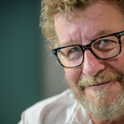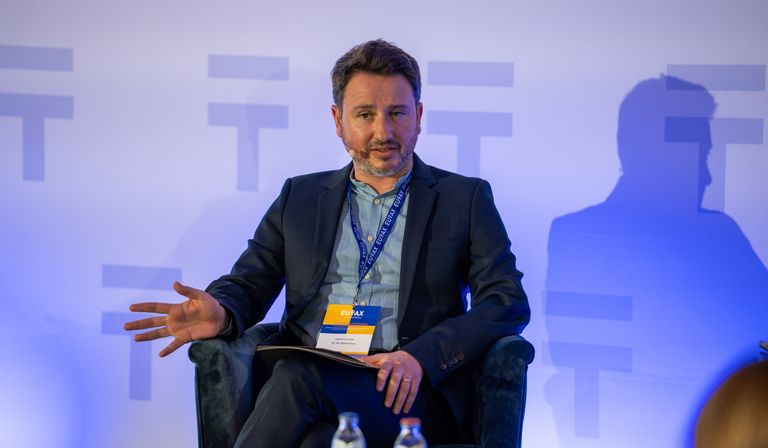
Gabriel Zucman has been dubbed that rarest of things: a “rock-star economist”. Having trained under the last Frenchman to receive this label—Thomas Piketty—the 39-year-old has become a global expert on the taxation of wealth.
A proposal nicknamed the “Zucman tax” was fiercely debated in France last autumn as the divided legislature tried to reduce its national debt. The measure sought to levy a minimum tax of 2 per cent each year on the wealth of centi-millionaires—people with at least €100m.
But France’s richest man, Bernard Arnault, the owner of brands including Louis Vuitton and Dior, was apoplectic. In the Sunday Times last September, Arnault called Zucman a “far-left activist” with “pseudo-academic competence” and a desire to “destroy the French economy”.
Zucman, speaking over video call from Paris, told me in November that he was shocked by Arnault’s comments. “It’s something that Donald Trump could say,” he quips.
With France set for another presidential election in 2027, Zucman is worried that inequality is helping the populist-right National Rally (RN) lead the polls. He has commented in the past that right-wing leader Jean-Marie Le Pen reaching the final round of the 2002 presidential race was the “traumatic political event of my youth”. It is his daughter, Marine, who now leads RN’s parliamentary party.
The son of two doctors, Zucman grew up comfortably in Paris. But concerns about inequality were strengthened when he briefly worked in France’s finance industry during the global financial crisis, and later spent time in the United States as a professor at the University of California, Berkeley. “The enormous rise of inequality radicalised me,” he said. “It’s very extreme that you have the wealthiest people on the planet, and next door, tens of thousands of homeless people in the Bay Area.”
Zucman’s work—and his contributions to public debate—have proved controversial in the US too. In 2019, the faculty at Harvard’s Kennedy School of government voted to offer him a tenured position. But the offer was vetoed by the university’s president and provost over criticisms that Zucman “could not support the arguments he was making in the political arena”, following public denunciations from a former Harvard president. Zucman hit back, saying the decision “should not discourage young scholars… to publicly defend new ideas.”
“If you leave the super-rich outside of the tax system, at some point, the concentration of power ends up clashing with our democratic ideals,” he told me. Multibillionaires Jeff Bezos, Elon Musk and George Soros have been criticised for paying minimal tax, or, in past years, avoiding it entirely.
As to the objection that the wealthy would undermine his proposal by moving abroad, he argues this can be prevented. He points out that American citizens must pay US income tax regardless of which country they live in, and also notes that there are countries where wealthy émigrés must pay an “exit tax”. Labour chancellor Rachel Reeves reportedly considered such a tax on UK-based assets for wealthy Brits who leave the country, but ultimately dropped the idea before the November budget.
French lawmakers rejected a motion on the “Zucman tax” in October, but the French left is still pushing to raise taxes on the wealthy. When asked if he would advocate a similar bill in the United Kingdom, Zucman suggested “not only is it replicable, but it’s necessary”. The revenue it would raise, he argued, would be “quantitatively significant, and [make] it easier to ask broader segments of the population to pay a bit more tax too.”
In contrast, he isn’t holding out hope that the Trump administration will act on wealth inequality—indeed, the US has actively frustrated initiatives Zucman has worked on at the G20. But plans in his old home California are “even more important”, he suggested: a ballot initiative on a 5 per cent, one-off tax on the state’s billionaires has been proposed.
“California was at the vanguard of the anti-tax movement 50 years ago,” he said. “Today, it’s possible that California is again going to be at the vanguard, but in the other direction.”