This week’s “Brexit reset” shouldn’t be oversold. It largely—and sadly—reaffirms Boris Johnson’s hard Brexit treaty of 2020, delaying indefinitely any serious political initiative to reverse arguably the worst decision of the British state since Nazi appeasement in the 1930s.
Pay attention to the policy, not the hype. There are three key elements to the so-called reset. All are welcome but none makes enough of a difference to the overall Brexit regime.
The first element—a sanitary and phytosanitary (SPS) veterinary agreement—eliminates most post-Brexit red tape in one sector: British agricultural and shellfish exports to the European Union. It is astonishing that Johnson did not agree this as part of his original deal, since it was an obvious imperative, whatever your Brexit theology, to avoid devastating the UK’s farm and fish exports to the continent.
This week’s agreement involves the UK accepting the EU’s SPS standards for produce qualifying for export to the EU. This has got Nigel Farage going, but not even Farage is out there arguing that we should be slashing UK animal and food health and safety standards. And anyway, how could we expect to do anything other than abide by EU health standards governing goods exported to the continent? The key pragmatic point is that the Johnson government, with all its Brexit sovereignty, decided not to impose new border controls on most agricultural imports into the UK from the EU, because of the impact this would have had on British supermarkets, particularly fresh fruit and veg.
The SPS agreement removes some extremely damaging Brexit obstacles to free trade. However by my calculations it covers just 3 to 4 per cent of Britain’s total exports of goods and services to the EU—and, as I say, an even smaller fraction of imports. So if it’s a cunning plan to reenter the EU single market and customs union, it hasn’t got us very far. It constitutes a pragmatic exception to the post-Brexit export regime for one small if important industrial sector. It is not a change affecting British trade as a whole.
The second element of this week’s reset is a youth mobility scheme, expected to allow between 75,000 and 80,000 young people a year from the EU to live, work and study in the UK for two or three years. A reciprocal number of young Brits will be able to access the EU.
Again, this is a good, pragmatic initiative of limited overall impact. The UK has similar reciprocal youth mobility schemes with 13 non-EU countries, including India, Australia, Canada and Japan, offering some 76,100 UK visas between them. If it’s a cunning plan to restore EU freedom of movement, which would allow any EU citizen to move to the UK for any duration and vice versa, then, again, it hasn’t got us very far. To put these numbers in perspective, there are currently just under 700,000 international students in the UK, plus many hundreds of thousands more foreigners under 30 working with visas.
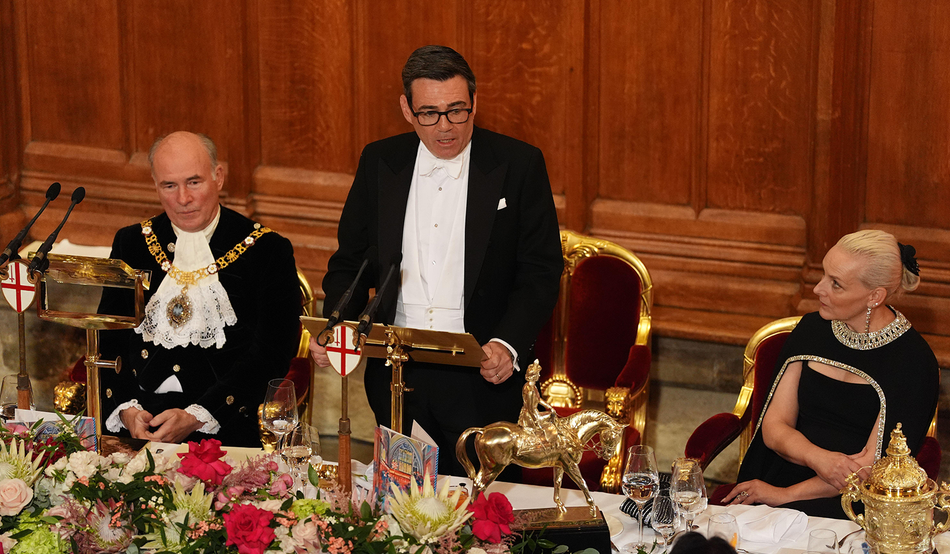
The third element of this week’s reset was potentially the most significant: namely, statements about a closer future relationship between the UK and the EU. Addressing the Lord Mayor’s Banquet on Monday, Andy Burnham said he would start new discussions about options for “our long-term relationship” following a UK-EU summit this week. “The Brexit we were given has not worked. We have lost more than we have gained,” he said, comparing the Brexit deal to the “emperor’s new clothes”.
For a short period after Burnham entered Number 10, it looked as if he might start a campaign to rejoin the single market or even the full EU. He more than hinted as much himself, stating in his party conference speech in September that he may even “go all the way” to rejoin. There appeared the possibility, for those like me thinking (or at least, dreaming) about an ambitious strategy for national renewal, that a bold rejoin pledge might form the basis of a Labour manifesto for an early election. That would have capitalised on the substantial Burnham bounce since he took over as prime minister in July.
I suspect Burnham himself may have been one of the dreamers. And had he made this bold move, he might have received a warm response from the continent. The EU and its largest member states are all currently led by pragmatic pro-British politicians who, despite Brexit, have spent four years working closely and productively with the UK on the Ukraine crisis.
But no, in the cold light of mid-November, none of this is happening. Not the rejoin pledge, nor the early election, nor a bold political project with European leaders (and without something big like rejoining the EU it would be hard to justify an early election). Many of Burnham’s closest allies—including his chancellor, John Healey, and his deputy leader, Lucy Powell—are fiercely against any serious move towards rejoin, not wanting a fight with the Tories and Farage on Europe. They have been saying so increasingly loudly, not least in a Cabinet discussion on Europe last week, and their caution has prevailed. The Number 10 briefing for this week’s summit is accordingly cast in terms of an exploration of “options” for closer ties.
How these options are going to crystallise into a policy isn’t clear. My best assessment is that Burnham hopes to have something positive to include in a manifesto for an election in 2029, but unless he can change or bounce his Cabinet, it will be well short of rejoin even then.
Who knows where British politics, or European politics, or the EU, will be in three years’ time. But unless the gods are kind, I suspect we may look back on 2026 as a tragically missed opportunity.