The United States is so powerful that it can persist with disastrous foreign policies long after they have failed. Think Vietnam, Afghanistan and Iraq. The question now is whether Donald Trump, following his drubbing in the midterms, can be persuaded by the rest of the west to reverse course on his three abjectly failing policies—Iran, Ukraine and tariffs—before they do significant further economic and strategic damage. Trump’s failure on these three fronts is obvious, even to most of his acolytes.
Following last week’s midterm results, the temptation for Andy Burnham and fellow mid-ranking western leaders is to heave a sigh of relief and disengage, hoping that the worst is over. This would be a dangerous mistake. The worst may be yet to come unless US foreign policy changes well before the 2028 presidential election.
The US-Israeli attempt at regime change in Iran has failed. The mass bombings instead radicalised the Islamic regime, which now holds western oil hostage in the Strait of Hormuz. Trump keeps saying he wants a settlement, and has just said it yet again. However, for as long as he refuses to firmly rule out further attacks, and so long as he continues to demand total Iranian capitulation, the stand-off will continue. This stalemate could easily persist for another two years.
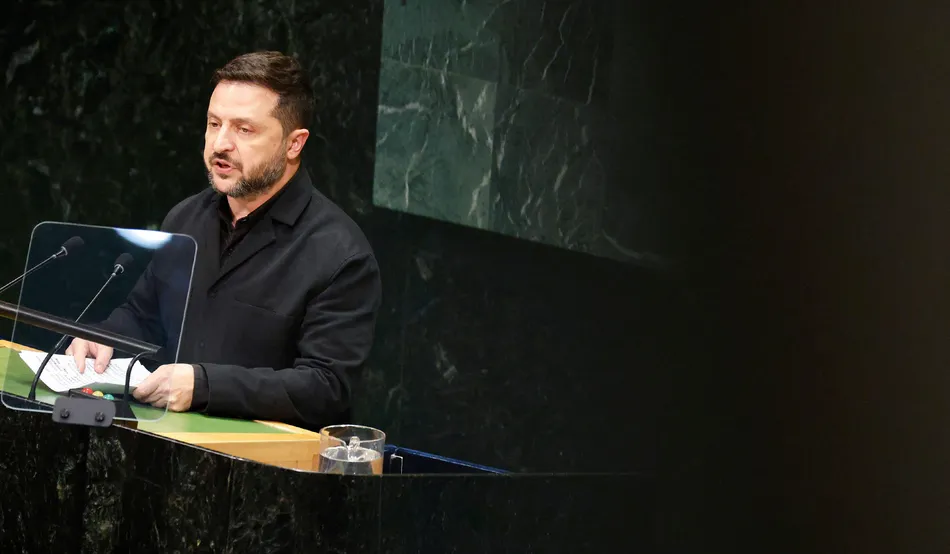
The US appeasement of Vladimir Putin could similarly continue for the rest of Trump’s term. Even in the days since last week’s election, the president’s son-in-law Jared Kushner—part envoy, part business manager—has been floating new “peace” proposals in which Volodymyr Zelensky would surrender territory to Putin in return for weak security assurances. Just because Ukraine has survived two years of such appeasement doesn’t mean it will survive another two, particularly if Marine Le Pen, who has pledged to cut aid to Ukraine, becomes president of France next summer.
Another two years of high, arbitrary and constantly changing US tariffs on international trade would be equally dangerous, particularly for Canada and Europe in the face of intense industrial rivalry with China. If such instability goes hand-in-hand with exclusion from US frontier AI products, the consequences could be worse still.
Europe’s vital interest in all these areas is that US policy should change imminently, not drift dangerously. That means a settlement with Iran which fully reopens the Strait, a big increase in support for Ukraine and sanctions on Russia, and a reduction in Trump’s protectionism. A large part of Washington, including parts of Trump’s own administration, basically agree. So what can the UK do to help bring it about?
Burnham, Emmanuel Macron, Friedrich Merz, Giorgia Meloni, Mark Carney—and of course Zelensky—should all be in Washington in the coming weeks making the case for change. Direct engagement with Trump and his entourage should be as intense as possible. So, too, with the new leaders of the House and the Senate, and on CNN and Fox News. They should be going especially hard on urging support for Ukraine and continued sanctions on Putin, even if this is greeted with explosions on Truth Social.
At the same time as engaging with the US, we must also open up direct European negotiations with Iran and its neighbours to reopen the Strait of Hormuz, including security and financial arrangements. It is also time for a serious increase in Europe’s military and financial aid for Ukraine, by deploying the billions of pounds of frozen Russian financial assets which have been in limbo since 2022. There has been endless debate in London and Brussels about doing this, but decisive action is now needed as a declaration to Washington and Moscow, as well as in support for Kyiv.
On trade and technology, Europe needs urgently to gain more leverage in the accelerating AI revolution, and not gamble on a naive faith in continued US market access and an enfeebled Trump. I can’t see how this happens unless a large proportion of the data centres powering AI are located within Europe. This could be the biggest policy challenge of them all, and it needs action now.
Not in two years’ time, when we discover that arbitrary US protectionism wasn’t limited to Trump alone.