Nearly four years ago, there was a period of extraordinary hope in Ukraine. A counteroffensive launched in the autumn of 2022 took Russian forces completely by surprise. The Ukrainian army sped east, liberating more than 12,000 square kilometres and hundreds of towns and villages. The world was transfixed.
Simultaneously, a second offensive was succeeding in the south, and by November the city of Kherson on the Black Sea—the only regional capital Russia had managed to capture during the fullscale invasion—was freed. The atmosphere on that day was electric all over Ukraine. We could really do this, people were thinking. Somehow, against all the odds, we can push them out.
After 2022, that sense of giddy hope never came back. The subsequent counteroffensive of 2023 failed, in part because Ukraine lacked the necessary military aid from its allies. Since then, Russia has inched forwards, making incremental gains in the east, though at enormous cost.
But early this year, that trend slowed—and even started to reverse. In March and April, Moscow lost control of around 120 square kilometres, according to data from the Institute for the Study of War thinktank. Ukrainians have long stopped believing in miracles or saviours, and giddy hope is a thing of the distant past. Nobody throws the word “victory” around like they used to. But successes built on new military technologies, as well as geopolitical shifts, have given Kyiv reason to be (cautiously) hopeful that the balance could be moving in favour of Ukraine, at long last.
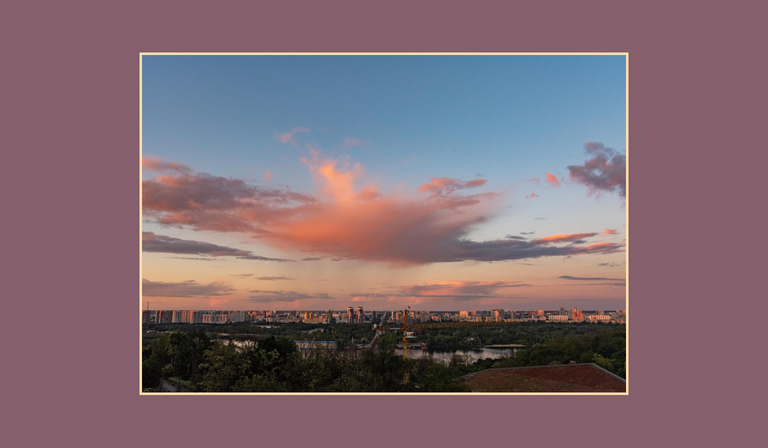
In the capital recently, on a sunny weekend, there was a sense of renewed confidence. At a huge book festival held in Kyiv’s 18th-century arsenal building, Ukraine’s flourishing literary scene was on full display, with nearly 30,000 visitors and a programme of talks only occasionally interrupted by air-raid sirens. There, against a backdrop of fairy lights and evening bands, I talked to a young drone operator from the elite K-2 brigade, who told me that Russia’s stumbling on the battlefield has much to do with Ukraine’s superior drone technology. Vlad, 23, had volunteered to serve early—the draft age is 25—and he spoke with huge enthusiasm about his work. He admitted to “some cautious optimism”, partly down to Ukraine now being able to launch drone strikes on sites up to 200km away, wiping out Russian air defences and supply lines in the rear. “It’s created this environment where, for Russia, it’s harder and harder for them to put logistics on the frontline and, because of that, it’s harder to advance,” he said.
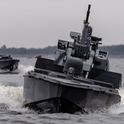
Of course, Ukrainians face a drone-saturated battlefield too—the “kill zone”, a grey area where pilots use first-person-view drones to hunt anything that moves, now stretches up to 30km either side of the frontline. Military resupplies and evacuations are extremely difficult. But, Vlad said, Ukraine has not only excelled in aerial drone development. “We are far superior right now in adaptation of ground drones—small vehicles to deliver supplies. So we’re not as reliant on trucks.”
I’d seen this for myself a few days earlier, in a Kharkiv workshop where mechanics were tinkering with massive, wheeled robots: heavy flatbed vehicles that can trundle over rough terrain, dodging the Russian surveillance drones to bring supplies to infantry and artillery positions, and also evacuate the wounded. The brigade had even pulled off a robot-only assault in February, mounting rocket-propelled grenades to the platforms to clear a Russian position. It’s incredibly difficult to do, but such operations are immensely effective: “Russian calls for mobilisation won’t do much… whether you send 10 suicide people or 50, they will all be killed by the drones,” said Vlad. Ukraine is acquiring “small advantages in different fields, logistics, drones, tactical supremacy… we kind of flatten the field,” he said.
As festival crowds milled around, literary scholar Tetyana Ogarkova told me that Ukraine’s ability to produce “cheaper means to be dominant on the battlefield”—drones, interceptors, new cheaper missiles—is turning conventional notions of war and great powers upside down.Gulf states are lining up to buy Ukrainian drone tech and expertise, with the country now a world leader in this type of asymmetric warfare, which allows the “weak to resist” and exposes the fragility of the big powers. “We’ve all seen that Trump has no cards, even with Iran… The world is changing,” Ogarkova said.
In a panel discussion earlier that day, she described a shift towards alliances “where everyone is equal and small”, rather than the big blocs of the Cold War era. Her husband, philosopher and editor Volodymyr Yermolenko, said Ukraine had long been fixated on joining the EU, but now, with the “Euro-Atlantic camp collapsing” and security guarantees carrying ever less meaning, Ukrainian diplomacy was building new alliances around the world. “It’s not about big camps, American versus Russia,” he told me later. “It’s about human capacity, human agency. And Ukrainians are showing this agency.”
Mykola Bielieskov shared this guarded optimism. A senior analyst at the NGO Come Back Alive, he also works for a thinktank attached to President Zelensky’s office. I caught him after his panel event, in the echoing bricklined vaults of the arsenal. “People see it from extremes, either too negative or too positive,” he said of the international commentary. “We can’t talk about ‘turning the tide’, it’s still too early.” Momentum is with Kyiv, but “sooner or later” Russian countermeasures will emerge. Still, Bielieskov added, there’s no denying that this is the most confident Ukraine has been for years.
That doesn’t mean that the war is getting easier, though. Just a week earlier, on 24th May, a massive ballistic missile attack had caused real terror—not just because of the scale of it, but the location.
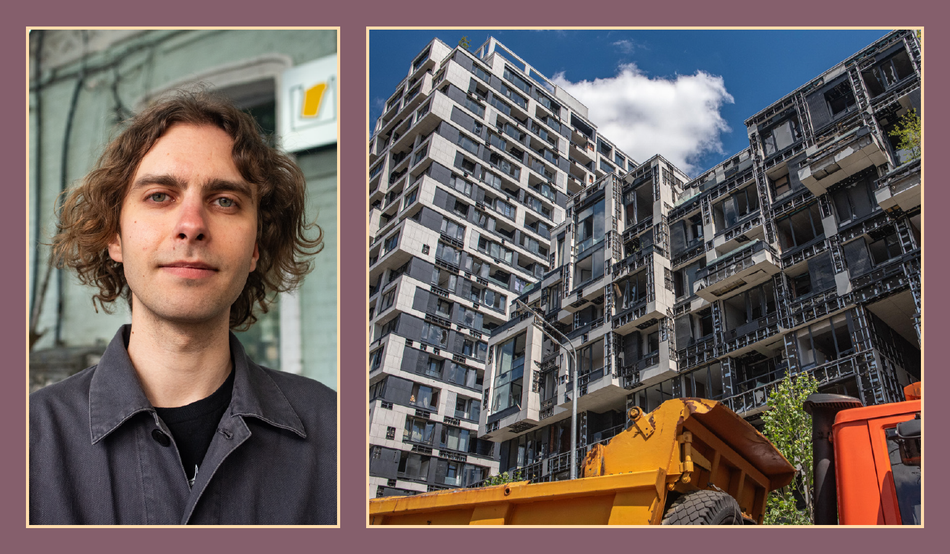
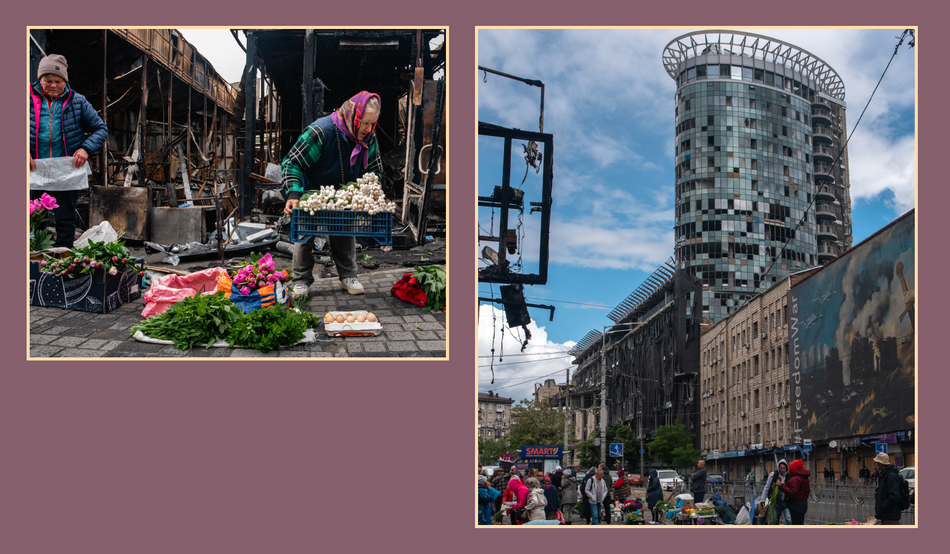
As a rule, the administrative and historic centre has not been the target of Russian strikes. This time though, the foreign ministry and cabinet of ministers building were damaged, along with an opera house, cultural institutions and the Chornobyl museum in the historic downtown neighbourhood of Podil. A popular market was destroyed and terrifying pictures emerged of the metro station nearby, the platform packed with people hiding from the bombardment as the shelter filled with smoke. The next day, Russia’s foreign minister issued threats against embassies, warned foreigners to leave and promised further strikes on “decision-making centres” in Kyiv. It felt like a huge escalation, though embassy staff, admirably, ignored Sergei Lavrov and stayed put.
As the festival rolled on, the city remained tense, waiting each night for the waves of drones that precede a big attack. Would there be another hypersonic Oreshnik missile? Would they really hit the government buildings, Maidan, the city centre?
On the Friday evening I met Yulia, 26, and Rostislav, 29, having a beer outside a microbrewery. Both were originally from the east—Luhansk region and Mariupol—and they shared a kind of fatalism common to those who’ve endured long years of this already. On the 24th May, Rostislav had listened to the night of explosions not from a shelter but from the comfort of his bed (“because I got used to it, unfortunately”, he explained, almost apologetic). It was “scarier than usual” and he was planning to find a safer place if another mass attack started. Yulia told me she’d got a backpack ready and had located three good underground bomb shelters in their area. All these past four years, she had stayed in her bathroom when it got bad, feeling “more or less safe” in the old part of the city. “Now after this strike on Saturday, we’re quite afraid.”
A few hours later, analysts who pick up radio frequencies were warning on a big monitoring channel that all kinds of civilian and government buildings could again come under attack. “It’s difficult to name exact dates and directions,” they added, sounding more than a little frustrated. “The warnings have been extended three times already.” But by midnight there was no sign of bombers taking off from Russian airfields and it seemed the attack had been postponed. The next day, it was the same. It’s a weird anticlimax, emptying your rucksack which had been packed to race to a bomb shelter, and trying to be grateful for the absence of imminent bombardment. You can’t help but wonder if it was all a big psy-op. A friend told me how crazy this situation makes her feel—when strikes are constant for weeks, she’ll almost decide to leave Kyiv, then a lull will convince her it’s all OK. This cycle has repeated for years now. “But where would you go?” I asked, thinking of her flat, her girlfriend, her office job. “Well, exactly,” she shrugged.
It was Monday night when it finally started. The deep roar and boom of missiles began just before 1am. “Fucking insane, the quantity of missiles,” my friend wrote from a metro station a few miles away, after checking I was at least in a corridor.
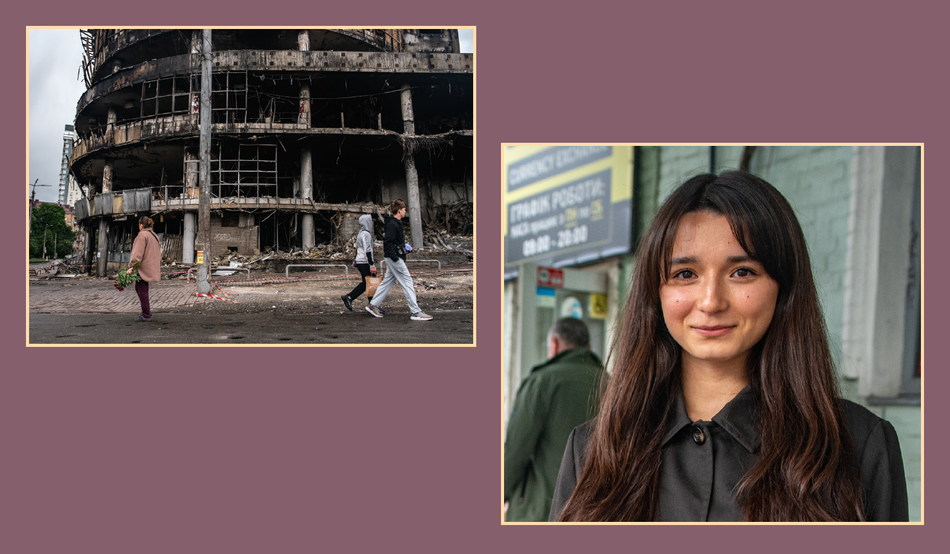
The next day, it was clear that the attack was certainly big, but not what Lavrov promised: instead of striking “decision-making centres”, Russia destroyed residential blocks and a clinic, with 656 drones and 73 missiles in total. Sixteen people were killed in Dnipro, with children’s bodies pulled from the rubble of their homes. A record 41,000 people took shelter in the Kyiv metro system that night. In a statement, Russia’s defence ministry said it had achieved all of its “strike objectives”.
The Patriot missiles Ukraine needs are in short supply now thanks to the war in Iran
Looking at the bomb damage, the familiar charred and smashed structures and twisted cars, the optimism felt a little hollow. Despite Ukraine’s innovation with drones and robots, it needs Patriot missiles to intercept the weapons which hit that night. They are in short supply now thanks to the war in Iran, but US deliveries to Ukraine had been dwindling for some time before, too—one of the many points of friction between the two countries. Relations reached a new low in February 2025, when Donald Trump sneered and snapped at the Ukrainian president in the Oval Office. Months of spectacle and humiliation followed: ordered to be more grateful, Zelensky had little choice but to go along with the charade. Trump’s “plan for peace” and Alaska summit with Russian president Vladimir Putin attracted breathless attention, even though anyone who understands Russian aims could see these were an empty spectacle.
All the while, Ukraine was ramping up its own production—of everything. More than 50 per cent of the weapons it uses are domestically produced, according to the president. On the frontlines now it is common to see strike and reconnaissance drones manufactured in Dnipro, and the Ukrainian company Fire Point makes Flamingo cruise missiles at secret locations across the country. These have a range of 3,000km, carry a 1,150kg payload, and have been used extensively in the campaign to strike industrial and military infrastructure deep within Russia. In the first two years of the fullscale war, Ukraine was not allowed to use the weapons it received from the west in long-range attacks on Russia. That restriction was eventually lifted, but now it’s irrelevant: Ukraine makes its own missiles and asks permission from no one to use them. The country’s defence industry claims that its production capacity is 55 times bigger than in 2022, and aims to produce $60bn worth of weapons this year.
As the US moves away from its role as European security provider, self-sufficiency in defence is becoming an urgent priority for other European countries too, says Konrad Muzyka, an independent defence analyst based in Poland: “If you do not have indigenous capability, then you will be servant to other people’s interests.” But he warned against over-estimating Ukraine’s self-reliance. “A lot of the most technologically advanced drones that Ukraine sends out to the skies actually come as a result of the cooperation with American companies… if this was to be removed, all the western investments and technologies and software, I think Ukraine would be in a very tough spot.” The country is also still heavily reliant on foreign aid, he added. It’s largely European money, like the recently approved €90bn loan which will fund, among other things, the increases in soldiers’ pay and incentives. This is an effort to ease the severe manpower shortage, not helped by an estimated 200,000 going AWOL.
There is no silver bullet, Muzyka said, no overriding factor that could end the war. Instead, the way Ukraine organises the fight—how it deals with recruitment and retention, how it structures and reforms the armed forces—will determine its “ability to actually endure the war”. Victory, now, if it’s discussed, is described more as a ceasefire reached when Russia no longer feels able to continue, beaten down by Ukraine’s siege of occupied Crimea, by inflation and sanctions and manpower shortages.
Other sticky and seemingly intractable problems remain for Ukraine, like the deeply unpopular mobilisation—forced conscription of men aged between 25 and 60, sometimes straight off the street—and the functioning (or dysfunction) of parliament. Frequent bombardments and power outages far from the frontline now present a challenge for the government, Mykola Bielieskov said, “to give people a sense of hope and horizon, without diminishing the nature of the current challenges… if you do not give people a sense of hope, they would just despair. And that gives Russia the opportunity to spread propaganda.”
All has not been rosy in the world of Ukrainian diplomacy recently, either: the fury in Poland over Zelensky’s decision to name a military unit after the Second World War-era Ukrainian Insurgent Army, which murdered up to 100,000 Poles, culminated in right-wing Polish president Karol Nawrocki stripping his Ukrainian counterpart of the highest state honour, which he had received in 2023. Suggestions that domestic politics in Poland are to blame, or that Nawrocki, a Eurosceptic, was aiming to undermine June’s Ukraine Recovery Conference in Gdansk, make little difference to the fact that relations between the two countries have been difficult for some time. Far fewer Poles today endorse sending aid to Ukraine or supporting refugees than in 2022, a trend seen in Romania too.
No one I talked to in Ukraine felt the war would be ending soon. Polling in April found a majority of Ukrainians think it will continue at least into next year, perhaps longer. Until late 2024, more than 70 per cent were ready to endure the war for “as long as necessary”, but this figure dropped to 54 per cent in March this year and then 48 per cent in April. Much was made of this trend last year, with claims that Ukrainians were “tiring” of the war, and of their wartime president. But crucially, when pollsters asked if they’d be willing to accept harsh “peace” conditions such as ceding more of Donbas, more than half said no. That’s partly a matter of principle for many Ukrainians, but it’s pragmatic too: a bad deal would likely lead to more war.
Talking of strategy, policy and geopolitics, it can be horribly easy to forget the reality of what that means in terms of human suffering. Despite the hype around drones replacing soldiers, frontline conditions are more like the First World War than some sci-fi future: the wounded wait days for evacuation with tourniquets cinched round limbs, leading to high rates of amputation.
For civilians too, the sheer volume of pain is hard to summarise. I watched a grieving dad give a speech at an award ceremony in Kharkiv, set up in his 18-year-old daughter’s name. Nika Kozhushko was a talented artist killed by a Russian glide bomb. Her father’s voice broke and he kept trying to stumble on, sobbing. I saw that people around me were crying too. Russian bombs will kill more teenagers, because that’s how Russia conducts its war. The same drones that have created frontline “kill zones” have been seen on the northern edges of Kharkiv, Ukraine’s second city, in recent weeks, the Russian operators having perfected their “human safari” tactics on the population of Kherson. Their range will only increase. Russia is developing its technology too, and it would be naive to ignore that.
None of this is to say that Ukraine should give up; much more suffering and pain would come with Russian occupation. Four-and-a-half years in, this remains an existential fight for Ukrainians. And in that fight, they have achieved extraordinary things and are now in a better position.
“It’s counterintuitive to a lot of people,” said Bielieskov, “because it’s a huge tragedy, destruction and suffering. But Ukrainian agency actually increased during these four years… It’s like an ugly beauty of the war”.
“Things are changing because Ukraine looks to the future,” concluded Volodymyr Yermolenko. “Russia is looking to the past, dominated by old men who are cruel out of despair.” In Ukrainian society, the “huge disappointments” of 2023 were followed by “a kind of fatalism”, he added.
“Now, we are in a better mood.”