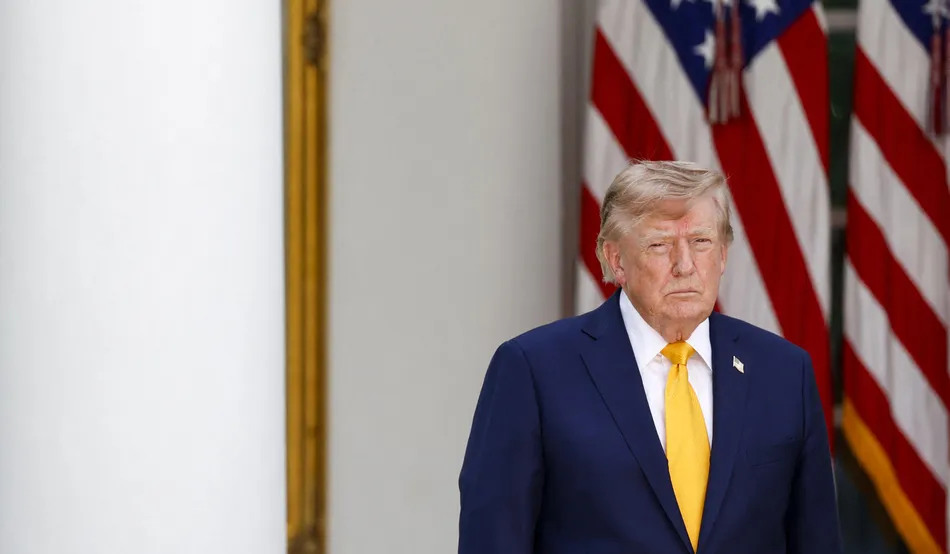
Europe’s leaders have become collectively weary and “unshocked”—to use an uncommon word—by Donald Trump’s incessant provocations, unless accompanied by actual acts of force. So the president’s casual aside that a united Ireland “may as well happen now” while in the country to visit his Irish golf course, was greeted by most British and Irish politicians with barely a shrug.
Tellingly, the leader doing the most to downplay its significance was Ireland’s taoiseach, Micheál Martin. Pouring cold Guinness on any imminent change, he said he was “not into timelines” or “simplistic rhetoric” about unification. Instead, he stressed continuing Irish support for the 28-year-old Good Friday agreement, which sets no date even for a referendum on Irish unification.
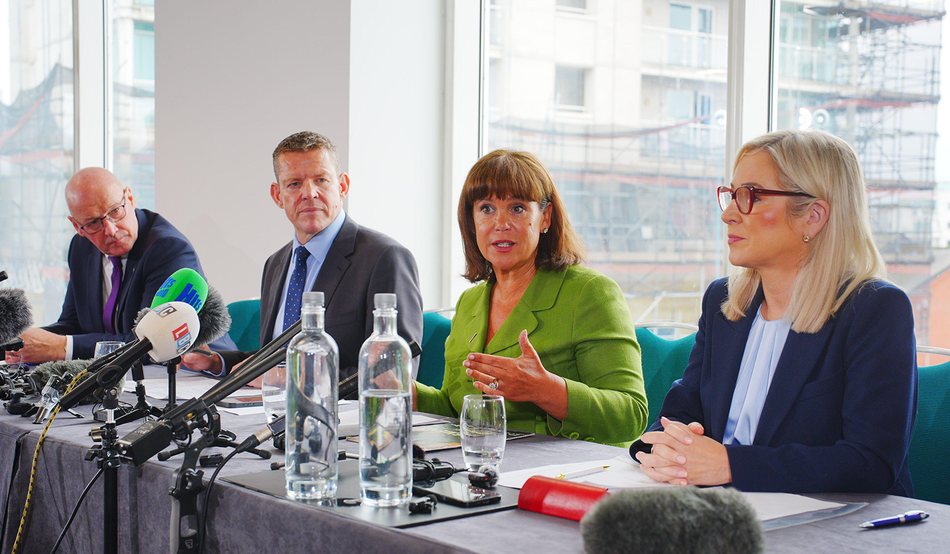
Even the three nationalist leaders of Northern Ireland, Scotland and Wales, fortuitously meeting together in Cardiff on Monday, were notably cautious. “Westminster’s time is coming to an end,” they declared in a joint statement. But they set no date on its demise, and the host—the Welsh first minister, Plaid Cymru’s Rhun ap Iorwerth—wouldn’t even commit to holding a referendum on independence, having been elected to lead the Welsh government this May on a categoric pledge not to do so, or at least not to consider it until a second term.
Scotland’s first minister, the SNP’s John Swinney, and Northern Ireland’s Sinn Féin first minister, Michelle O’Neill, struck more positive notes, but Andy Burnham has already ruled out constitutional referendums in both jurisdictions pretty firmly, and neither indicated any intention to take to the barricades metaphorically, let alone physically.
I doubt this situation will change for as long as Burnham is in power. That is because he is unlikely to stir up animosity to “Westminster” to anything like the degree needed to make agitation for Scottish independence and Irish unification an overriding concern of nationalist voters in Scotland and Northern Ireland.
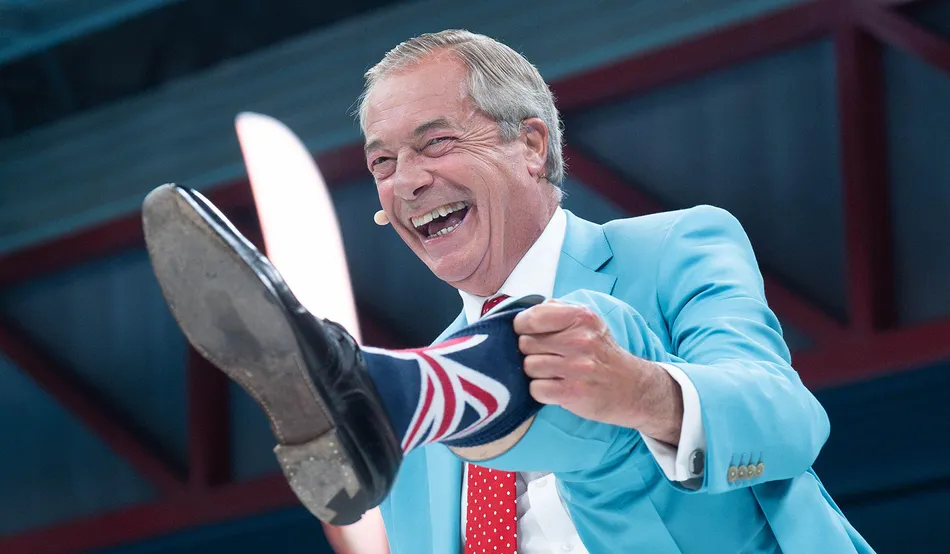
In all three jurisdictions it is important to distinguish between support for nationalist parties and passion for constitutional change. In the case of Scotland and Wales, much of the nationalist vote is a combination of disillusion with Labour combined with equally strong opposition to Nigel Farage’s “English nationalist” Reform UK. In Northern Ireland, meanwhile, the peace and prosperity brought about by the Good Friday agreement is among the top priorities for most voters, whether nationalist or unionist.
For a period after 2016, when Brexit appeared to threaten the open Irish border, unification moved sharply up the agenda. But the ultimate Brexit deal, keeping the internal Irish border open without checks on people or goods while Northern Ireland effectively remains in the EU single market, defused the crisis.
In Wales, polls show that barely a third of the electorate expresses support for independence. Far fewer make it a high priority. As for Scotland, it’s still only 12 years since independence was fairly clearly rejected in a referendum. After 19 continuous and fairly lacklustre years running the devolved government in Edinburgh, the SNP arouses little energetic enthusiasm. It is only really popular in comparison with the alternatives.
So the United Kingdom of Great Britain and Northern Ireland isn’t in immediate danger of dissolution. And the ever-belligerent Trump is about the worst possible ally of nationalism in any part of the UK.
However, all that could change quickly if Westminster were to go into another Brexit-style frenzy of aggressive and incompetent English nationalism. And bizarrely, so soon after Brexit, just such an eventuality is foreseeable in the event of a Reform victory at the next election.
I doubt a Farage-led government would go the whole hog and attempt formally to dismantle the various devolution regimes, nor the various treaties between Britain, Ireland and the European Union which underpin Northern Ireland’s highly internationalised political and economic status. But I equally doubt that the Trumpesque Reform leader would stop himself—and his associates—from committing constant acts of disrespect, both petty and substantive, thereby transforming today’s latent nationalism into something far more potent.
If that happens, the fact that nationalist leaders already hold the governmental reins in Edinburgh, Cardiff and Belfast could lead to an extremely rapid descent of the UK into existential crisis. Ireland would likely become the most serious flashpoint, because Faragist disrespect—particularly if it involved breaches of the Brexit settlement to please the ever-pugilistic anti-Dublin DUP—would immediately bring the leaders of Ireland and the EU into play. Instead of a taoiseach saying he was “not into timelines” for a unification referendum, you could have one, with cross-community support in Northern Ireland, calling for an EU-underpinned unification process in short order.
And if that happens, a US president saying that Irish unification “may as well happen now” would certainly leave a Farage government well and truly exposed.