Premedidated riots in Dover and Portsmouth. A noisy Reform UK conference in Birmingham. Victory for the AfD in a German state election. Polls showing Marine Le Pen on track to become the next president of France. This week, Europe’s extreme right has been on the march. But where is it going.
Despite alarmism from liberals and conservatives alike, the anti-extremism lights are flashing amber rather than red. In all three of Europe’s largest countries—the UK, Germany and France—there is now strong electoral support for far-right parties, while thuggish anti-immigrant movements make hay on social media and beyond. But the mainstream parties remain in charge, and the immediate challenge is for them to find leaders and policies robust enough to defeat the insurgents, who have yet to win a major national election and have serious vulnerabilities of their own.
The most imminent battle is in France, where the presidential election for a successor to the term-limited Emmanuel Macron is only seven months away. In her fourth shot at the presidency, Le Pen is ahead in the polls and stronger than ever before. But this is partly because three centrist candidates are jockeying for position, while the left-populist Jean-Luc Mélenchon also commands double digit support.
There is still time and scope for one of the centrists to come through the middle, much as Macron did a decade ago. The strongest of the three, Édouard Philippe, formerly prime minister under Macron, is mayor of the northern port city of Le Havre, where economic challenges are akin to those of northern England. Philippe has successfully held off the far right much like Andy Burnham did in Manchester.
However, even if Le Pen wins, it is distinctly possible that she will govern Giorgia Meloni-style, fiercely anti-immigrant but without fundamentally destabilising Nato, the European Union or democratic norms. Her National Rally party, after more than a decade of subsuming the mainstream right, has muted the pro-Russian and anti-EU rhetoric of its past despite internal divisions over these issues. Meanwhile its young pretender president, Jordan Bardella, talks of “honouring” French commitments to Ukraine. Donald Trump and Vladimir Putin have become as toxic in France as elsewhere in Europe, and Le Pen and Bardella are keeping their distance.
In Germany, the AfD has not moderated to anything like the same degree. It remains fiercely anti-EU and pro-Russian, with links to neo-Nazi networks (which the party denies) so its success last weekend in Saxony-Anhalt, where it came within a few seats of an outright majority in the state parliament, has led to an outbreak of understandable angst in mainstream circles in Berlin.
Saxony-Anhalt, deep in highly deprived, formerly communist eastern Germany, is at the extreme end of the country’s current economic crisis, and the AfD is still not in serious contention to win a majority across the country as a whole. But Friedrich Merz has become the most unpopular German chancellor of the entire postwar era, confronting a raging economic crisis without either a viable growth plan or the empathetic qualities of his predecessor Angela Merkel, which were so effective against the brittle AfD co-leader, Alice Weidel.
So the question is how Merz’s Christian Democratic Union responds. If Merz does not improve there is still plenty of time for him to be replaced before the next German federal election in 2029.
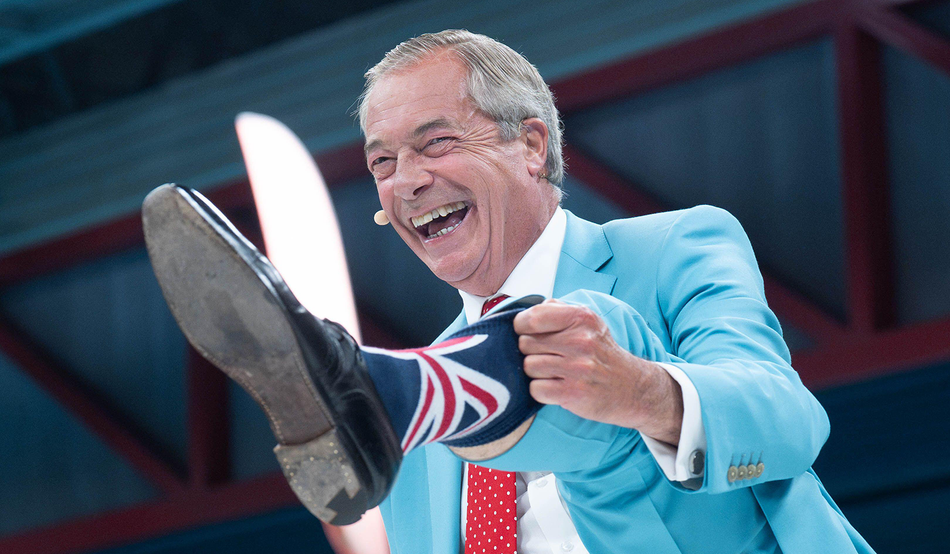
The UK’s next election is probably also three years away, and Labour has just replaced the hugely unpopular Keir Starmer with the far more likeable Andy Burnham. This has helped put Nigel Farage, Reform’s leader, on the defensive and he no longer leads in most polls. But the UK’s growth crisis remains, and three years is too long for excuses rather than economic achievement to win the day for Labour’s new prime minister.
Farage is more akin to Le Pen than Weidel in his political flexibility, and he too has changed his tune on Putin and Ukraine while campaigning hard against immigration. A year ago, Farage was making such large inroads into support for the Conservative party that it looked as if he too might largely subsume the mainstream right. However, Farage also resembles Le Pen in his serious and growing aura of financial sleaze, which has contributed to his recent decline and halted his advance on the right. He still has a possible path to Downing Street, but it is long and looks increasingly rocky.
What of the splintering of Britain’s extreme right? Rupert Lowe’s Restore party is attempting to outflank Farage, pointedly praising the latest immigration rioters. This could become a problem for Reform if Lowe proves able to run large numbers of candidates. But that too is probably a few years off, and the ego-driven split between the two leaders might well have been patched up by then.
In short, however, there is a common situation: a far right across Europe’s three largest countries which is mobilising angry electorates. It has the possibility of power but has yet to pass the threshold. What happens next depends on the quality of the mainstream leaders deployed against the far-right insurgents in forthcoming elections, and their credibility as agents of prosperity.
There is another commonality. In neither today’s Britain, France or Germany are violent, let alone revolutionary, forces holding sway. This isn’t France in 1958, nor Germany in the early 1930s. None of the far-right pretenders have actual paramilitaries in hock. Further, the likes of Farage know that street thuggery of the kind we saw in Portsmouth and Dover last weekend is not remotely his path to power.