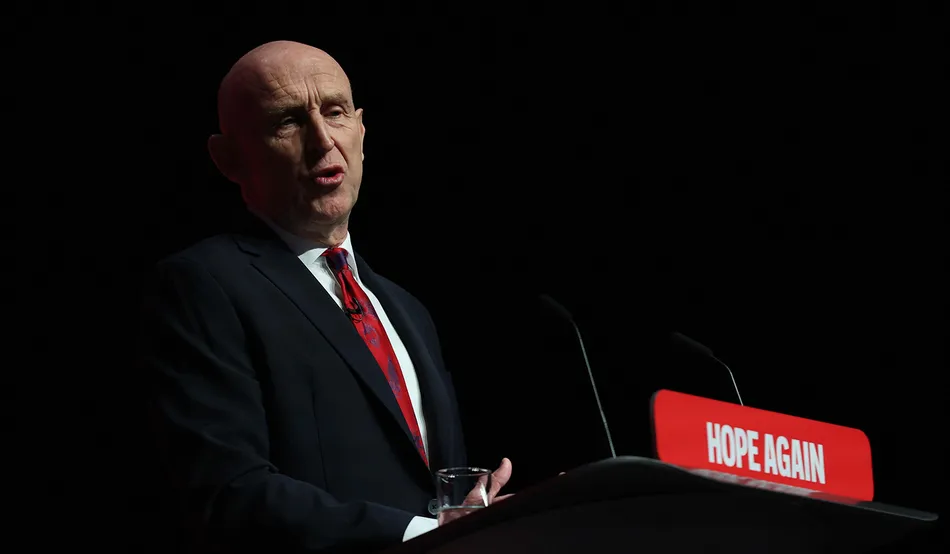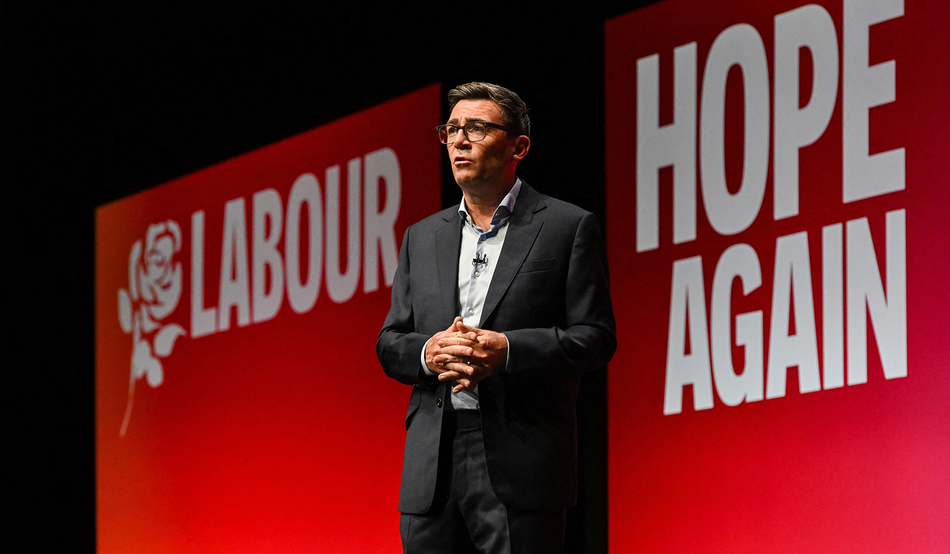
I know that Number 10 keeps briefing that there won’t be an early election, and the state of the polls would make one a perilous undertaking for Labour in any event. But the inescapable logic of Andy Burnham’s Labour conference speech on Tuesday was that we need an election as soon as possible, because almost everything he had to say about his plans for the future depends upon a new manifesto and a new mandate.
The prime minister’s biggest plan is to create a new social care agency for the elderly. He linked this in his speech to ending the current “triple lock” protecting increases in the state pension. That change can only come after an election: indeed, he specifically said from “April 2030”. That is, after the currently projected date for the election.
This is the first time I can recall a prime minister, who already holds power, making his political centrepiece a reform which he declines to enact for another four years. Unless, of course, he calls the election sooner.
Then there is electoral reform, which Burnham hailed as vital to the health of British democracy. That too requires an intervening election.
Then there is Europe, where Burnham said, in effect, that he wants to break free of Keir Starmer’s red lines severely limiting any change to the existing Brexit regime. Here again, this can only happen after another election.
I could go on to Burnham’s statements in recent weeks about the water industry, welfare reform, defence, devolution and much else, but you get the point. Virtually all of it requires a new manifesto and a new mandate.
There is only so long that you can promise that everything will get better, but only in three or four years’ time. And since political honeymoons tend to last not much longer than the summer which has just passed, I suspect that the charge of this being a self-confessed zombie government will get going soon. Indeed, as more goes wrong, the list of promises for after the election will get longer and longer, and the call for that election to take place immediately will only get stronger.
The logic of an early election isn’t just about policy. It is also hard to see that Labour will become more popular over time, particularly if Burnham’s main argument is that he can’t make big, necessary changes because he doesn’t have a mandate. It is far too soon to be confident that Nigel Farage is finished; and even if he is, that Kemi Badenoch won’t end up as the main beneficiary.
However, the prime minister is in a real bind even if he does come to want an early election. For despite his lengthy conference speech this week, and much associated briefing, his big plans aren’t in fact plans but merely placeholders.
Social care for the elderly? There is as yet no plan for the prime minister’s proposed new social care service, and the modest change proposed to the pension triple lock will pay for only a fraction of the cost. So who is going to benefit, and who is going to pay? Is there going to be a new so-called death tax? In 2017, Theresa May’s Tory election campaign imploded on precisely these issues. It isn’t remotely clear how Burnham is going to navigate them. A commission led by notorious policy fixer Louise Casey is under way, but no report is expected for months. And when the report does comes, its proposals will doubtless become deeply controversial.
Electoral reform? Burnham said he would appoint a commission to make proposals. This is one of the most difficult issues in the political lexicon, and as soon as a plan is unveiled it too will become deeply controversial, including the question of whether electoral reform should require a referendum. Here again there is recent form. Remember the 2011 referendum on electoral reform and how that went down in flames?
However, even more problematic than either of these is the third issue, Europe. Again, Burnham announced no plan. He didn’t even set out an objective, such as to rejoin the customs union and/or the European single market. Rather, he said that at some point in the autumn he would make a speech which would explore whether there might be a “consensus” for some further undefined change to the Brexit regime. But how does a speech establish the existence of a consensus behind a policy which has never previously been announced, let alone debated? And a consensus with whom—Farage, Badenoch and Lib Dem leader Ed Davey? Ursula von der Leyen? Or just between Burnham and the three or four top members of his government?
So Burnham’s logic may lead to an early election. But his policies are opaque and the politics is perilous. A rollercoaster awaits.