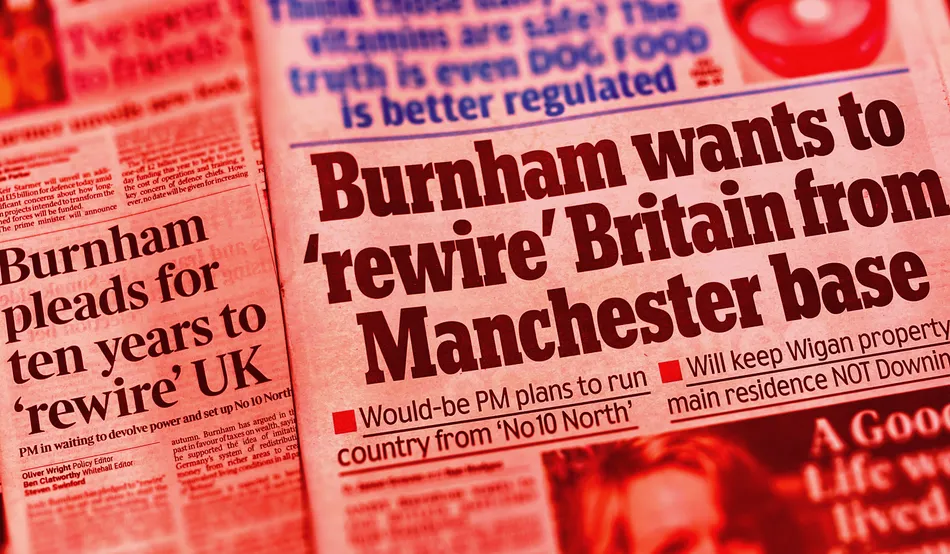
On Monday morning at Labour’s annual party conference, Andy Burnham was 70 days into those first “100 days”, by which new leaders since Franklin D. Roosevelt have been judged.
Things have, it’s fair to say, been going pretty well. The new prime minister dug his hand in behind the Downing Street sofa and found bits of loose change to chip towards electricity bills, bus fares and Britain’s struggling pubs. He’s finally forced some unmissable distance between the UK and Benjamin Netanyahu’s Israel, and won back enough of the Green-curious voters to inch ahead in a five-way tussle in the polls.
Things remain fluid, but this advance is enough to dispel the gloom of Labour activists under Keir Starmer. All the slogans about “hope” plastered around the conference centre in Liverpool were in keeping with the mood.
Party activists are feeling sunnier because the country is finally giving the Labour government a hearing. The country is doing so, however, only because Burnham has persuaded it that he, unlike the wooden and bureaucratic Starmer, is serious about change. What he has not done is give a clear account of what “change” will involve. It is here that he could yet come unstuck.
Burnham has offered bold talk about Britain’s wrong turn way back in the 1980s, and the 40 years of failing neoliberalism that followed. He has offered no precision, however, about how the economic course will be corrected.
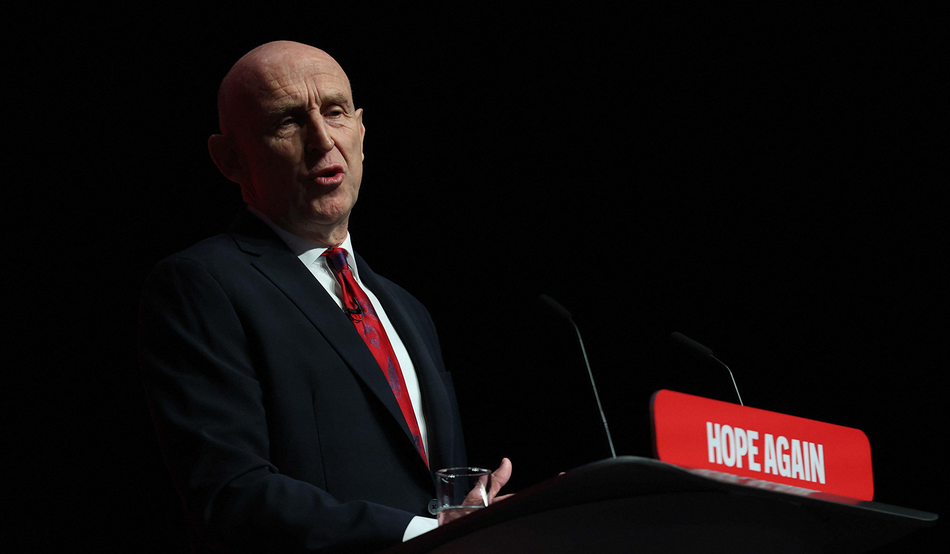
More than anyone else, it will fall to Burnham’s surprise pick as chancellor, John Healey, to make the still-missing leap between sweeping rhetoric and quantified plans. The dilemmas involved are going to be a whole lot thornier than videos of brotherly bickering with the PM over Britain’s best bar snacks. Healey’s turn in the conference spotlight came on Monday—exactly a month before his first budget. That is scheduled for Burnham’s 100th day in office, which looks like a moment that could bring the PM’s honeymoon to an abrupt end.
Healey’s conference speech was never going to be about economic specifics. Britain’s strict (and slightly ludicrous) convention of budget purdah precludes chancellors dropping early hints about their leanings on particular decisions. But if Healey had different economic instincts to Rachel Reeves, then this week would have been an apt time to give a sense of them.
Instead, a chancellor who had just won big in this summer’s Palace of Westminster coup, opened with fulsome tributes to none other than Starmer and Reeves. This fits with Healey’s reputation, which is more as an unusually decent colleague than an insurgent of any sort. He is no doubt grateful to his predecessor for her resolve in getting a whole lot of necessary tax rises out of the way before he assumed the role. With his talk of the miner’s lamp that he keeps at home and the great cheer he won by rekindling the Union Learning Fund—cut by the Tories five years ago—Healey pitched himself as at home and fully at ease in the Labour movement. This is a contrast with Starmer, who struggled to sound at ease anywhere, even among the party faithful.
So Healey’s immediate test in the conference hall was passed, but what about the deeper political challenge of embodying the sort of change that could make sense of Labour’s recent regime change? In listening to the speech, I asked one question about every line: Was anything substantive being said that Starmer or Reeves would not have ventured?
I think my ear caught one line where that was possible: a reference to using public-sector purchases to promote good jobs. This would be an implicit shuffle away from the usual insistence of value-for-money as the only valid criterion in public procurement. Starmer and Reeves weren’t necessarily against this shift, but Healey and Burnham may just be keener to push it.
Beyond that however, even as someone who spends far too much time wading through thinktank reports, I don’t think I caught a single argument that would have sounded out of place coming from Reeves at last year’s conference. He twice reassured the hall—and the bond markets—that he and Burnham are resolute in their commitment to “the fiscal rules”. A bit of that was probably inevitable. But at moments it felt as if Healey were leaning more deeply into the conventional wisdom than Reeves did. Whereas she stuck her neck out to rewrite the fiscal rules to factor in the positive value of some debt-financed public investment, Healey described existing debt levels as “an assault on our common sense” and “an affront to our values”.
There is no denying that public borrowing is a seriously costly problem just now, and it is shrewd politics for Healey to manage the Labour party’s expectations on public spending. But discussing the deficit in such florid terms—values!—is surely likely to reinforce rather than disrupt the discourse of the last 15 years. That discourse treats chronic public borrowing not as one of many serious symptoms of general economic malaise, but rather as the root problem from which all our other difficulties flow.
The chancellor made a welcome nod towards the importance of skills training and job creation for the many young people languishing with nothing to do. But he hitched this to a myth: that there is a “a bigger and bigger benefits bill”. In reality, overall social security (even including rising outlays on pensions) is no more of a weight on national income than it has been for most of the last 20 years.
It is now left to the budget to reveal Healey’s chancellorship in hard decisions and numbers rather than warm conference words. But there was nothing on Monday to prepare the ground for a different distribution of sacrifices. There was nothing, either, to give the vaguest hint as to where the chancellor might look to find the money for the social care reforms that Burnham is so committed to. Any hint of change there instead awaits the PM’s own speech on Tuesday afternoon. The chancellor gave no clues even regarding who might be asked to pay for all the additional defence spending, which Healey himself judged so urgent in June that he walked away from a Starmer cabinet over the issue.
Hope is in the air as Labour meets in Liverpool, but it is hope that rests on the belief that a big change to the way that Britain runs its economy is in the air. After all the political tumult, however, a close listen to the new chancellor’s speech suggested a different lesson. Namely: the more things change, the more they stay the same.