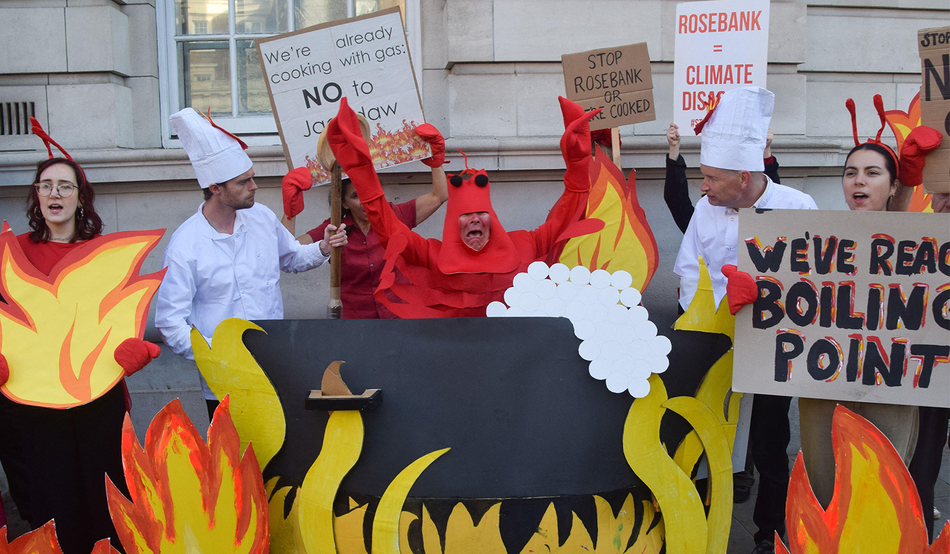
Andy Burnham has two big decisions to make about climate change policy in the next few weeks. Most attention has so far focused on whether the government should reapprove licences for the Jackdaw gas field in the North Sea and the Rosebank oil field in the North Atlantic. But much more significant in terms of UK greenhouse gas emissions is whether the government should weaken Britain’s zero emissions vehicle (ZEV) mandate, which requires car manufacturers to include a rising proportion of EVs in their total sales. It is currently consulting on this.
The car companies say the public are not buying enough EVs, and want the total phasing out of petrol and diesel cars—due by 2030, with hybrids by 2035—to be slowed down. What they actually mean is that the public are not buying enough British-made EVs. In fact, nearly 75 per cent of all new cars sold in the UK in August were either battery electric (30 per cent) or hybrid (43 per cent). But most are imported, made by Tesla, BYD, Volkswagen, Audi, Skoda, Kia and Hyundai. Those British manufacturers which didn’t invest properly in EVs are having to reduce their prices and buy credits from overseas manufacturers who exceeded the mandate, in order to avoid fines—and they don’t like it.
Slowing the growth of EV sales would greatly increase the UK’s carbon emissions. Indeed, the government is highly dependent on EVs to meet its statutory carbon budgets (five-year emissions targets). If the policy is weakened, the government would by law have to introduce other policies to meet the targets, with much higher costs to the economy. (The government has adopted the lowest-cost emissions trajectory calculated by the independent Climate Change Committee). With petrol and diesel prices so high, EVs are making daily life cheaper for motorists. It would be odd for a government focused on the cost of living to make it more expensive.
But, as with the oil and gas fields, the Conservatives, Reform UK and many in the media want to stoke another climate war, and charge the government with being “anti-motorist”. Burnham will be looking nervously at the opinion polls. The interesting thing, however, is that those polls are not telling him to go soft on climate policy. On the contrary—as the byelection in Holborn and St Pancras on 8th October may demonstrate—doing so could cost Labour dearly.
It is perhaps not surprising that the extreme temperatures of the last few months have increased the political salience of climate change. In YouGov’s monthly tracker of the issues the public rank among the “most important facing the country”, the environment and climate change leapt to fourth place in August, above crime and only just below health. (The economy and immigration are way ahead as the top two.) But it has since fallen back again as the heat and media attention have subsided.
Critical for Burnham, though, is how these numbers break down. A little under a fifth of all British voters now regard the environment and climate change as among their top three political issues—but among Labour voters, this figure rises to 29 per cent.
And not all Labour supporters are the same. As pollster Steve Akehurst of Persuasion UK has shown, of Labour voters who say they might otherwise vote Green, almost half (49 per cent) put the environment and climate among their most important issues this August. For those who might otherwise vote for Reform UK, that number was only 6 per cent. Those for whom the environment and climate are particularly important are 18- to 24-year-olds, professionals and Remain voters. They are less important to the over 65s, to manual workers and to those who voted Leave.
It is notable that, while a majority of the public support stronger climate action, the summer’s extreme heat has barely increased their number. It seems that the already supportive are now even more convinced, while actual evidence of climate change seems not to have changed the minds of those who are not.
This has major implications for the government. Burnham won the Makerfield byelection by persuading former Reform voters to switch to Labour. But in Holborn and St Pancras Labour is under serious threat from the Greens. This was no doubt behind the prime minister’s recently declared recommitment to net zero by 2050. But that is a statutory duty on the government already; much more politically significant was the news that the oil and gas licensing decisions (as well as the EV one) will be postponed until after the byelection.
Burnham’s problem is that there are far more “Green-curious” voters among Labour supporters than prospective Reform supporters. In the English local elections in May, Labour shed more than half of its 2024 general election support. But many more Labour voters switched to the Greens (22 per cent) and the greenish Liberal Democrats (16 per cent) than to Reform (6 per cent) or the Conservatives (5 per cent).
And whereas for prospective Green or Lib Dem voters climate change is a major motivation determining their vote, this is not the case for those who might vote Reform. They care about immigration and the cost of living; they simply don’t care enough about climate change for Labour’s positioning on it to matter. Labour-Green switchers, on the other hand, really do care. So, leaning away from climate policy is likely to cost Labour many more votes than leaning into it.
In London and a few other metropolitan areas, losing votes to the Greens means losing parliamentary seats to them in a general election. But in the rest of the country, it means splitting the Labour vote, and thereby allowing Reform or the Conservatives to win. The uncomfortable paradox Labour faces is that if it is seen to weaken its commitment to action on climate change, this makes it more likely that it will lose the next general election to one or both of the parties on the right.
The high temperatures of the long summer may have subsided. But the politics of climate are only just hotting up.