Olly Robbins and Chris Wormald were two of the most able and “can do” middle-ranking officials with whom I worked in the governments of Tony Blair and Gordon Brown. It was no surprise to me that they rose by merit to the two of the top jobs in the civil service. Keir Starmer has now sacked them both.
They are in good company. Starmer seems to part with almost everyone that works closely with him. Since becoming Labour leader six years ago, he has had four chiefs of staff and four communications directors. All three of his initial picks to shadow the three principal offices of state (chancellor, foreign and home secretaries) were rapidly demoted. And in less than two years as prime minister, he has sacked or otherwise lost two cabinet secretaries, two heads of the foreign office and, of course, two ambassadors to Washington. As within the cabinet, he has parted with his initial deputy prime minister, and demoted or reshuffled his initial foreign secretary, home secretary, business secretary and chief whip. And those are just among the top jobs.
Of his top team, only Chancellor Rachel Reeves survives and her position is precarious, given her public unpopularity.
A fair initial observation, therefore, is that Starmer feels little loyalty to his staff and his colleagues. This is clearly reciprocated. Earlier this year, Labour’s leader in Scotland, Anas Sarwar, publicly called for him to stand down; the mayor of Greater Manchester has openly plotted a leadership challenge; and the previously mentioned deputy prime minister, Angela Rayner, is only slightly less overtly waiting in the wings.
However, it is equally fair to point out that a similar level of churn and public recrimination at the top of government—encompassing both ministers and officials—has been constant since the Brexit referendum of 2016. And nothing symbolises it more than the office of prime minister itself. This has changed hands five times in less than ten years and appears highly likely to change hands at least once, perhaps more than once, in the next three-and-a-bit years until the next general election, which is due no later than mid-2029. If the polls are to be believed, one of two disruptor parties, Reform UK or the Greens, could take power, alone or in coalition, after the next general election, revolutionising both Whitehall and Westminster.
Seen in this context, Labour’s dizzying game of Whitehall musical chairs under Starmer is essentially a continuation of the endemic instability which persisted throughout the short and unstable Tory premierships of Sunak, Truss, Johnson and May before him.
Before 2016 it was a different world, under both Labour and the Conservatives. The five prime ministers prior to 2016 (David Cameron, Gordon Brown, Tony Blair, John Major and Margaret Thatcher) served for 37 years between them. The difference between five prime ministers in 37 years against five in 10 years is roughly reflected in the tenure of other senior ministers and officials, too. Throughout Blair’s 13 years as Labour leader he had the same chancellor/shadow chancellor (Gordon Brown) and the same chief of staff (Jonathan Powell). Thatcher had only two chancellors/shadow chancellors for the first 14 years of her Tory leadership (Geoffrey Howe and Nigel Lawson), and ruled with just one cabinet secretary (Robert Armstrong) for almost the entirety of her premiership.
Neither human nature, nor the average quotient of competence and loyalty among politicians and civil servants, suddenly changed in 2016. What changed, I think, was the sudden loss of broad governing projects which appeared to work. And by “work”, I mean political projects—whether pioneered by Tory or Labour governments—that delivered broad increases in prosperity credibly linked to the programmes and leadership of the government in charge.
Obviously this didn’t preclude arguments within and between leaderships and parties as to who could do better. Nor did it stop ambition, envy and incompetence from undermining relationships at the top of government. But the trend of prosperity generally rising gave these destructive forces less scope to operate. It also meant that the perennial cry of “time for a change” succeeded less frequently.
Cameron’s referendum was in this respect a double whammy. He lost it largely because of the collapse of economic growth and real wages in the years since the economic crash between 2007 and 2008. Meanwhile Brexit advanced a “cure” to low growth which proved worse than the disease—and one which few Labour or Tory leaders, nor the civil service, ever believed would work. The stage was set for a political and governmental meltdown. Ten years on, the meltdown is ongoing and economic growth remains pitiful.
Which brings us back to Olly Robbins and Chris Wormald. In Wormald’s case, Starmer was explicit that his dismissal as head of the civil service was because of the failure of Whitehall to “deliver.” But what actual Starmer policies (as opposed to rhetorical aspirations for “more growth”) was Whitehall failing to deliver? Answer came there none.
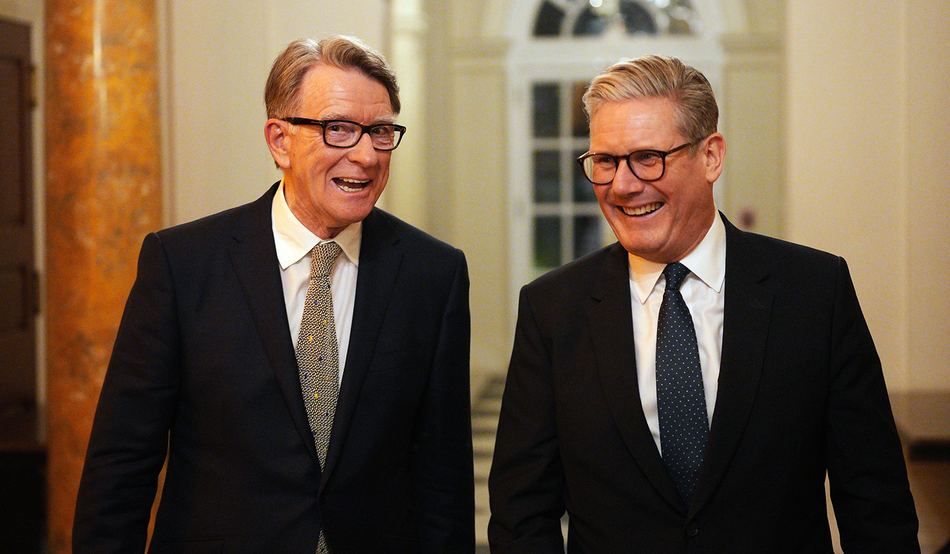
In the case of Robbins, there is the Peter Mandelson firestorm. The now former permanent under-secretary of the Foreign Office was ostensibly sacked for waving through Mandelson’s security clearance despite confidential security service concerns. But Robbins did nothing worse than implement Starmer’s prior unqualified announcement of his decision to appoint Mandelson to the Washington embassy. The trouble is that, to the media and political worlds alike, Mandelson’s appointment has become the most glaring case of Starmer’s poor judgement. With the prime minister languishing in the polls and credited with little success on any front since taking office, Robbins fell victim to a desperate Number 10 strategy to spread the blame.
The irony is that Robbins, as Theresa May’s chief Brexit negotiator after the referendum, did more than anyone in government to attempt to mitigate the ill effects of leaving the European Union. For his pains he was disowned then too.
Labour’s dizzying game of Whitehall musical chairs
Olly Robbins is in good company. Keir Starmer seems to part with almost everyone that works closely with him
April 22, 2026
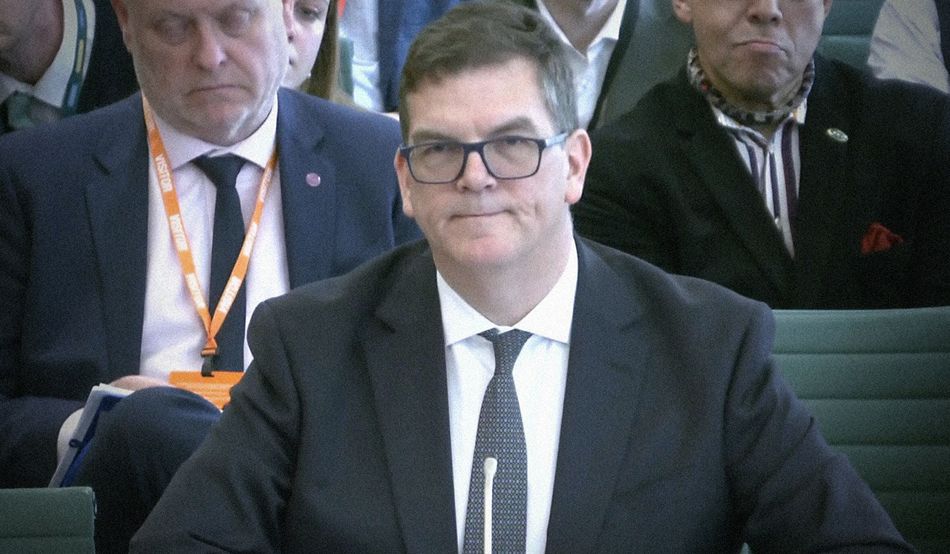
Olly Robbins speaking before the parliamentary Foreign Affairs Committee. Image: Alamy