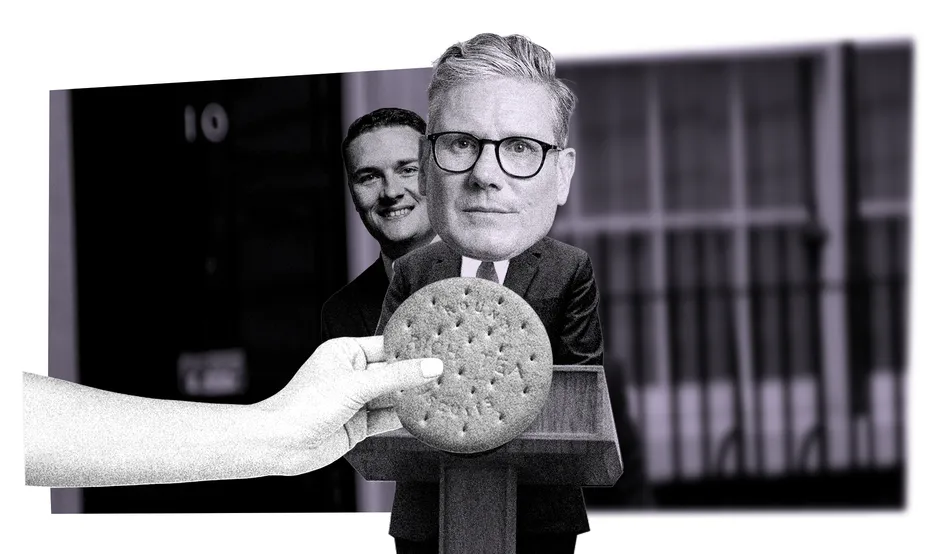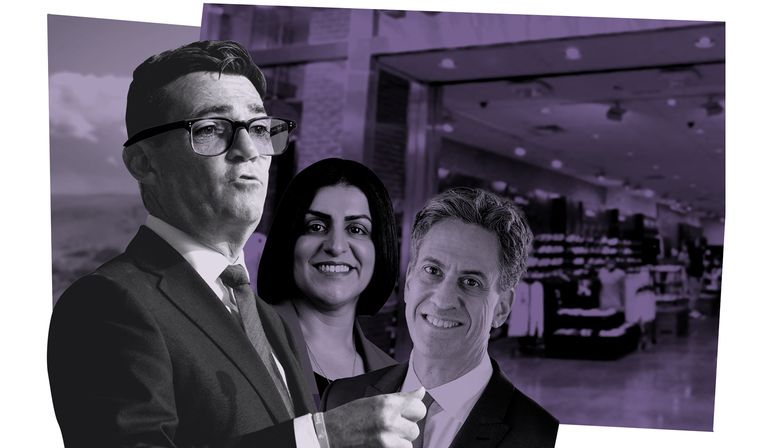
Smoke from Peak District wildfires drifts across Manchester. Key workers go about their business in facemasks. Pigeons huddle in doorways. The Altrincham tram materialises from the orange haze like Shaun Ryder from an afterparty. Andy Burnham alights and scuttles the short distance to Manchester’s Arndale Centre, where Cobra is meeting.
The UK sweats under the sixth heatwave of 2026. July was the driest for 190 years. Crop yields are down 30 per cent. Milk production has fallen by 34m litres. Swathes of the country are burning.
Inside a former Footlocker’s staffroom, key stakeholders have gathered to discuss the fast-tracking of drilling licences for North Sea energy fields Jackdaw and Rosebank.
They include senior cabinet members Ed Miliband and Shabana Mahmood; Penny Endersby, chief executive of the Met Office; two Big Oil CEOs, Gerry Can and Green Washburn; and the prime minister, Andy Burnham. Who does not have a book about Shakespeare to finish.
Endersby is speaking. “…the meteorological situation is unusual. The latest heatwave is expected to persist. Soil moisture is exceptionally low, fire behaviour in the uplands is becoming increasingly unpredictable, and if I may, these are the consequences which we’ve been predicting for years will get worse.”
“And that’s why I’m taking a pragmatic approach to the licences” says Burnham, wearing the avuncular grin of a man who needs to turn an economy around.
“The International Energy Agency, the IPCC and all of our scientists say that to limit the scale of what we’re already seeing, we need to keep that gas and oil in the ground,” says Ed Miliband.
“Ed, listen, I get it,” says Burnham, walking over to the window to shut out the smoke. “Yes, burning fossil fuels is incompatible with the continued existence of human life on Earth. But if we look beyond that, you’re not as relatable as me, which is why I’m in charge now.”
“We have to be pragmatic” nods Mahmood, echoing her new boss in the studied manner of one who would never make a leadership bid themselves.
Burnham pauses with his hand on each of the CEOs’ shoulders. “Exactly. Pragmatism. People don’t want ideology. They want to know whether they can afford their energy bills. Whether their taps will work. Whether their children can breathe.”
“These are all arguments against new licences,” says Miliband.
“I admire the consistency, Ed, I really do. But consistency is not consistent with politics.”
Gerry Can puts her hand on top of Andy’s on her shoulder.
“Perhaps there is another way of looking at this,” she says. “Energy security doesn’t necessarily mean abandoning climate commitments. We could just ignore them instead?”
GreenWashburn nods reflectively. “Inaction is not an option,” replies Endersby. Miliband nods. Burnham, looking irritated, rolls up his sleeves. “Right, let’s establish what we do agree on,” he says.
The PM tries to rub out the old whiteboard on the Footlocker staffroom wall, but a former member of staff has written “Daz sniffs dogs’ arses” on it in permanent marker and it won’t budge.
“I’ll just write around that,” he reassures them: “One, climate change is bad; two, nobody wants to be blamed; three, petro-multinationals have colossal sums of money at their disposal, a fraction of which might find its way into our economy if I play the next 10 minutes right.”
Even Burnham’s handwriting has an authentic northern swagger. This isn’t wasted on the members of the group who got burned batting for Keir.
Gerry Can speaks.
“Well, I’m glad you raised that last point, Andy. Who knows, if you green light the licences, perhaps we might be tempted to stick around after all. And I do mean green in the ecological sense.”
“That’s settled then. Great news for fuel prices. Great news for cost of living. Great news for our continued prosperity. It’s win-win.” says Burnham.
Miliband shakes his head.
“Fuel prices won’t lower, it’ll all get sold on the open market and you just said it yourself, burning fossil fuels is incompatible with our future.”
“Ed,” says Burnham through a rictus grin and clenched teeth, “do you want to get re-elected?”
“Andy. Giving these licences the go-ahead while trying to tackle a climate emergency would be like temporarily banning disposable barbecues, to address decades of failed contingency planning.”
“Great idea, we’ll do that too.”
“It’s too late,” says Enderby, “the writing is on the wall.”
“The whiteboard,” corrects Miliband.
“Daz sniffs dogs’ arses?” advances Mahmood.
Smoke begins to curl underneath the door. They look to the leader who replaced the leader who couldn’t lead.
“Ignore that. Probably just a toaster fire at B&M. It’s not related to climate change.”
Outside, the fire alarm rings.
“That is also unrelated.”
The sprinkler system activates, dribbles, then stops.
“As is that. In fact. It’s why we need energy security.”
“No,” says Endersby, “It’s why we need water.”
A voice over the Arndale Centre’s public address
system says that the
precinct is closing.
“So, Andy,” splutters Green Washburn, who is now crouching on the floor, and failing to outcompete the noise of the alarm and boardroom-level coughing, “these drilling licences?”
“I’m sorry, who said that?” gasps Burnham, as the delegates recede into the carbon particulates from whence we all came.
The meeting continues.