I doubt the “Burnham Bounce” is anywhere near strong enough to tempt the new prime minister into an early election. But anyway, how could you justify it when you already have more than 60 per cent of the seats in the House of Commons and can do what you want for another three years?
As ever, the historical record can be disputed. On the one hand, every postwar election held roughly this early—or earlier—in a parliament has been justified by the lack of a clear or sufficient majority. On the other hand, there have been six such elections, five called by leaders who, like Andy Burnham, had only recently taken office. And guess what: all five of these were won—by Anthony Eden 1955, Harold Wilson in 1966 and October 1974, Theresa May in 2017 (with help from the DUP) and Boris Johnson in 2019—while the one early election loser, Clement Attlee in 1951, was by then in his seventh year in Number 10 and manifestly exhausted.
So you might argue that it was the novelty of a new or newish prime minister that won, as much as the argument of electoral necessity. But it is impossible to divorce the two.
To complete the picture, in the postwar era five new midterm prime ministers have been in Burnham’s position of inheriting a commanding majority. All five let parliament run until near the end of its term, when two of them won (Harold Macmillan in 1959 and John Major in 1992), while three lost (Alec Douglas-Home in 1964, Gordon Brown in 2010 and Rishi Sunak in 2024). Maybe this is, on balance, an argument for going early. But doing so would have required heroic hindsight, since none of these prime ministers felt bold enough to trade in their majority at the time.
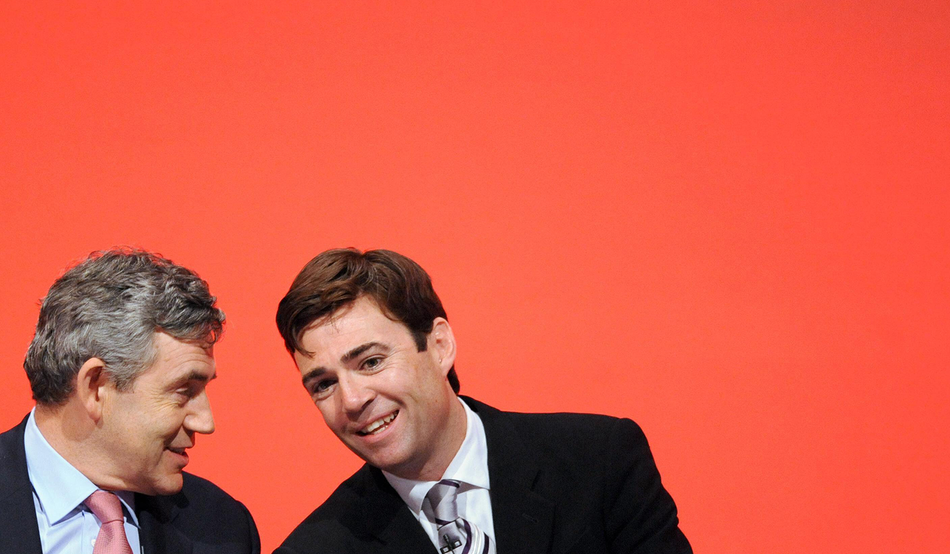
I recall vividly the case of Gordon Brown who, in the summer of 2007, taking over from Tony Blair, enjoyed an initial poll bounce far bigger than Burnham’s and toyed publicly and privately with the idea of an immediate election. Yet fatally, he hesitated. And he did so over precisely this issue of trading in a certain majority for a highly uncertain election outcome when there was no imperative to do so.
What is strikingly lacking in postwar politics is an instance of a new leader calling an early election because they want a mandate to do something big and completely new. The closest cases are May and Johnson, who both called elections to help them complete Brexit. But the imperative for Brexit came from the 2016 referendum, not from a change in prime minister.
For Theresa May in 2017, having initially called an early vote on the argument that she needed a bigger majority to deal with Brexit, she then introduced to the election campaign the huge and vexed issue of social care for the elderly, proposing a new system of “death taxes” to recoup the cost of nursing care from the assets—including property—of the elderly people receiving care. There was a huge public backlash and May had to backtrack on the plan mid campaign.
Ironically, Burnham has also said that social care is a key unresolved issue he wants his government to tackle. But he has notably not committed himself to a policy to achieve this, and I can predict with a fair degree of certainty that he won’t be calling a snap election proposing new taxes for that purpose. I would be surprised if there is any radical plan for social care even if the election does still happen in three years, given the massive funding predicament it poses.
So where does this leave Burnham? In a position similar to most new prime ministers with a secure working majority: that is, under enormous pressure to improve the economy and tackle urgent cost-of-living pressures, and hoping that good management and incremental policies—including a few new ones of his own making, like greater devolution—start showing some decent results by the end of this parliamentary term.
There is, however, a wild card: Reform UK and its populist leader Nigel Farage, who was re-elected as the MP for Clacton last week. Reform is shaping up to be Labour’s main opponent at the next election, albeit in a highly splintered party system on both left and right. But the anti-establishment populism which Farage has pioneered so successfully since Brexit has come hand in hand with a contempt for existing rules on party and personal funding that is constantly threatening to submerge him and his party in sleaze scandals and legal imbroglios.
Farage’s latest problem, over an extraordinary undeclared £5m “personal gift” from a crypto tycoon, rumbles on. The by-election was a bid to defeat the scandal with populism. The Reform leader’s strategy is that, whatever the legal position, a Trumpian mobilisation of his media and political base, including his own constituency, will see him through. Maybe it will. But maybe Farage will implode or, at least, become highly politically vulnerable.
Clacton was a holding operation and the main battle on the £5m is still to come in the shape of an ongoing parliamentary standards investigation. And who knows, a huge ethics scandal dividing and weakening the opposition might just be the peg for Burnham calling an early general election—not this year, but possibly next. Stranger things have happened in the tumultuous decade since the Brexit referendum.