In June, I found myself in Kensington’s Olympia exhibition centre for the Alliance for Responsible Citizenship (ARC) conference, an annual right-wing talkfest in London co-founded by Canadian psychologist and provocateur Jordan Peterson. Suitably, the foyer was decorated like Mount Olympus. Sketches of Greek columns adorned the walls, reinforcing the supposed aim of the conference: to rebuild western civilisation.
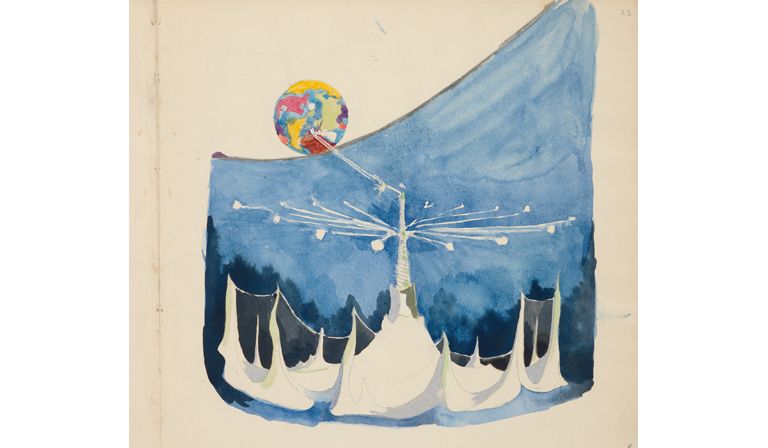
Overwhelmed by the furiously networking thinktankers and Spads, I slipped into the quieter gallery space. There I discovered what is, to my knowledge, the world’s only artwork inspired by an Unherd article (Louis Elton’s call for “neo-temperance” for social media). Hashtag Alley by JG Fox depicts bacchanalian chaos on London’s streets, caused by excessive social media and smartphone use. “An Algorithmic, dark machine, makes human minds its prey,” read the poem etched beneath.
It is ironic, because at ARC, I met some of the most terminally online people I’d ever encountered. From Curtis Yarvin and Rod Dreher to Mary Harrington and Konstantin Kisin, the conference contained a who’s who of right-wing influencers. The key talking points onstage—mass deportations, “transgenderism”, wokeness—could have been lifted from the “trending” section of X.com. And the “civilisational” importance attached to these niche concerns gave the distinct impression that the organisers’ priorities had been warped by the “algorithmic dark machine” of Elon Musk’s platform. (Fox clearly knew his audience—he also displayed A Map of the Brexit Isles, right next to Unherd’s official stall, depicting the Leave and Remain camps as two separate, divided islands. Zero points for guessing which side the crowd was on.)
I went to ARC—and the inaugural CPAC Great Britain (an offshoot of the US Conservative Political Action Conference) in July—to better understand the British right at an inflection point in its history. The electoral landscape has fragmented, with the Conservatives, Reform UK and Restore Britain all now competing for right-of-centre votes. Reform has been leading the polls. But as Andy Burnham enters Downing Street, and Nigel Farage is under pressure over his finances, its popularity is slipping. What ideas are circulating among the right’s activists and intellectuals? What might they reveal about their possible paths back to power—and what they might do if they get there?
I didn’t get definitive answers to these questions at ARC or CPAC, however—perhaps because the British right does not yet have them. Just two years after the Conservatives’ electoral drubbing, these parties have largely focused on taking cheap shots at the hapless Keir Starmer and have thought little about their own policy agenda beyond reducing migration and abandoning net zero. Neither conference presented many new policy ideas of the quality that we might expect to percolate in the minds of future ministers. But the shared references and rhetoric—and the difference between the prevailing vibes of ARC and CPAC—illuminate a divide in how British right-wingers see their collective project.
Having drawn breath in the gallery space, I re-emerged into the sprawling foyer as if ascending into heaven. Everything was bathed in white. The walls, the signage, the tablecloths, the chairs, the lighting... Some might unkindly draw comparisons with a hospital, but the designers clearly aspired to the divine. Which was apt, because most attendees self-identified as religious when asked for a show of hands during a later session. ARC’s co-founder and one of its major funders is Paul Marshall, the evangelical financier who owns the Spectator and Unherd, and part-owns GB News. Marshall gave the opening address, joking that “I can’t get through breakfast until I’ve performed a land acknowledgement, checked my privilege, changed gender at least three times.”
The authors JRR Tolkien and George Orwell were frequently referenced. The official conference book, The Age of Reconstruction by ARC’s “Chief Ideas Officer” Johnny Patterson, dedicated a whole chapter to Tolkien’s “temperance” in the face of technological change. It was a brave assertion, for there were plenty of Silicon Valley types in the crowd, including many working for companies named after things from the Lord of the Rings. (Executives from tech companies Palantir and Anduril, for instance, held a private dinner at the Lincoln’s Inn alongside the conference. Journalists were excluded.)
But the most revealing deployment of Tolkien was not his techno-pessimism but his novels’ depiction of decent countryfolk defending their realms against threatening invaders. Philippa Stroud, co-founder of ARC and the conference’s MC, paraphrased Tolkien in her rousing concluding remarks: “This day we fight, we build, we create, and we speak truth. And by all that you hold dear on this good earth, I bid you, ladies and gentlemen of the West, stand!” Reform MP Danny Kruger did not directly mention Tolkien, but he presented a similar vision: “The people of England have fought a long defence” of the “sacred spring” of tradition, he said, though they have periodically come under attack by “lucifers”. “The only good revolutions are conservative ones,” he intoned, calling for “an act of restoration”.
This is how the ARC speakers see their political project: as a rearguard defence of tradition against the alien ideas of the progressive left. Kruger directly contrasted this self-conception with how the left often portrays their project: as a dangerous, radical aberration departing from the norms of liberal democracy. We are the defenders, Kruger argued; they are the invaders scaling the castle walls.
The invocation of Orwell added an important layer: not only are the right defending against an alien agenda, but an irrational one, that succeeds only through obscuring its perversity. Orwell—whom I must remind you was a democratic socialist—was name-checked by various speakers, from United States diplomat Sarah B Rogers to former Australian prime minister Tony Abbott. Poor old George was marshalled to position claims seen in this forum as unquestionable—there are only two genders, diversity is not a strength—as having been suppressed by progressive doublespeak. “If the state can force you to accept men as women, they can force you to accept anything,” said anti-trans entrepreneur Sall Grover.
This supposed defence of facts over groupthink did not extend, of course, to the scientific consensuses on climate change and vaccinations. Author Eric Metaxas, whose titles include children’s books Donald Builds the Wall and Donald Drains the Swamp, was given a prime speaking slot despite his overt vaccine scepticism. Onstage, Australian journalist Rowan Dean mocked New Zealand’s Covid response. Conversely, Nigel Farage kicked off his interview with Stroud by mocking the official “red” weather alert issued by authorities that day. Outside, it was the hottest June day on record for the United Kingdom, and the London Ambulance Service was facing a 50 per cent increase in calls categorised as “immediately life-threatening”. It would later be estimated that 2,124 deaths across the UK were linked to that week’s heatwave. Inside the air-conditioned conference room, however, this was all bureaucratic over-reach.
One evident difference between them is on foreign policy; most of the ARC tribe remain supportive of Ukraine in its defensive war against Russia
It is hardly novel for conservatives to position themselves as traditional and sensible—and while the ARC crowd was enthused by issues you might call “extremely online”, the conference participants remained fairly traditional in their aesthetic and self-understanding. This puts them in marked contrast to the more radical voices on the right who see themselves less as defenders than insurgents. Maga-aligned activists appear less interested in “reconstruction” (the ARC conference’s theme) than the sheer theatre of targeting and humiliating their opponents, less enthused by rebuilding institutions than by ensuring their purported enemies don’t have access to them.
For instance, at last year’s ARC conference, Australian journalist Paul Kelly distinguished between the “Churchillian” and “Trumpian” right in attendance, with the balance of support tilting toward the former. One evident difference between them is on foreign policy; most of the ARC tribe remain supportive of Ukraine in its defensive war against Russia—a prototypical example of peaceful hobbits assailed by the forces of Mordor if ever there was one. (Many Ukrainians call Russian troops “orcs”.) While some of the Trump-adjacent speakers may not always see it that way, they were in the minority.
I bumped into Labour peer Maurice Glasman, who sits on ARC’s advisory board, in the smokers’ section on my way out. He called me an “old friend”, which I thought odd, as I’d never met him before, before I realised he was merely being affectionate toward Prospect, which he has previously written for. At the time, he was facing public scrutiny for his association with a parliamentarian for the far-right Alternative for Germany party (Glasman said he regularly meets with people of differing views and the meeting was intended to improve his understand the AfD’s political thinking), as well as Maga leaders. Both of these groups were represented in the crowd at ARC, and I’d be hearing plenty more from the latter at the next conference of the hot conservative summer: CPAC.
Compared to the stark white of ARC’s interiors, CPAC’s aesthetic was pure red, white and blue. This was meant to signify the colours of the British flag, but given the event was an offshoot of a popular American conference, one wondered if they hadn’t simply recycled the signage and lighting. Not that the audience seemed to notice—around a third of them were American anyway, which I could tell before they even opened their mouths from the distinctly Maga look of the blonde women and spray-tanned men.
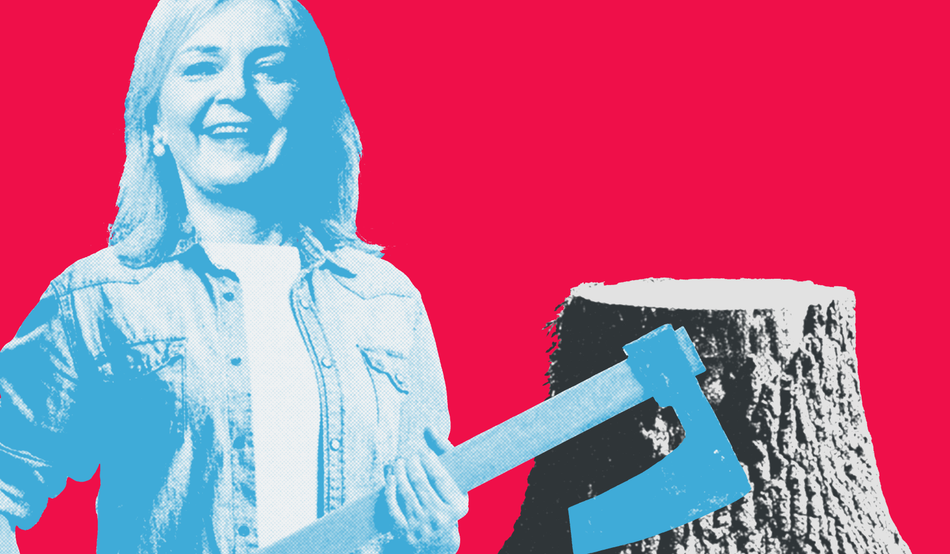
The problem for Liz Truss, the event’s organiser, was that very few locals showed up. The conference room peaked at about half full, and for most of the conference it was around two-thirds empty. Isolated individuals milled about awkwardly in the foyer, which was clearly meant to be a networking hotspot, with GB News presenter Matthew Goodwin walking back and forward as if staying in motion might hide the fact there was no one to talk to. In stark contrast to ARC’s lavish trappings, everything had a “thrown together at the last minute” feel, with catering nowhere to be seen and coffee costing £3.50—the indignity! Multiple speakers, including Florida governor Ron DeSantis, pulled out at the last minute. The slideshow with guests’ names and titles contained multiple errors. Even one of the event’s youth ambassadors, Ellie Hodges, said the “organisation simply wasn’t good enough”.
What was said onstage, however, planted the CPAC crowd firmly on the Trumpian side of Kelly’s dichotomy. Speakers ranged from Lucy Connolly, who was jailed for inciting racial hatred following the Southport attack, and Reform UK politician Laila Cunningham to Suella Braverman and former Tory MP Jacob Rees-Mogg. Many speakers waxed lyrical about standard bugbears of the populist right, from being “insurgents” to going to war with the “deep state” or—perhaps the key term of the conference—“the blob”. These people didn’t appear to be trying to “rebuild” anything; the left’s supposed cultural hegemony is so total that the country itself is already completely lost.
This perception was reinforced by the visiting Americans, with activist Jack Posobiec suggesting the UK had strayed so far from its roots that it needed a Trumpian revolution. Perhaps, he joked, Trump could move here and become the next prime minister, such is the laxity of our immigration laws! Matt Schlapp, chairman of CPAC, suggested Brits should have fewer restrictions on their ability to own guns, given how dangerous their streets had become. Australian politician Pauline Hanson jumped on the bandwagon of bashing the UK capital: “Get out of London and you have a beautiful country. But London? No thank you.”
Polish journalist Michał Rachoń dared to say something positive about London, calling it a great city that, to his people, represented freedom and modernity after their years of Soviet rule. Commentator Dan Wootton clapped back that London was not a great city anymore, and he should stop saying such preposterous things. Dozens of people applauded. Far from a Tolkienian defence of the realm, this was an abandonment of the shire to the orcs. It’s ruined, they seemed to say. Let it go.
The division between those who call for “reconstruction” and those who want to tear it all down and start over was clear at these respective talkfests. The catastrophism about life in western cities evident at CPAC is hard to reconcile with the way ARC speakers present themselves as reasonable defenders of home and hearth. Conservatives appear uncertain about whether there is anything left to conserve, or whether they have given up on much of the west as it now exists.
Any party seriously contending for government will need to win urban seats—where voters are upset about deteriorating public services, but not by the diversity of their neighbours nor the vibrancy of urban life
The person for whom this question is most pertinent is Nigel Farage, who spoke at both events (perhaps unwisely at CPAC, he spoke on “crypto day”). Which path will he choose? On his right, Rupert Lowe has hoovered up some of his most radical supporters, largely by appealing to declinist sentiment on X. The British public’s attitude towards London and other urban centres has also soured, but not to the same paranoid degree as in right-leaning spaces online. And any party seriously contending for government will need to win urban seats—where voters notably don’t buy the criticism of their neighbourhoods. They are upset about deteriorating public services, but not by the diversity of their neighbours nor the vibrancy of urban life. Cunningham, for instance, is running for mayor of London. Can she win over a city her party often depicts as a hellhole? And if Andy Burnham can reorient the political narrative toward the regions—and endear himself to voters with his love of home—will city-bashing lose its appeal?
Finally, these competing narrative frames do not stand in for a policy agenda, which the right still evidently lacks. On some of the biggest questions confronting the nation, the conferences were largely silent. On the economy and the cost of living—voters’ top concern—there was surprisingly little said, except for some cheap potshots at Starmer and, at CPAC, some shameless cryptocurrency boosterism. On defence and the war in Ukraine: not much. On energy: Farage boasted about calling in South Korea’s nuclear engineers, and various speakers got stuck into Ed Miliband’s green agenda, but that was about it. On healthcare, transport, taxation, social care? Crickets. Rarely have such political gatherings had so little to say about so many pressing policy issues.
About the closest ARC got to a new idea was in a conversation between Australian politician Bridget McKenzie (another speaker at both conferences) and parent coach Erica Komisar. The policy paper they presented proposed moving from individual income tax to family-based taxation (effectively allowing high-earners to reduce their tax bills by attributing half their income to their partner), discounting the income tax and student debts of mothers by 25 per cent for each child, and “removing emissions-based penalties on larger family vehicles”. Rod Dreher, a longtime proponent of Viktor Orbán’s pro-natalist policies, might have been pleased.
A bare policy chest and a muddle sense of direction left Starmer and his allies in Downing Street undone. As his adviser Morgan McSweeney recently acknowledged, Labour did not adequately prepare for power. Nothing I saw at ARC or CPAC suggested the right, which is still best placed to win the next election (for now), is heeding McSweeney’s warning. There was plenty of culture war fodder, and a notable difference in rhetoric, but little one can use to helm a department, let alone Number 10. At least the artwork was amusing.