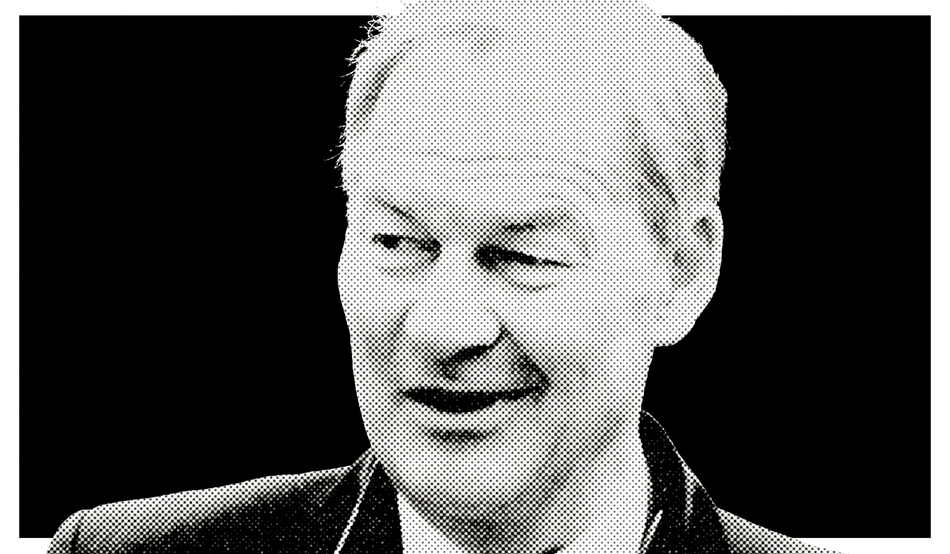
Who is the most popular British politician on X (formerly known as Twitter)? Reform UK leader Nigel Farage? Nope, he’s sitting in third place with 1.9m post likes over the three months to 13th April. The Greens’ leader Zack Polanski? Second, with 3.3m likes. Miles in front, according to Benchmarker, is Rupert Lowe, leader of the fringe radical-right party Restore Britain, with a whopping 12.9m likes.
Despite his online reach, the mainstream media has paid little attention to Lowe until now. They have been fixated on Nigel Farage, whose party Reform has surged to first place in the national polls. But Lowe has begun to challenge Farage on his right flank and is threatening to co-opt his insurgent energy. And when footage of the tragic murder of Henry Nowak was released last week, Lowe’s response cemented his position at the vanguard of the British reactionary right.
Eighteen-year-old Nowak was fatally stabbed in Southampton last December by Vickrum Digwa, who falsely claimed he had been racially abused by Nowak. The police officers initially handcuffed Nowak, assuming he was the aggressor, only to belatedly discover he’d been stabbed with a Sikh ceremonial sword.
After Digwa was sentenced to life and footage of the arrest was released, Farage seized the moment, delivering an incendiary speech at 8am on 2nd June declaring “white lives matter too” and calling on the public to respond with “pure cold rage”—despite the Nowak family’s appeal for calm. His “national address” gained over 59,000 likes on X. But Lowe outdid him a few hours later by claiming on the same platform that “a Restore Britain government, with the British people’s approval, would put Vickrum Digwa to death.” The post has been liked over 137,000 times.
How has the leader of a four-month-old party with only one seat in parliament (Lowe’s own) gained such reach on X? The clue lies in the platform’s owner Elon Musk, who has long been an admirer of the former businessman and chairman of Southampton FC.
Lowe won the seat of Great Yarmouth, on England’s eastern seaside, in 2024 as a Reform candidate. Musk had endorsed Reform UK, but started to appreciate Lowe’s blunt social media posts more than Farage’s slightly more polished rhetoric. In January 2025, Musk called on Nigel Farage to resign as leader and praised Lowe for making “a lot of sense”.
Soon after, Lowe and Farage’s relationship unravelled, with the two publicly trading insults. In March last year, London’s Metropolitan Police announced they were investigating whether Lowe had made verbal threats against Reform’s chairman Zia Yusuf, after the party referred the matter to the authorities. Reform subsequently withdrew the whip from Lowe in the House of Commons, effectively ejecting him from the party. No criminal charges were laid and Lowe denies any wrongdoing.
He sat as an independent MP for the rest of 2025—during which time he erroneously claimed that a charity rowing crew spotted off the coast of his Norfolk constituency could have been “illegal migrants” entering the UK on a small boat. He later admitted he was in error and donated to their charity.
Lowe started Restore Britain as a campaigning group, then registered it as an official political party in February this year, with Musk promptly offering an endorsement. Lowe positioned Restore to the right of Reform with increasingly extreme proposals such as mass deportations of migrants, complete abolishment of the asylum system and a referendum on reintroducing the death penalty.
Lowe’s social media posts were clearly popular in certain circles on the right before Musk took notice of them. But many have speculated that Musk may have tweaked his algorithm to increase the prominence of his new favourite British politician—and to the detriment of Farage.
Analysis by Sky News and the Oxford Internet Institute from 2025, for instance, showed that X’s algorithm resulted in Lowe’s content being significantly over-represented compared to other UK politicians, even those who post more often than he does and have more followers.
This disproportionate reach on X also shows up in the revenue Lowe receives from the company. The platform’s Creator Ads Revenue Sharing program distributes a percentage of ad revenue to top-ranking accounts based on how frequently verified users engage with their posts. UK politicians must declare such revenue in their registered interests. Since May 2025, Lowe has declared £47,140.73 from X Corp, compared to Farage’s £10,202.78 over the same period.
There are factors other than algorithmic manipulation that could explain Lowe’s popularity on X, however: Musk often interacts with Lowe’s content using his own account, and Lowe’s posts get a 5x boost when he does so. And Lowe is also popular on other social media platforms—he was the fourth most popular politician on TikTok and the second most popular on Instagram during the three months to 13th April. And he has more followers on Facebook than Keir Starmer and Kemi Badenoch combined.
Lowe’s posts frequently employ inflammatory language and imagery, which can generate arguments between his supporters and critics. This engagement tells the algorithm to amplify his reach further. As he framed it, “mass deportations are popular, and the algorithm picks up on that and rewards it.”
Lowe’s rise has both global and local implications. First, his X posts are evidently reaching and influencing members of the United States government. Former Trump adviser Michael Flynn has described him as “the leader every Brit needs RIGHT NOW” and a State Department official recently told the Times that Farage was boringly “mainstream” while Lowe was the real thing. Another figure with “close links to the administration” agreed, telling the Times there was a general preference for Lowe in Maga circles. On Thursday (4th June), the US State Department’s official X account posted its condolences to the Nowak family, but not before first stating that “ideological conditioning and two-tiered policing are glaring symptoms of civilizational decline.” The US administration’s amplification and endorsement of one of the UK’s most extreme voices will further strain the bilateral relationship, with Keir Starmer last week telling Musk to butt out of British politics.
Locally, Lowe’s influence is more contested. Restore is polling at just 3 per cent across the UK, compared to Reform’s 26 per cent. But Restore contested 10 seats in Norfolk at the May local elections through its offshoot party, Great Yarmouth First, and won all of them. In the upcoming Makerfield byelection, in which Greater Manchester mayor Andy Burnham is running for parliament as the first step in challenging Starmer for the Labour leadership, Restore is polling at 8 per cent. With Labour on 49 per cent and Reform on 39, Burnham would be just ahead even if Restore’s voters backed Reform instead. But the race is close, and the fragmentation of the right could decide the result.
The potential for Restore to spoil Reform’s gains is pressuring Farage. Polling suggests his party has lost one in eight of its 2024 voters to Restore, and he is evidently worried about losing more. This may already be pushing him further to the right, and precluding any moderation in search of Tory and Labour voters.
Farage used to be reticent on the subject of “mass deportations”, saying in September 2024 it was “a political impossibility to deport hundreds of thousands of people.” After his expulsion from Reform in 2025, Lowe complained that a call for mass deportations had been removed from a speech he had given as a Reform MP. Since then, Farage has changed his tune and embraced the idea of mass deportations. Both the Guardian and the Times this week noted that Farage’s incendiary rhetoric around the Nowak killing may have been an attempt to stall Lowe’s momentum.
The left has often been criticised for infighting and fragmentation, but the right is just as capable of it. Restore may inadvertently help Burnham to victory in Makerfield and effectively hand him the keys to Number 10. But Lowe could also further radicalise Farage, who, like Burnham, has a genuine chance of occupying Downing Street in years to come. The nation’s future might well hinge on the retweets of a foreign billionaire.