In February, on the Saturday before the Greens triumphed in the Gorton and Denton byelection, I met a Bolton-born self-described ethno-nationalist in Denton’s Jubilee Square. It was the final campaign rally held by Advance UK, a party to the right of Reform UK, in support of its local candidate, Nick Buckley. John, 65, was wearing a sandwich board.
When he was younger, John was “more of an ethno-nat, but… I've realised we're not going to get rid of everybody,“ he said, before pausing our chat to protest Reform’s notorious, teal-coloured empty double-decker, which was parked at a bus stop.
Back in February, Advance UK and its further-right peer Restore Britain were treated as eccentricities of our electoral system; their supporters, like John, eccentrics too. Not even Reform seemed worried by these parties’ level of support. But now, ahead of another critical byelection, the picture has changed.
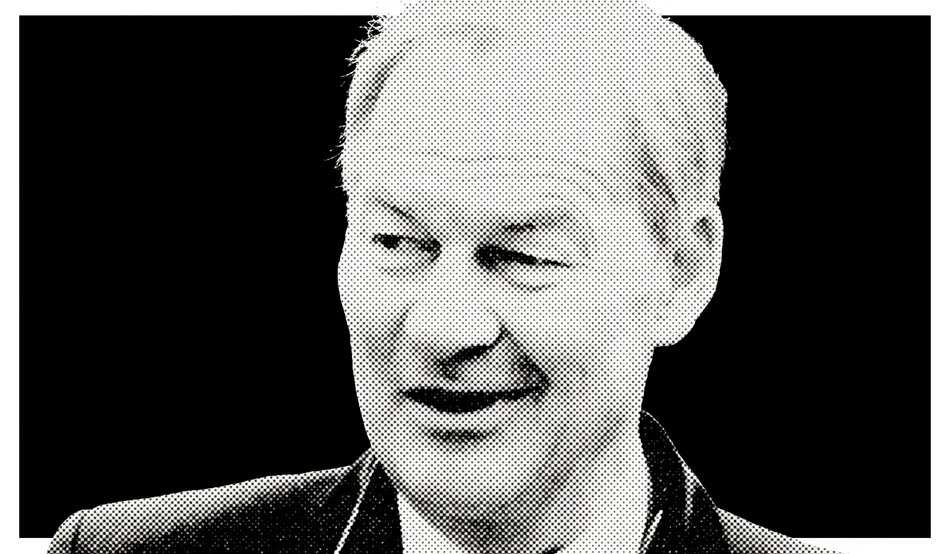
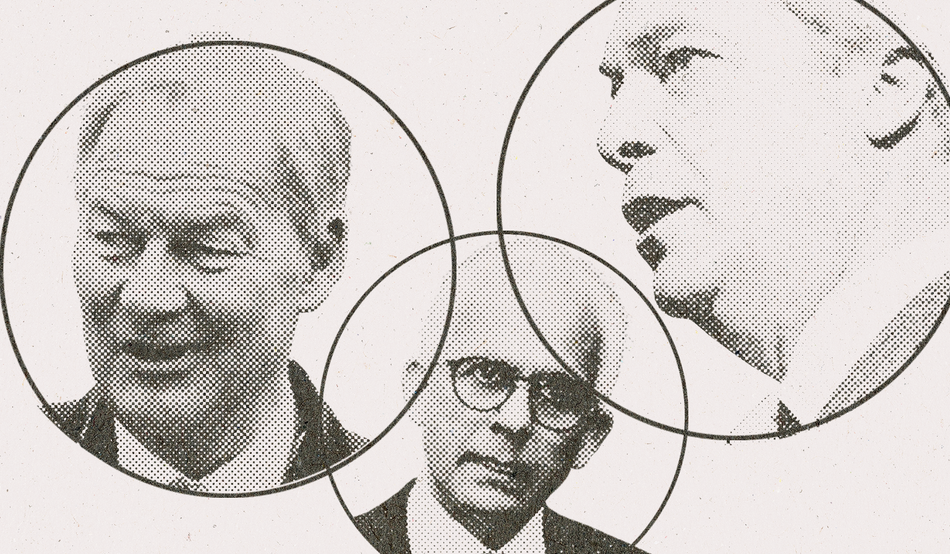
In Makerfield, Restore is giving Reform a genuine electoral shakedown. The party is polling at 8 per cent of Makerfield’s vote—ahead of the Greens on 2 per cent—and that can only eat into the Reform vote, where every percentile is needed to beat Labour’s Andy Burnham on his home turf. Restore’s leader Rupert Lowe, the 68-year-old MP for Great Yarmouth, Reform alumnus and former investment banker, is promising that “Restore Britain’s support in Makerfield is going to shock the establishment”.
Which brings us back to sandwich-board John, who shared with me a vision that’s gaining support on Britain’s nationalist right. “I’m aiming towards a supermajority, maybe 90 per cent [of] white demographics,“ John explained. “I’m happy to stand beside Ben Habib, even though he’s multi-race himself, because he's for the country,“ he continued, referring to Advance’s British-Pakistani leader, also ex of Reform, who is posh-sounding and “a gentleman“, according to several attendees at the Denton rally.
On 3rd June, Habib announced that he would cease his own party’s activities, given Restore’s rise in the Makerfield polls. Welcoming Habib’s decision, Lowe cited the “growing momentum” behind Restore, now at over 120,000 members, whereas Advance peaked at around 30,000. (Advance’s Buckley returned only 154 votes in Gorton and Denton). In Makerfield, Restore’s candidate is Rebecca Shepherd, a local businesswoman who is new to politics.
Out in Makerfield on Monday (15th June), I met an eager Restore campaigner handing out leaflets. He was explicit that the party is aiming to split Reform’s vote in order to show that Restore won’t accept the “new Tory party”.
“People who don’t follow politics much don’t realise that Reform are Tories with new branding,” he said. “They got fed up after 14 years of Tories, and I respect them for jumping ship, but [voters] don’t see what they’re falling for.” Restore’s operating logic, according to the campaigner, is to show both the Conservatives and Reform that they won’t settle for anything short of “full-scale political change”. When I asked about the recent Makerfield polling, he said it was selling Restore short. Double digits? “Oh, we’ll smash double digits.” If that lets Burnham win, to teach Reform a lesson, so be it.
Reform-adjacent posts online frequently have comments beneath them along the lines of “Defect Now, Restore Britain”. Reform was once Elon Musk’s favoured British political party; now that honour is reserved for Restore (there has been speculation that Musk is artificially inflating Lowe’s social engagement). Radical-right activist Laurence Fox, who founded the Reclaim party, has also backed Restore.
Despite Advance’s gesture of support towards Restore, the pair are not perfect allies. In leaked private voice memos, Habib described Restore as “full-tilt racist”. (Recently leaked Advance emails also show the party’s then COO and northwest regional director, Tim Power, trying to mount a counter-coup against Habib. Power, who launched a petition to halt any potential merger with Restore, is no longer with Advance.)
Other officials from the now shuttered party have also been suspicious of Restore. Its national director, Howard Cox, described himself to me as a “dear friend” of Lowe, before sharing concerns about the people surrounding Restore’s leader: “too drastic, too radical, and—yep, I'm gonna say the R-word—being racist.”
Advance had been considered marginally less extreme than Restore. To glimpse its worldview, look no further than Nick Buckley, Advance’s Gorton and Denton candidate. At Gorton’s hustings, Buckley told me that “we need to deport millions”, that “man-made climate change” is non-existent, and that the Greens are “the most dangerous party”. Buckley also said that Reform had joined the “uni-party… pulled to the centre“, piled in ex-Tory MPs and continued “what we've had for 50 years.” In other words, Reform is a fraud. Advance had also pledged to “re-colonise the curriculum“.
Most Advance supporters I spoke to in February were ex-Reform. One woman was a Tory convert who had skipped the Reform membership stage altogether. She said she saw Habib onstage at the Unite the Kingdom rally in September 2025, when he called Keir Starmer “a wanker”, and that was more than enough to convert her to Advance.
But many Advance supporters felt they had been excommunicated from Reform for supporting far-right agitator Stephen Yaxley-Lennon, also known as Tommy Robinson, who Nigel Farage disavows in public. (Now, Rupert Lowe has said that “if Tommy Robinson wants to join us that’s up to him”). Among them was Cox, who also calls himself a Thatcherite. On the further-right there is mistrust of Farage and “uni-party“ politics. Beyond that, Advance harbours a genuine ideological commitment to nationalism, ethnicity-based or otherwise. The racial lines consolidate in Restore, however. As anti-extremism organisation Hope not Hate has reported, its supporters include activists from fringe and neo-Nazi groups, such as Patriotic Alternative.
Reform, with its big money donations, appears by contrast glossier and more insincere to such voters. In Makerfield, Farage comes with a major security operation. Thirty minutes before his arrival at the St James Social Club, where he addressed Reform supporters on 2nd June, there was a full sweep of the bar, kitchen and backrooms. There were earpieces, multiple bodyguards and large black 4x4s. A dozen or so Stand Up to Racism demonstrators meant police were at the scene, and to enter there were full-body and bag checks and metal detectors, while punters needed to show their Reform membership cards. I was turned away. The Advance rally earlier this year in Gorton and Denton, meanwhile, was held in a public square with little more than a branded gazebo and table. There, I spoke casually with and interviewed multiple party directors, security-free.
Reform’s candidate in Makerfield, Rob Kenyon, may be a “plucky plumber” but his boss certainly doesn’t travel like one, undeclared helicopter rides and all. Reform thus finds itself in a difficult place. Some observers argue that Labour shouldn’t waste time or political capital trying to “out-Reform Reform“ by lurching rightwards. But there’s now a party on the further-right which is pushing Reform to more extreme public pronouncements. Beyond Makerfield, this means the continued normalisation of far-right narratives, which is eroding the barriers of acceptability in the political mainstream.
This trend pre-dates the Makerfield polling that so worries Reform. When the party’s candidate in Gorton and Denton, Matthew Goodwin, posed on the campaign trail with teal-clad Sikh Reform supporters, a prominent pro-Restore account mocked him online. Now, in the wake of footage of Henry Nowak’s murder being released and his murderer, a British Sikh, being sentenced earlier this month, Farage et al are speaking openly about “white lives”. On Monday, Farage published a 5,000-word Substack essay titled “Britain is a two tier state - against white people”.
In the end, despite the photographs with Sikh supporters, Yaxley-Lennon endorsed Goodwin in Gorton and Denton. Now, Nick Tenconi, the latest of Farage’s successors as Ukip leader, has endorsed Reform’s candidate Kenyon in Makerfield. Tenconi explained why on Dan Wootton’s YouTube show: “Nigel Farage is moving to the right… saying radical stuff… playing ball… I know for a fact that him and his team are observing what we do at street level… the direction of travel we set, the rhetoric that we use… as long as Nigel has the infamy… my thoughts and feelings about Nigel and Reform aren’t relevant…we must... pool in some way, shape or form: money, resources, candidates, systems, processes, campaigning strategies, ideas.”
It is unlikely Restore will challenge Reform’s position at the top of the polls nationwide, where it has hovered just below 30 per cent for some time. The question is whether growth on the further reaches of the right could ultimately strengthen Farage ahead of the 2029 election. Unlike the left, the UK’s extreme right hasn’t to date concerned itself with ideological purity tests. Back in February, Howard Cox hinted at the possibility of a broad-right coalition forming before the next general election, bringing together numerous parties and overcoming clashes of ego. As sandwich-board John told me: “We’re stronger together.”