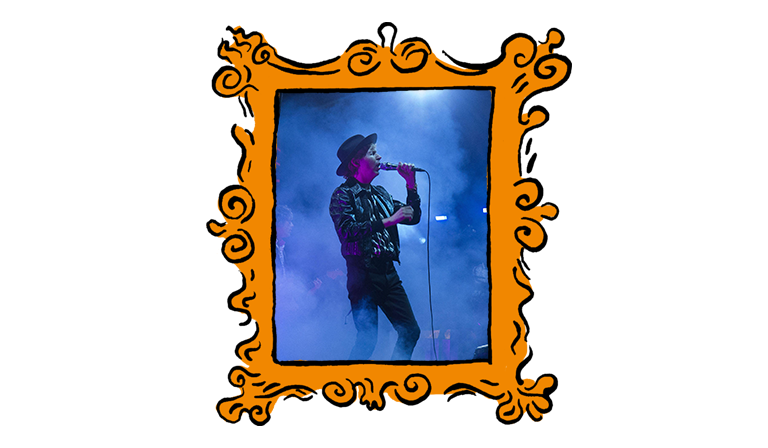
When the dust finally settles on Beck’s eclectic career, I suspect the albums that will be most fondly remembered are not the cheeky, postmodern, experimental ones, like 1996’s Odelay, but the great trilogy, beautifully arranged and sombrely sung, about the heartache he has suffered. The first of these, Sea Change (2002), explored the demise of a lengthy relationship in raw yet stirring fashion; the Grammy-winning Morning Phase (2014) reunited the same personnel for another collection of songs of solitude and longing.
Now, his first studio album in seven years, Ride Lonesome, deals with the pain he felt in the aftermath of his divorce in 2021. Once again, it is a masterpiece, although you cannot help feeling that it is just as well for Beck’s artistic spirit that he is somewhat reminiscent of The Fast Show’s Unlucky Alf when it comes to matters of the heart.
Veteran Beck watchers will know what to expect, and some of the titles flirt with self-parody. Of course there is a song called “Falling Through My Hands”, just as there must be another called “Failed Words”. But if the sentiments are at times on the nose, the sumptuous music, owing equal debts to Serge Gainsbourg and Nick Drake, demonstrates that when songwriters have their souls rent asunder the results are often extraordinary.
Nor is this confined to rock and pop. Anyone who has ever listened to a lovelorn country ballad—bemoaning, say, the death of a relationship or the endless pain you feel when waking up to discover that your beloved is no longer there—will know that heartbreak often makes for great tunes. At times, these songs can tip into cliché—as Blur demonstrated when they released their own version of the trope, “Country Sad Ballad Man”, in 1997—but they also have an unusual sincerity to them that other artists struggle to match. The late Dolly Parton wrote perhaps the finest example of the genre in “Jolene”, with a rare psychological acuity that adds another character to the traditional mix of leaver and left-behind. The flame-haired Jolene is a near-supernatural presence who, you fear, is going to get and discard Dolly’s man, just as she has a thousand others.
Even in its traditional form, however—the black-clad singer-songwriter—melancholia makes for arresting music. It is impossible to listen to Leonard Cohen without being moved, occasionally to tears, by such classics as “Famous Blue Raincoat”, “Bird on the Wire” and, perhaps most of all, “So Long, Marianne”, a hymn to his former lover, Marianne Ihlen. It acquired a heartbreaking sequel when Cohen, close to death himself, wrote to the dying Marianne to say, “I think I will follow you very soon. Know that I am so close behind you that if you stretch out your hand, I think you can reach mine.”
Even before Cohen’s death, the mantle of gloomy yet poetic troubadour had been taken up by his acolyte Nick Cave. Strangely, for one so dark in his writing and preoccupations, Cave has spent the past few years travelling from cult act to mainstream figure, thanks to the painfully emotive records that he has released since the accidental death of his son Arthur in 2015. This is a wholly different kind of heartbreak from the sort he explored so memorably on his 1997 album The Boatman’s Call. That record deals with the end of his relationship with PJ Harvey and features perhaps his single most impressive song, “Into My Arms”, with its unforgettable opening lines, “I don’t believe in an interventionist God / But I know, darling, that you do.”
Gods, interventionist or otherwise, tend to be in short supply in most songs of love and loss. Cave is unusual in being an avowedly religious artist who treats his relationship with the Almighty in intensely personal terms, whereas the classic heartbreak ballad delves into far more earthly territory, focusing on a broken-down relationship. One of the greatest of these is Sinéad O’Connor’s version of Prince’s “Nothing Compares 2 U”, which improved on the already impressively emotional original. A scene in its accompanying music video, when O’Connor sheds two tears (for her late mother, she once clarified), secured its place in the annals of break-up records.
Admittedly, after you have immersed yourself in the luxuriant wallow of songs about lost love, it is sometimes tempting to shout, “For God’s sake, get a grip on yourself!” But as anyone who has ever been hurt romantically will know, it is far easier to abandon reason, pour yourself a bath and a glass of something strong, lie back and savour a purely selfish sadness. That is something Beck and all his ilk understand innately, and it is why their records will be listened to by the heartsick as long as music—or heartbreak—continues to exist.