Preparing a new edition of a book is a delight. The simple fact that it’s required is a pat on the back from the world. It is a chance to re-immerse myself in an old enthusiasm. It is also a chance to correct mistakes: however hard I research, errors always seem to creep in. Yet I find that people who contact me pointing these out do so politely, having enjoyed the book overall. It can be the start of an online friendship.
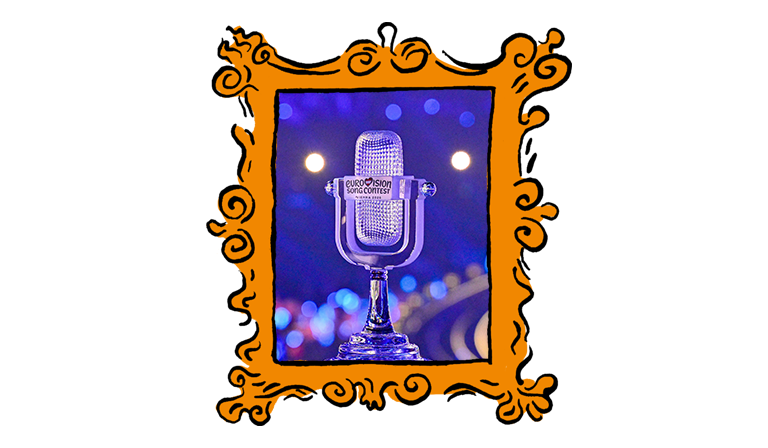
This time, I have been updating my Eurovision! A History of Modern Europe Through the World’s Greatest Song Contest. It is a natural for revision, as the contest is annual. But European history is perpetually rewriting itself, anyway. Anyone covering the topic can only hope to keep up.
The previous edition had appeared in autumn 2022. Arguably the biggest shock since then is not change but the lack of it—the war in Ukraine grinds remorselessly on. In the 2022 contest, held that May, there was a massive sympathy vote for Ukraine’s entry, propelling it to victory. That has not happened since. Ukraine has entered a series of quality songs, and they’ve all done well, but on merit, not politics.
The major story in the contest since 2022 has been about Israel’s participation. This has long been controversial, given its policies on the West Bank, but after its invasion of Gaza following the 7th October terrorist atrocity, debate has become intense. The organisers lost control of Eurovision 2024, clamping down on pro-Palestinian micro-protests by artists, while some participating countries complained that the Israeli delegation created an intimidating atmosphere backstage. Things were handled a little better in 2025 and 2026, even if five countries—Spain, the Netherlands, Ireland, Slovenia and Iceland—did withdraw this year in protest at Israel’s inclusion.
Meanwhile, the Israeli authorities have been using the contest for propaganda. The competition is decided by two different electorates: the public who vote via various media, and panels of professional judges (the split between them is 50:50). From 2024 onwards, Israel entered a series of undistinguished songs, which the judges duly ranked mid-table but which the public voted best or second best. The Israeli government said this was a sign of Europe’s “silent majority” support for the country. In fact, the public voting system allows individuals to vote 20 times per payment method (reduced to 10 in 2026) and Israeli government agencies openly ran substantial online advertising campaigns encouraging people around Europe to support their songs by doing that. The European Broadcasting Union, which runs the contest, has started to address this issue, but it will no doubt rise again in 2027.
That will be a shame for Bulgaria, next year’s host. That is a third, more upbeat new story. In 2026, that peripheral and relatively poor nation beat the usual suspects—Sweden, Italy, France—thanks to the mesmeric star quality of its entrant, Dara.
Intriguingly, none of these three stories is about what the founders of Eurovision, back in 1956, would have called “Europe”. The underlying tale of Eurovision—and of Europe—in the era of the contest, is not one of the decline of old colonial powers but the expansion of a new idea, a liberal vision of Europe. It is also a story about varying reactions to that vision, from Putin’s paranoia to the pro-Europeanism of the 2026 winners. (Back in 2007, Bulgaria’s Stoyan Yankoulov yelled “Europe, we love you” after his contest performance.)
Commentators on global affairs mutter about the decline of Europe, as Chinese manufacturing and US tech march on. Europe, they say, will become a global theme park. But Europe remains a beacon of real, lived tolerance, culture and civility to many people. If anything, that beacon is shining ever brighter, given China’s authoritarianism and America’s gun culture and leadership black hole. The Eurovision Song Contest is one expression of this.
Rewriting the book has also made me face prejudices I thought I had transcended. Britain’s view of the contest was shaped in the 1980s and onwards by commentator Terry Wogan, who found it ever more ridiculous and did not hold back on saying so. But he was overlooking a deeper reality. He failed to understand the traditions from the new, wider Europe that were becoming embedded in the contest. Carnival and cabaret have strong roots in Eastern Europe (as well as, of course, France and Germany). The British tradition of sincere, well-made pop doesn’t really sit with these ironic genres. There are also passionate but musically unfamiliar traditions such as Balkan sevdah and lăutar, Portuguese fado or French chanson. These are alien to UK popular music culture, which is largely based on American influences, especially blues. But they belong in our modern Europe-wide contest.
It was with embarrassment that I looked at some passages in the old edition and heard the ghost of Sir Terry still whispering—wittily, of course—in my ear.
Updating my Eurovision history has not been a simple, “job-done” thing. For days after submitting the new version, I would find myself thinking, “No! I should have said more about Dani Dauberson or rephrased my comment on Moldova’s 2012 entry.” At first, my publisher was tolerant of my suggesting new wording, but finally the curtain descended, and the new edition had to head off to seek its fortune. It appears today. When I get my copy, I wonder how far into it I will get before I start shaking my head and asking why I didn’t say X or Y.
Oh, well, there’s always the next edition.