When the sparks of the #MeToo movement crossed the Atlantic nine years ago, Britain’s theatre sector was the first to catch fire. The stories of Harvey Weinstein’s casting couch felt only too familiar.
Two big names soon became lightning rods for the anger of their juniors. Max Stafford-Clark, founder of the pioneering Out of Joint company, stepped down after a formal complaint of sexual harassment was made to the board. Five women in total complained to a Guardian investigation—and, for the record, two others had told me similar stories of working for him, long before the #MeToo movement brought these conversations into the open. (A spokesman for Stafford-Clark later apologised for “any offence caused” and blamed “pseudobulbar palsy” and “occasional disinhibition” caused by a stroke in 2006.)
Kevin Spacey continues to deny over 30 allegations of sexual harassment by men in two continents, and stresses that he was acquitted of nine sexual offence charges at trial in 2023. But his case has haunted London’s Old Vic, where he served as artistic director between 2004 and 2015. This March, he agreed an out-of-court settlement in a civil action with three more men who accused him of sexual assault, including an actor employed in a small role in the Old Vic’s 2013 production of Sweet Bird of Youth.
On the backstage side, the moment gave voice to theatre’s exploited like nothing else before. I won’t forget the fierce and motivating anger of the feminist director Vicky Featherstone’s Day of Action at the Royal Court, where Stafford-Clark had once held her post of artistic director. Over 150 testimonies of sexual abuse of power were read out in five days. That day had consequences beyond the theatre world and into Westminster: it was the moment that inspired me to make my own complaint of sexual harassment against a senior politician who eventually resigned from his role. (He denies he did anything wrong.)
Theatre was Britain’s Ground Zero for the #MeToo movement. Backstage, some things did change, a little. But many miscreants survived, riding out the rumour mill and, in some cases, brazenly programming work about the #MeToo movement itself, to widespread bemusement at press nights. But the rise of intimacy coaches and the establishment of codes of conduct—pioneered by Featherstone—has made a clear difference in rehearsal rooms.
On stage, however, #MeToo has yet to inspire a great British play. Instead, theatres have relied on work from abroad—perhaps because Britain’s strict defamation laws make them wary of developing texts that even hint at recognisable stories. The first West End production to respond to Weinstein was David Mamet’s 2019 US play Bitter Wheat, which barely platformed the victim experience at all and instead charged John Malkovich with taking us inside the head of a grotesque Weinstein-stand-in. (This was a show played for dark laughs: at one point, Malkovich’s character attempts to win a “humanitarian in film” award by pimping out an unwilling actress to a juror.)
In 2022, Suzie Miller’s Prima Facie transferred from Miller’s native Australia and took Britain by storm, owing much to Jodie Comer’s tour-de-force performance as a barrister who pursues charges against a colleague for rape. But, fundamentally, this wasn’t a play about the abuse of personal power as much as it was about the failures of the British legal system—which, not least in its references to “Cambridge law school”, it sometimes covered hazily. Its raw power came not from nuance but from Comer’s righteous, female rage.
This too, perhaps, is the challenge of writing the #MeToo play. For many of us, this was a global moment born from white hot anger—the “witch-hunt” to its detractors; the long overdue reckoning for those of us who participated. Drama relies on dialogue and emotional distance. It takes a very long time for such emotion to be recollected in tranquillity.
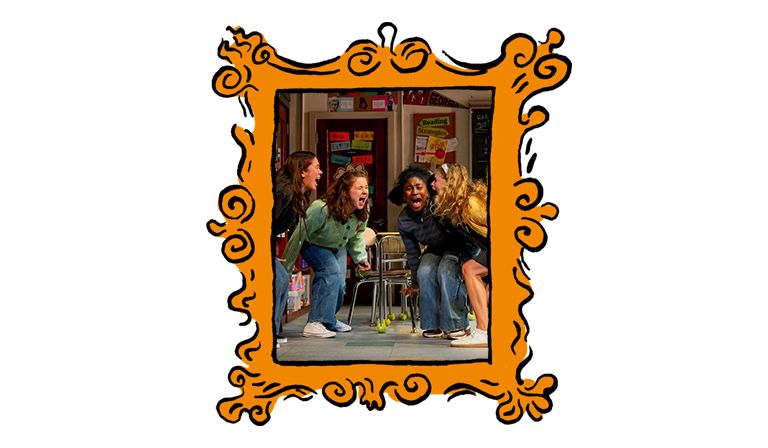
Yet, in America, playwrights have faced this challenge with more success. Kimberly Belflower’s play John Proctor is the Villain is one of the most celebrated examples and can now be seen at London’s Royal Court Theatre. The show marks something of a full-circle moment for the Royal Court. Last week marked the institution’s 70th birthday. Long before Featherstone’s Day of Action, long before Stafford-Clark’s tenure, the theatre’s first month included the British premiere of Arthur Miller’s modern classic The Crucible.
With its thinly veiled attacked on McCarthyism, for which 17th-century Salem became a stand-in, Miller’s play popularised the term “witch-hunt”—the same term that critics of #MeToo would weaponise against sexual harassment complainants 60 years later. (The original witch-hunts were, in fact, directed against non-conformist women.) But, as Belflower points out, the female hysteria in Salem goes back to the behaviour of the play’s hero, John Proctor, who seduces his teenage servant, Abigail, before sticking with his wife. Generations of male interpreters have noted this only as evidence of Abigail’s immorality. Indeed, a 1996 film added a closing credit note alleging that Abigail was last heard-of working as a prostitute in Boston, a detail for which there is no evidence in the life of the historical person—serving only to add zest to Proctor’s accusation, in the text, that Abigail is a “whore”. His own straying is earlier excused by his wife, who blames herself: “It needs a cold wife to prompt lechery.”
Belflower’s play isn’t a rewrite of The Crucible: it’s a contemporary tale about a group of high schoolers in small-town Georgia, studying the play and finding in Proctor’s behaviour the models for the hypocritical men around them. It takes a long time to warm up and depends on a sharp, if predictable, twist about two-thirds through. Yet, because it’s a play largely set in an English class, it is powered simultaneously by pure rage and thoughtful understanding of the ways in which language can be used to humiliate and control. We watch a seemingly inspirational teacher encourage his female students to mine Miller’s words for deeper power structures; it’s a spoiler, but a blazingly predictable one, to say that the words in his own mouth soon become double-edged.
In this, I was reminded of one of the most thoughtful responses in theatreland to Stafford-Clark’s own alleged abuses in the rehearsal room. As the playwright Dan Rebellato wrote back in 2017, it was particularly implausible to hear one of the most acclaimed interpreters of language claim innocence for the impact of his own words—and to give the standard apology for “any offence caused”.
Stafford-Clark had invented a method of interrogating text known as “actioning”. This requires actors to identify the “action” that is being enacted by each line. So: “when you have the line, ‘where are the scissors?’, what are you actually doing to the other character by asking that question?” Which means, as Rebellato put it: “the man who invented actioning knows exactly what he is doing… when he tells his assistant, ‘If you were sat on the desk there in front of me I would eat you out’. The man famed for ‘all his sensitivity to the interpersonal power dynamics when people meet and talk and boast and clash and compete and battle for territory and try to fuck with each other’s heads, knows exactly what he is doing.”
In Carter Smith, Belflower has created a teacher with all the same interest in text and power, if a more Appalachian style: “I’m really excited to dig into this all with y’all,” Smith says of Miller’s language around sex. Now Belflower gets to put him on stage at Stafford-Clark’s old stomping ground—thanks to current Royal Court artistic director David Byrne’s programming. This surely is some kind of progress.
If critics look for flaws in John Proctor is the Villain, they will find plenty with which to work. None of the male characters are well developed and, as Smith, Dónal Finn has an easier time projecting superficial decency than latent predation. If you’re snippy about the use of Taylor Swift or Lorde to express teenage longing, you’ll roll your eyes. Across the British cast, Southern US accents wander.
But, better than any play I’ve seen in the UK, it captures the animating spirit of the #MeToo movement: the howl of the powerless trying to name power. It’s helped by a bravura performance from a nervy Sadie Soverall as Shelby, the show’s Abigail stand-in, who, like many youthful victims of predation, has been left far too damaged and self-sabotaging to be credible when it matters. It’s spot-on, too, about how these accusations test female loyalties.
Shelby does find enough solidarity and sisterhood to leave us with a glimmer of hope. Leaving the Royal Court’s building, I felt the same odd mix of rage and optimistic power that I felt on that fateful Day of Action in 2017. On stage and off, the #MeToo movement ran out of steam within a year, but the Epstein scandal is threatening to revive it. John Proctor is the Villain should inspire us.