Over the past few years, the Oscars have become a much more international affair. Rather than just honour films made in the English language, as they did with very few exceptions throughout the 20th century, they have found room for films from different countries: the ceremony last Sunday included multiple nominations for films from Norway (Sentimental Value), Iran (It Was Just an Accident) and Brazil (The Secret Agent).
That said, certain blind spots remain. China may be surging in all sorts of ways, but you wouldn’t know it from the Academy Awards. No mainland film has received a nomination since Hero, and that was all the way back in 2002. What’s more, only four films from the People’s Republic have ever been picked to compete, all of them in what’s now called the Best International Film award. None of them have ever won.
Which is odd, considering the robust state of Chinese film. For a start, it has already eclipsed the USA as the biggest market for movies, with some 90,000 screens, and more coming on stream all the time (contrasting with 40,000 in the States, a number that’s declining). What’s more, the local industry is thriving in a way that cash-strapped, post-Covid Hollywood can only dream of.
Once, Chinese directors made widely admired arthouse fare—the likes of Zhang Yimou’s Raise the Red Lantern (1991) and Chen Kaige’s Farewell My Concubine (1993). Now, however, the emphasis is on bigger and more explosive films. And, unlike the rarefied critical hits of yesteryear, these are genuinely popular, routinely grossing unimaginable amounts of money.
The biggest Chinese film last year was Ne Zha 2, an animation drawn from Chinese myth. It wasn’t simply the most profitable film of 2025 in China; it topped the charts worldwide, with a total haul of around $2.2bn, making it the fifth highest-grossing film of all time. (Its nearest 2025 competitor, the American-made Zootopia 2, made a paltry $1.9 billion.)
This, of course, will be grist to the mill of those people who foresee China’s global dominance expanding ever further, with a cultural sector as ambitious as its businessmen. But while there’s no arguing with the raw data, there are a few notes of caution that should be sounded.
For instance, for all the undeniable success of Ne Zha 2, it’s worth noting that all but about three per cent of its haul came from within China itself. Now, obviously, three per cent of $2.2bn is still a lot, but it’s also still some considerable way short of being the phenomenon internationally that it was at home. And this is true of other Chinese blockbusters: unlike Hollywood films, which generally enjoy a similar (if relative) level of popularity in every territory, Chinese audience enthusiasm does not translate into global success.
Then again, this is—at least partially—by design. As they do for so much else in China, the government issues five year plans for movies. The last came out in 2021 and placed an emphasis on “patriotic’ subjects” whether from folklore (such as Ne Zha 2) or military triumph (The Battle at Lake Changjin, celebrating a Korean war victory against America). For the Communist Party, cinema is now essentially propaganda, to elevate national sentiment and promote Chinese self-confidence.
But at what cost to their international soft power? A useful comparison might be to South Korea, a far smaller country whose music and movies have made it a cultural hyperpower: think BTS, think Parasite, think—if you must—K-Pop Demon Hunters. Think of all the hearts and minds they have won.
The parochial Chinese blockbusters haven’t established a profile overseas, and there’s been no strategy to develop films that might. Whereas the former Soviet Union made sure to produce prestige films that would play at international film festivals and arthouses around the world, seeding influence and shaping perceptions, the Chinese authorities have shown little interest in these arenas, whatever advantages they might convey.
This seems bewildering, especially when there are already so many distinctive voices in Chinese cinema. Films such as An Elephant Sitting Still (2018), So Long, My Son and The Wild Goose Lake (both 2019) were amongst the very best of their respective years. Increasingly, though, they seem like isolated triumphs rather than the start of something so much more, as they seemed at the time.
Worthwhile Chinese films are still being made. Director Jia Zhangke (A Touch of Sin) has been able to build a career and increasingly looks like a master. There is also the case of Bi Gan. His latest, Resurrection, has just been released in the UK and while it is emphatically Not For Everyone (= high art), there is simply nothing else like it out there—a sprawling meditation on dreams and cinema that defies easy description as it shifts through time and genres. It’s a more striking—and better—example of Chinese creativity than the state-sanctioned pablum that dominates at the box office.
China, of course, has many sources of soft power and many ways to influence those overseas, from Mr Xi’s Belt and Road through to TikTok. But culture, thus far neglected, might well be the most powerful tool of the lot—the extent to which American film and TV have shaped favourable perceptions of that country cannot be underestimated, something that communists used to understand.
Maybe movies—once the most international medium, with the most potent impacts—simply don’t matter as much these days. Or maybe it’s a sign China’s rise is built on shallow, and fragile, foundations. We’ll find out soon enough.
China is spreading its influence. Except in movies
President Xi’s five-year plan for his country’s film industry? In a word: insularity
March 19, 2026
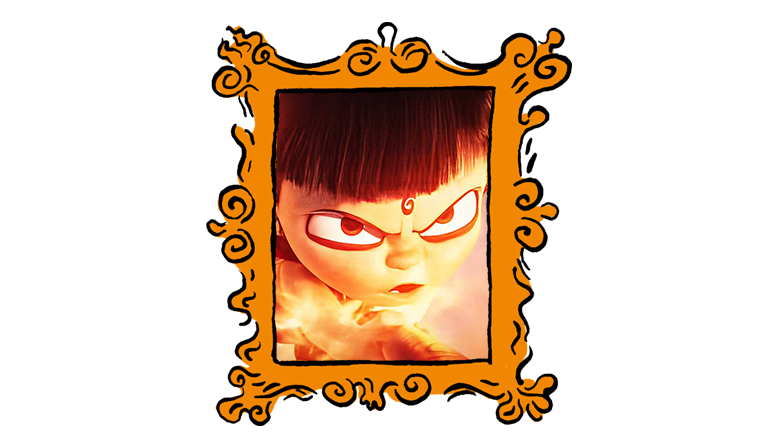
Image: Alamy / Everett Collection Inc