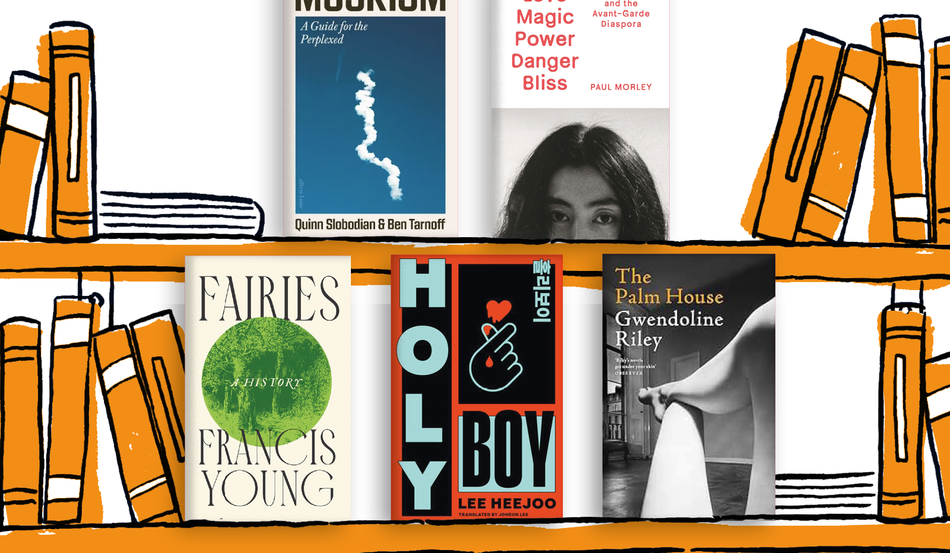
Muskism: A Guide for the Perplexed
by Quinn Slobodian & Ben Tarnoff (Allen Lane £25)
Soon after Elon Musk paid $44bn for Twitter in November 2022, he found a stash of #StayWoke T-shirts at its San Francisco headquarters left over from founder Jack Dorsey’s era, then tweeted a video to prove the company’s infection by the woke mind virus. The next morning, he posted that reports of the killing of Michael Brown, the African-American shot and killed by Missouri police, were lies. “‘Hands up, don’t shoot’ was made up,” he wrote. “The whole thing was a fiction.” Later that day, he posted pictures of new Twitter merch, a T-shirt emblazoned with the new slogan, “#Stay@Work”.
The tale of two T-shirts is emblematic for the authors of this pacy, informative analysis of the world’s richest man and his counter-revolutionary ideas. Musk mutated into Covid-era Gradgrind and Twitter became X, a global clearing house for racist hokum, including the “Great Replacement” theory that claims liberal elites have conspired to accelerate immigration to replace the white population.
What is Muskism? On this account, it combines lean Fordism (his enterprises are vertically integrated, keeping supply lines short and dependence on bad foreign actors minimal); cybernetic futurism (mingling Douglas Adams’s Hitchhiker’s Guide with Ray Kurzweil’s transhumanism); and eugenicist fantasies.
When he left the Trump administration last year as head of the cost-cutting Doge, Musk tweeted: “[P]edal to the metal on humanoid robots and digital superintelligence.” Pedal to the metal, indeed. How poignant that the Memphis data centre for his AI chat enterprise Grok is located in a historically black neighbourhood that was a community for emancipated slaves; their descendants now face increased rates of cancer, asthma and respiratory diseases thanks to the facility’s methane gas turbines. “We are not a sacrifice zone for the profits of a billionaire with technocratic fantasies,” said one protester. But, in a sense, we all are.
Stuart Jeffries
Fairies: A History
by Francis Young (Polity, £25)
In the de-enchanted modern world, fairies come to us mostly through Disney, made safely dull in sparkly pink. But fairies, or faeries, have far darker origins in the history of supernatural belief. By tradition, they are often capricious, not to be trusted, morally ambiguous—and, in their varied forms, are a challenge to any notion of neat taxonomy.
Undaunted, historian Francis Young follows his examination of pre-Christian British beliefs, The Twilight of the Godlings, by expanding his study of fairies into continental Europe. He finds a riot of trolls, leprechauns, elves, gnomes, goblins and bogeys, bringers of chaos, good luck, bad luck or sour milk. Fairyland is seen as a parallel world, a distant echo perhaps of pagan or animist beliefs that have run alongside Christian cosmology for millennia.
Young looks at the theory that fairies started in literature then crossed over into folk belief, embodiments of magic intervention without the theological awkwardness of angels or demons. He draws exhaustively—sometimes exhaustingly—on three centuries of scholarship, antiquarianism and folk study. The result has a lucky-dip kind of fascination, but, as he admits, any form of definition is as elusive as a fairy sighting. And surely that is as it should be.
That said, there are similarities in fairy beliefs across European cultures: they are almost always diminutive; they are thought to live in hierarchies, ruled by kings or queens; they are often intimately related to landscapes; pointy ears are a persistent feature and surely a lingering inheritance from the Greek god Pan.
Belief in fairies has survived the Reformation, the Enlightenment and the Industrial Revolution to re-emerge, apparently, in eco-protest movements (fairies being generally hostile to technology and new roads). The online Fairy Census in 2018 alone posted 500 encounters—including a startling account of an elf in a hedge. Fairies’ tenacious refusal to disappear is living history in action.
Lucy Lethbridge
Love Magic Power Danger Bliss: Yoko Ono and the Avant-Garde Diaspora
by Paul Morley (Faber, £25)
David Sheff’s conventionally chronological Yoko Ono biography, Yoko, published last year, had a mixed reception. Paul Morley’s new book instead focuses on Ono’s life after she left Japan but before she met John Lennon in a London art gallery in 1966. His subtitle, “Yoko Ono and the Avant-Garde Diaspora”, tells it well; this is Ono mixing with the likes of Fluxus musicians, Marcel Duchamp, John Cage and minimalist composers, among whom she found the essence of her own work. Morley’s hard analysis and historical essentials are the antidote to Sheff’s adulatory tone.
Elsewhere, though, he’s been given a hard time for writing an Ono book that skates over Lennon. I feel I’ve read about the Beatles once too often, whereas Morley’s narrative teleports us somewhere that is far less visited: Ono as a virtual unknown, picking her way through the New York avant-garde scene of the earlier 1960s, where she not only thrives but becomes a key power player.
The famed loft space Ono opened at 112 Chambers Street was a hub of exploratory activity where, on any one night, audiences might be expected to sit through glacially moving electronic drones, or see musicians setting their sheet music on fire. It’s easy, from this historical distance, to view such antics with disdain, but Morley won’t hear of it. Passionately engaged with making a new, better world—she had, after all, witnessed horrors in Japan during the Second World War—Ono was steely and determined, as well as naturally inquisitive.
Responding to Trump’s first election victory, she tweeted @realDonaldTrump with a recording of a full-throated scream—her instinct had long been to defy authoritarian behaviour, and Morley does a superlative job of examining all the hows and whys.
Philip Clark
Holy Boy
by Lee Heejoo, tr Joheun Lee (Picador, £14.99)
They say that all human parents are, at times, drawn to wanting to eat their babies. This “cute aggression” is the biological urge to bite and squeeze something you love so much that it draws out feelings similar to anger—but, crucially, you don’t actually want to cause harm.
Holy Boy is the first of Lee Heejoo’s novels translated from Korean and it takes this idea to its fullest extent. What would happen if the urge never abated and the desire to tear apart something you love overwhelmed you?
Lee is known for the way she writes about K-pop—that is, the Korean popular music of bands like BTS—its fans and their “fierce and unapologetic love for their male idols”. Her Holy Boy is set in the 1990s, when K-pop exploded into what it is today—a global cultural behemoth—and it explores that idea of love from every possible angle: maternal, idolatry, existential, religious, forbidden and even illegal.
To say that none of the four women at the centre of this story are likeable is an act of understatement. Their plan to kidnap their beloved Yosep, the object of their fandom, is horrible to start off with—and it only gets worse. But Lee’s deft writing and careful explanations of her protagonists’ desires and jealousies mean that you can’t help but understand where they’re coming from.
The horror in this “horror-thriller”, when it occurs, is almost incidental—yet it is so evocatively described that it’s physically repulsive. Here are eyes as soft as egg whites waiting for a spoon to be pushed into them; the sparkling drips of blood from a head bashed in with the butt of a shotgun.
Is it all real? Who knows? Holy Boy slips so easily between dreams and the waking life that the reader will start to question their own faculties. But this is not a get-out on Lee’s part; it’s a feature of the strange, liminal worlds she’s creating. I’m a fan.
Ellie Jay
The Palm House
by Gwendoline Riley (Picador, £16.99)
Gwendoline Riley is revered by critics and writers for her concise, caustic novels that are light on plot and heavy on emotional and psychological drama, usually featuring a spiky mother-daughter relationship and an estranged father. Yet, despite numerous awards early in her career, she isn’t as widely read as she should be.
The Palm House, her seventh novel, is familiar fare on the familial front, but here the main emphasis is on friendship and loss. Laura Miller, the first-person narrator, met Edmund Putnam at a UCL careers fair about 20 years ago. He was deputy editor of a literary magazine called Sequence. Laura, now 40, followed him into journalism, with all its financial precarity, and the pair became friends.
The story, such as it is, opens with Putnam, at 49, leaving Sequence because he can’t bear the new editor. Simon “Shove” Halfpenny has bowled in with a mission to turn Sequence into the New Yorker. “As long as it’s not boring. That’s our motto now,” Shove tells staff at his first editorial meeting, with no hint of irony. Putnam is also dealing with his father’s recent death.
Riley stitches her narrative-in-five-acts together with a series of vignettes that skip between the present and the past. A picture emerges of an atomised society. As ever, Riley’s ear for dialogue and eye for observation are unparalleled. In one of Laura’s flat shares, “the three of us wandered around that place in towel-turbans, and more often than not with our headphones in.” It all helps to explain her loyalty to a faltering present-day Putnam.
Ultimately, the balance between nostalgia (A-Zs! Blockbusters!) and second chances will make The Palm House catnip for anyone who has ever worked in the media, or suffered from the arrival of a new, younger boss who doesn’t know as much as they think they do.
Susie Mesure