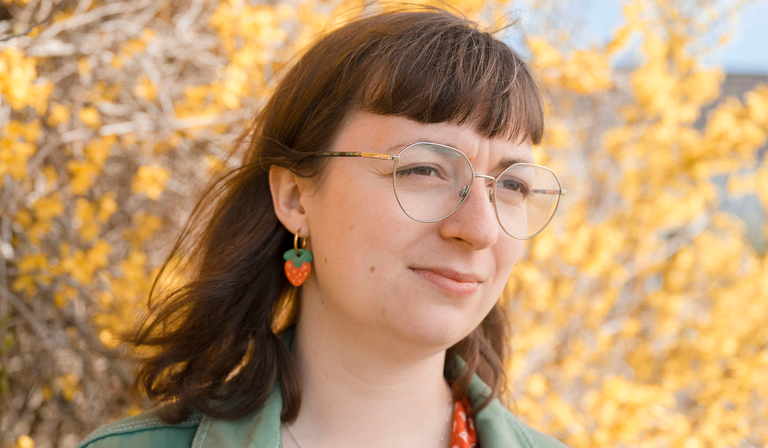
A year ago, graphic artist Rebecca “Becky” Burke embarked upon a dream trip, spending weeks in the United States and seeing as much of the country as possible. A month-and-a-half into the holiday, she decided to add Canada to her itinerary—but was turned away at the border. It was, she thought at the time, the sort of visa mix-up that would be sorted in an hour. A mere technicality.
What followed, instead, was 19 days of hell, as the Cardiff-born tourist was whisked away by Donald Trump’s Immigration and Customs Enforcement (ICE) officers and thrown into a detention centre for illegal immigrants. “On the way to the facility I was handcuffed,” says Burke, “and, when I finally got out, I was put in ankle chains and handcuffs on my journey from the facility to the airport, where I awaited my flight home. I had to be helped into the van, as the chains meant I couldn’t walk myself.”
As family and friends in the UK worked hard to get her out of the detention centre, near Tacoma, Washington State, Burke turned to the only solace she had ever known. “Whenever I have any kind of experience that’s out of the ordinary,” she explains, “my first thought is: I need to make this into a comic.” Her work documenting her experiences—and those of her fellow women detainees—is now going to be a graphic novel, Visiting America: 19 Days in an I.C.E Facility, to be released in 2027 by the major US publisher Fantagraphics.
Burke, 29, who works part-time as a nanny in London, has previously self-published her own zines and comics. So, while in the detention centre, “I was sketching a few observational drawings and writing down every single thing that happened. I came out with 90 pages of handwritten notes.” Other detainees, with credit in their prison accounts, obtained sketchbooks and pencils in return for portraits.
The nightmare began when US border officials decided that, because Burke was planning to stay with a family in Vancouver in return for doing some childminding, she needed a work visa, not a tourist one. But, when she was walked back to the US side, ICE officials probed her about her time in America and, since she had made similar quid-pro-quo arrangements with host families, concluded she had been working illegally.
Although her experience was terrifying—Burke was allowed one hour of exercise a day in a yard bordered by barbed wire fences and patrolled by armed guards in cars—there was a camaraderie among the detainees that helped her get through it. “All the women were so sweet,” she says. “Most of them were confused about why they were there—they thought they’d done the right thing or that America would be a better place than wherever they were coming from.”
Burke’s case received a lot of media attention. She was told that the last time a Brit had been detained at the facility was four years ago and after those 19 days she was released thanks to the pressure exerted by her family and their lawyers. She is not unaware of her privileges in this regard. “I’ve come out of the experience saying I feel stronger for what happened, but that’s not the case for most of the women,” she reflects. “Most are deported after months protesting their case, and are going to be in debt from paying lawyers, and possibly sent back to dangerous situations.”
Creating the 255-page graphic novel—she’s putting the final touches to it now—has been cathartic but also difficult for Burke, as she relives her own struggles while detained. “There are probably scenes in the book I haven’t spoken about to anyone, because I’m worried about upsetting people, especially my parents. But I think it’s important for people to know what goes on in these places, especially right now.
“If I could get some Trump supporters to read this, I’d be happy. Because I just reckon people don’t think this far ahead when they’re making decisions politically. They don’t think about all the consequences of what they’re voting for.”