Lives lost from the attacks on Iran from Israel and the United States are mounting. The human toll is not the only cost of the war, however. There will likely be three other lasting consequences, none of them good.
First, this war is the low point for US soft power. For most of the postwar era, US attempts at hegemony rested on a combination of hard and soft power. While the American military had the most advanced weapons and could weather wars in farflung territories, the US also tried to win hearts and minds—against communism in the Cold War, and then later under its banner of encouraging democracy and pro-American sentiments around the world.
With its dismantling of USAID, the second Trump administration had already signalled its derision for soft power. But attacking Iran without support from Nato allies, without authorisation from the legislature (despite Republican domination of both chambers) and against the wishes of the American public, signals its complete abandonment. That the war appears to be very badly planned and conceptualised—both in terms of its justifications and aims and also a lack of preparation for Iran’s predictable move of closing the Strait of Hormuz—has done further harm to America’s reputation.
While a future Democratic administration could try to reverse Trump’s ill-advised foreign strategy, it seems likely that US soft power will take some time to recover. The world will be much less stable as a result.
Second, the war will have far-ranging effects on the US and the global economies. Although the world is much less dependent on oil than it was in the 1970s, a protracted oil price hike will impact inflation and raise the prices of several other products heavily reliant on oil or transport services. It would also slow down hiring, hampering economic growth and nudging up unemployment in the US and in other economies.
The administration may be hoping that the war will soon be over, the Strait of Hormuz will open and the oil market will normalise. It may be banking on oil reserves or even exports from Russia stabilising the market. But the most likely scenario seems to be that the war will drag on, oil supplies will be down for a while and oil prices will remain high.
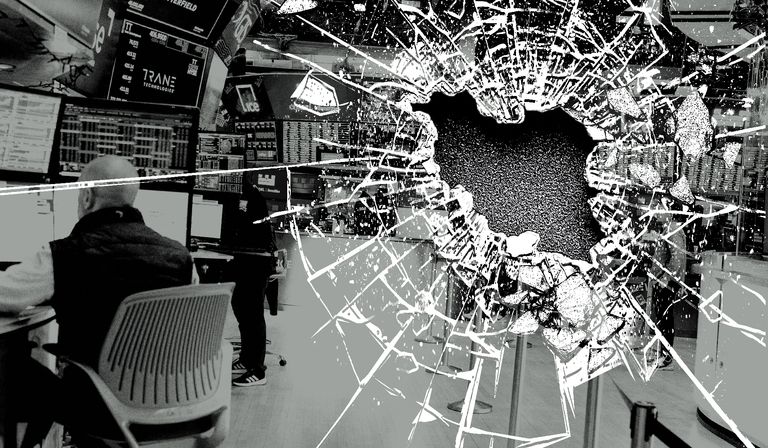
Turbulence in the oil market also has broader economic impacts. The stock market was at an all-time high before the war: when the Dow Jones index rose above 50,000, it prompted widespread concerns that some of this may have been built on an unsustainable AI boom. Some analysts estimate that as much as half of US growth in 2025 may have been due to investments in AI.
This increases the risks of the oil price hike. As investors get nervous about an economic slowdown and drops in share prices, they may also move away from AI, starting an avalanche of selloffs. The impact of drops in AI-related stocks on the rest of the economy is unknown but the dangers are there, especially if a sudden halt to the AI investment boom triggers widespread stock market falls and layoffs.
The third and biggest risk is to institutions in the US and around the world. American democracy has already taken a beating under Donald Trump—and there are legitimate concerns about whether it will ever be able to recover. But a protracted war changes everything, more so than shorter, equally dubious foreign adventures such as the snatching of the Venezuelan president Nicolás Maduro and his wife.
One feature has so far distinguished recent right-wing populist-authoritarian governments, including the current US administration, and historical, fascistic regimes in Europe: militarism. If militarism becomes part of the fabric of Trump’s movement, as looks increasingly likely, the future of American democracy becomes even rockier. It would also mean that the erosion of formal and informal checks against executive overreach would tempt future administrations, whether Republican or Democrat, to act with an increasing lack of restraint.
If US institutions suffer even more under the weight of the Iran war, the damage would take not just America but the whole world into an era of greater instability and uncertainty.