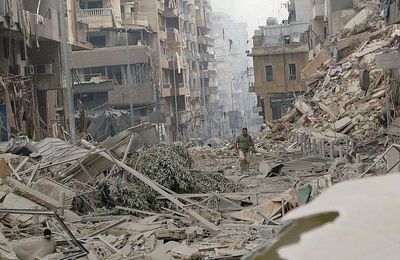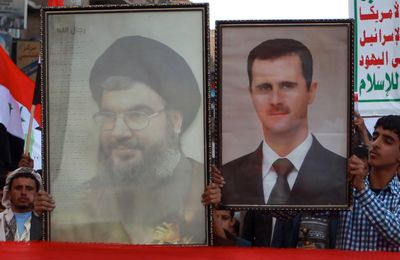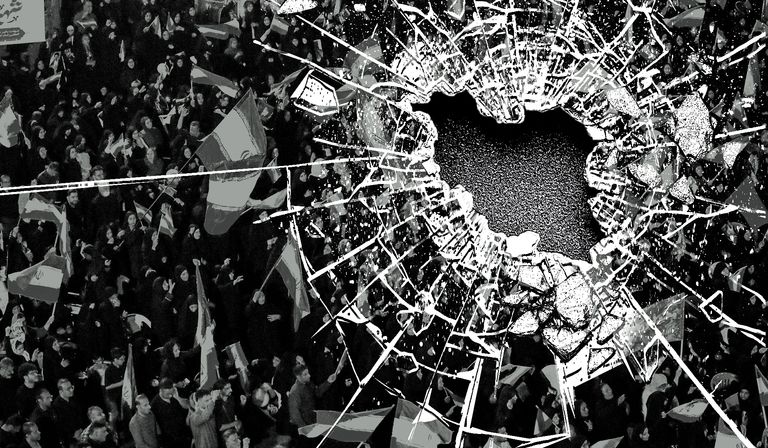
The ongoing war, an existential one for the Iranian regime and Lebanese Shia militia Hezbollah, follows a series of military defeats and setbacks for Iran’s “Axis of Resistance”. But this was never merely an alliance of proxies supported by Tehran, it also propagated a clear set of ideas: that the Axis is a network of solidarity whose members stand side by side; that Israel is a doomed entity; that Israel must be destroyed through military force and that this Axis is capable of destroying it.
These ideas have proven misguided, driven by wishful thinking and underestimation of the adversary. While the Axis relies not just on its ideas but on brute force and the oil riches of Iraq and Iran, its ideological underpinning is crumbling. The military outcomes of the wars Israel has waged since 7th October 2023 are easy to quantify. The effect of these wars on support for this ideology will take longer to materialise.
The Iranian regime will likely survive, but it has been badly battered. It is unable to project power as it once did. A regime whose officials claimed superior intelligence to Israel, a nation it could supposedly wipe off the map in seven-and-a-half minutes, failed to defend Iran’s skies and waters—or dozens of its top leaders from assassination. This wasn’t just bluster: the leaders of Hamas decided to launch the 7th October attack on southern Israel based on the belief that Iran and the rest of the Axis would join in, with full force rather than largely symbolic support. Hezbollah’s Hassan Nasrallah, Iran’s Supreme Leader Ali Khamenei and senior security official Ali Larijani—all assassinated by Israel—thought their military power and determination was greater than it turned out to be. Rank-and-file members and supporters of this Axis genuinely believed in these ideas.
The gap between expectation and reality has not gone unnoticed. There are early signs that a rethinking of Axis of Resistance ideology is taking place among elites and at the popular level, particularly in Gaza, where two years of ferocious Israeli violence followed Hamas’s 7th October massacres. Salman al-Dayah, a leading Islamic jurist in Gaza, issued legal rulings criticising the attack due to the devastating consequences it brought on Gazans. Even bolder, a senior Palestinian Islamic Jihad official, Walid al-Qutatti, published a book early this year lambasting both the decision to launch the “adventure” of 7th October and the disconnect between the boastful rhetoric of the Axis and the horrific realities on the ground in Gaza (experienced first hand by al-Qutatti).
The defeat of Axis ideas will take time. Pan-Arabism, the ideology that underpinned the national security policy of Arab regimes and indeed 1967’s Six Day War, suffered a major blow when it lost that war. Pan-Arabism held that the Arab people formed one nation temporarily divided by colonial borders, and that their inevitable unification would sweep away Israel and restore Arab dignity. In the following years, secular and religious intellectuals such as Sadiq al-Azm, Muhammad Jalal Kishk and the poet Nizar Qabbani penned critiques of Pan-Arabism, and the social ills and delusions that led to defeat. However, Gamal Abdel Nasser, the Egyptian leader embodying this ideology, continued to be idolised across the Arab world. Only in the 1980s did masses come to embrace Islamism as an alternative, or policy focused on national self-interest alone.
Unlike the long tail of disillusionment with Pan-Arabism after 1967, ordinary people are already abandoning the ideology of the Axis. This is particularly noteworthy among those who have suffered the most due to the imbalance of power between the Axis and Israel: the people of Gaza and Lebanon. Hamas’s popularity has sunk to unprecedented lows in the Strip. Despite its practice of torturing and even killing critics, Gazans, some of them former Hamas members, have spoken out forcefully against the group’s disregard for their lives and its insistence on continuing a futile armed struggle.
In Lebanon too, Hezbollah’s decision to join the war launched by the US and Israel against Iran aroused unprecedented anger, even within Hezbollah’s Shia base. As Shia residents packed their bags and fled Israeli bombings, as they stretched out on pavements to sleep, many posted on social media and gave interviews venting their anger about an irresponsible decision that has cost them dearly.
While the human desire to resist oppression is eternal, the delusion that this Axis could deliver liberation is not.