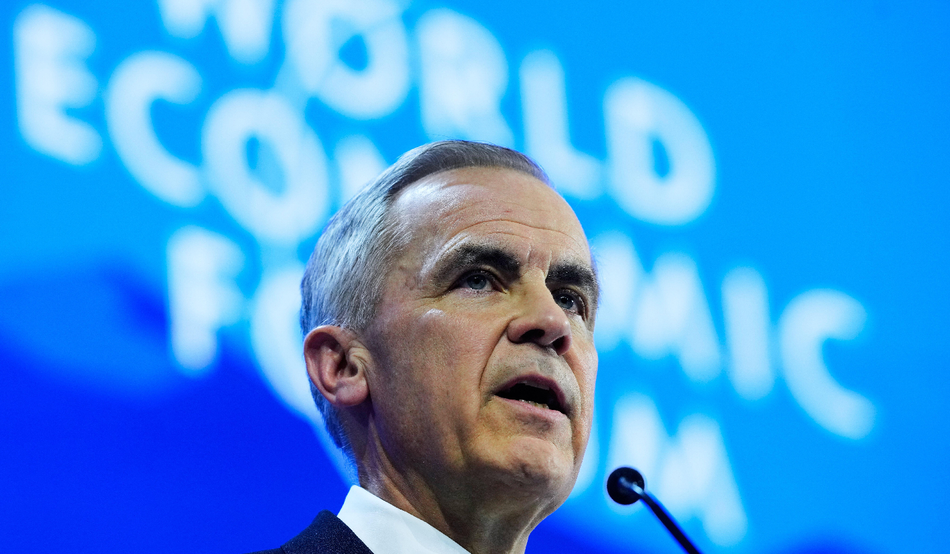
When Canada’s prime minister Mark Carney declared at Davos last week that “the old order is not coming back,” the global reaction varied sharply. In Europe, as the Economist noted in a piece aptly titled, “Europe's five stages of grief”, the weakening of the transatlantic alliance has been experienced as acute loss. Some western commentators registered a mix of alarm and grudging recognition at Carney’s words—surprised, perhaps, less by the claim itself than by the messenger, a figure who had long embodied the very liberal internationalist establishment now being declared obsolete. Others, looking aghast at Donald Trump’s indignities at home and abroad, responded with relief at a western leader speaking the truth.
Yet in much of Africa and Asia, Carney’s statement was seen as belated, not revelatory. It was simply the point at which a system that rarely protected countries in the Global South was finally, honestly being described.
The question now is whether this moment of western disillusionment can build something genuinely inclusive—or whether it will merely herald a reorganisation of the west’s power under new terms.
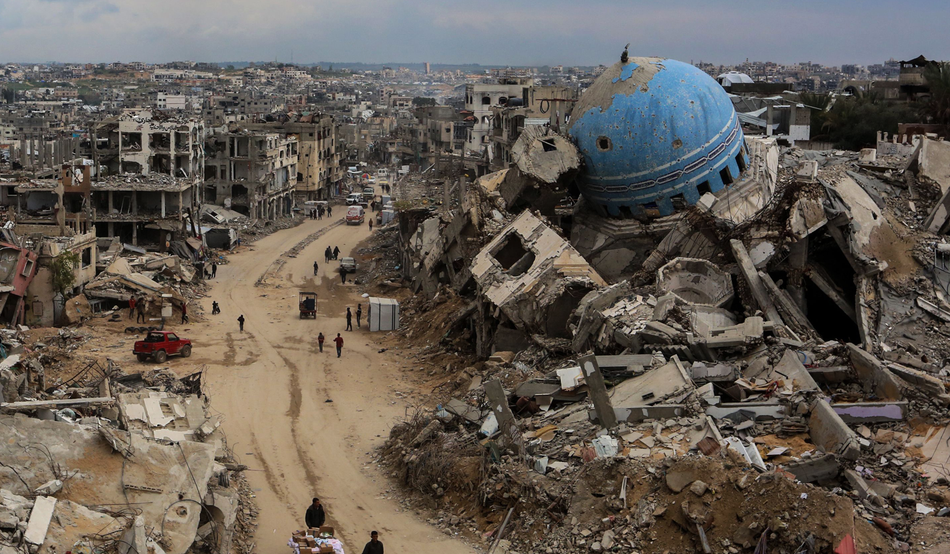
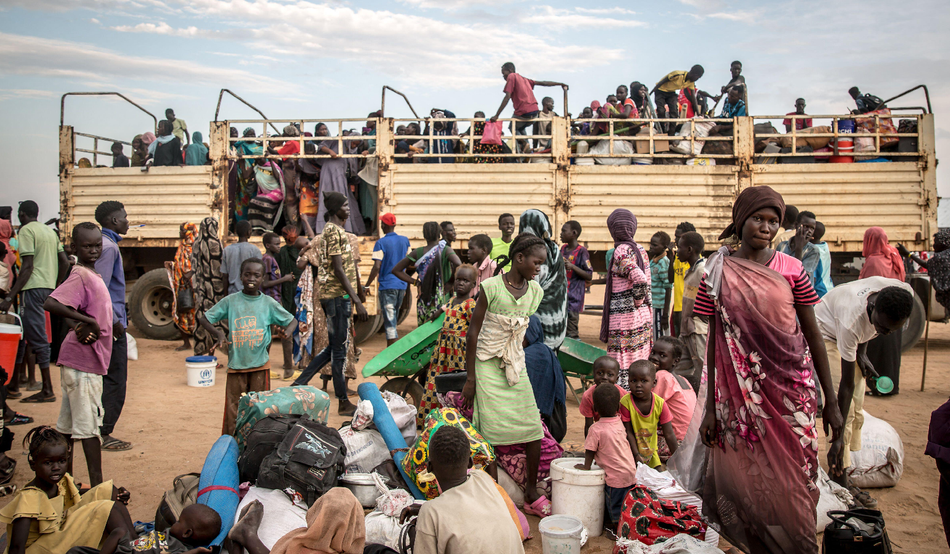
Consider what didn’t trigger a Carney-esque reckoning: Gaza, where more than 71,000 Palestinians have been killed in what the International Court of Justice has found to constitute a plausible risk of genocide. In Sudan, meanwhile, it is thought that more than 150,000 have been killed in a war which has displaced at least 13 million—the world’s largest displacement crisis. Both continued with minimal international intervention to protect civilians.
The war on Gaza is being prosecuted not by an adversary of the west, such as Russia, but by a country that the new US National Defense Strategy calls a “model ally”—Israel. A model ally of the postwar order's principal underwriter should face accountability for breaking those rules. Instead, even before Trump was re-elected, Washington actively enabled the violations with weapons, diplomatic cover and military intelligence.
European reactions to Israel’s onslaught on Gaza have been mixed at best, with many governments ignoring the International Criminal Court (ICC)’s arrest warrant for Israel’s prime minister, Benjamin Netanyahu, while championing the warrant for Russia’s president, Vladimir Putin. And when Israel launched its attack on Iran in June last year, European criticism of its actions in Gaza receded as attention turned to an operation whose compatibility with international law was deeply questionable, to say the least.
Western acknowledgement that the rules-based order was not being upheld did not follow mass atrocity per se, but the threat to western territory and lives. Carney more or less admitted that western concern for international law has been situational: that we defend principles when adversaries violate them, and rationalise exceptions when allies do. As Carney said: “We knew the story of the international rules-based order was partially false, that the strongest would exempt themselves when convenient, that trade rules were enforced asymmetrically. And we knew that international law applied with varying rigour depending on the identity of the accused or the victim.”
A functioning rules-based order remains our best security guarantee—but only if we stop exempting ourselves from it. Predictable rules reduce conflict. Impartial enforcement builds legitimacy. Consistency prevents the erosion of deterrence. But selective application is no order at all—it is brute power dressed in law’s language.
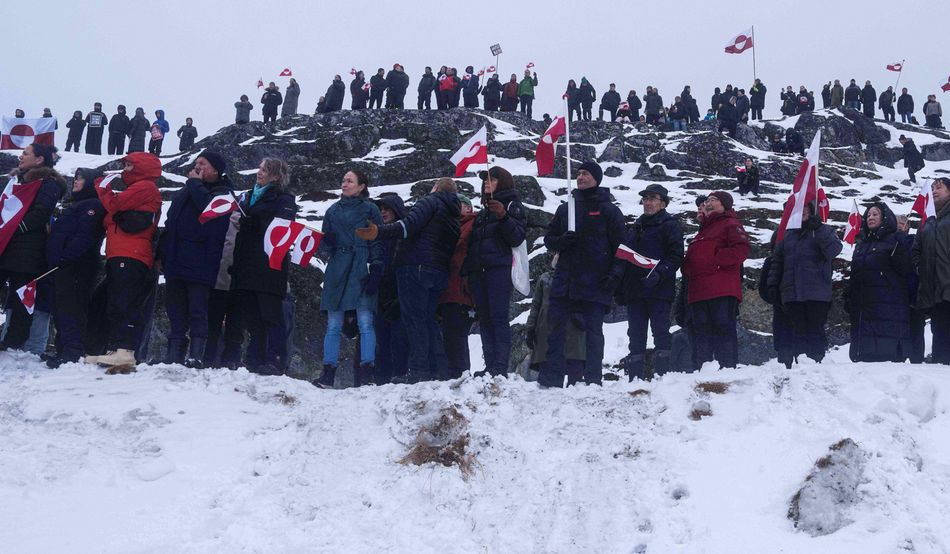
The disparity in these reactions reveals something crucial about how the west measures threats to the international order. When Russia invaded Ukraine in 2022, the response was immediate and justified. There had been a clear violation of the rules-based system; sanctions and diplomatic isolation against Russia followed, as did military aid for Ukraine. When Trump threatened Greenland, Carney’s address gave cover for western elites to finally acknowledge the order’s collapse—with the strongest western power openly abandoning respect for sovereignty.
These failures of consistency extend beyond the west: selective application of international law is a global phenomenon. Russia and China have cynically instrumentalised Gaza—condemning western hypocrisy while offering Palestinians little beyond rhetoric. Russia, having levelled Grozny and Aleppo, and currently devastating Ukrainian cities, lacks any moral standing on human rights. China, presiding over mass detention in Xinjiang and suppressing Uyghur identity, cannot consistently defend international law when it comes to Gaza while rejecting accountability for its own systematic violations.
Part of the solution Carney proposed is for middle powers like Canada to “act together, because if we’re not at the table, we’re on the menu”. This need not become another exclusive club. The erosion of American primacy creates the space for balanced coalitions—such as Canada and Denmark alongside South Africa and Indonesia, pooling diplomatic credibility in ways the old order rarely permitted.
A genuinely inclusive alignment should have a simple premise: that international law applies universally or not at all. The ICC’s jurisdiction cannot be enforced inconsistently—operative for Putin, but dismissed for Netanyahu. UN resolutions must carry equal weight whether violated in Ukraine or Palestine. Threats to Greenland cannot outweigh the destruction of entire communities in Gaza or Sudan.
This requires specifics, not rhetoric. Middle powers are consequential enough to shape geopolitics, yet not dominant enough to impose on it unilaterally. They must act collectively to develop frameworks for trade, finance and security less dependent on Washington or Beijing. Western middle powers will need to engage on the basis of partnership, not hierarchy.
After all, Carney was right: the old order was selective and hypocritical. The question is whether we’ll build something better or repeat those mistakes under a different guise.
Carney’s intervention could herald something genuinely consequential—not multilateralism’s end, but its evolution into credible form. The old order failed not in its ideals, but because we never applied them universally. A renewed framework, anchored by middle powers and grounded in consistent principles, could succeed where the previous attempt didn’t.
The decisive question is whether western elites can recognise this opportunity—and whether non-western powers will demand from themselves the accountability they insist of Washington. A multipolar order built on competing hypocrisies is no improvement on selective enforcement by a unipolar hegemon. The answer will determine whether this moment births a more equitable order—or reconfigures old privileges under new management.