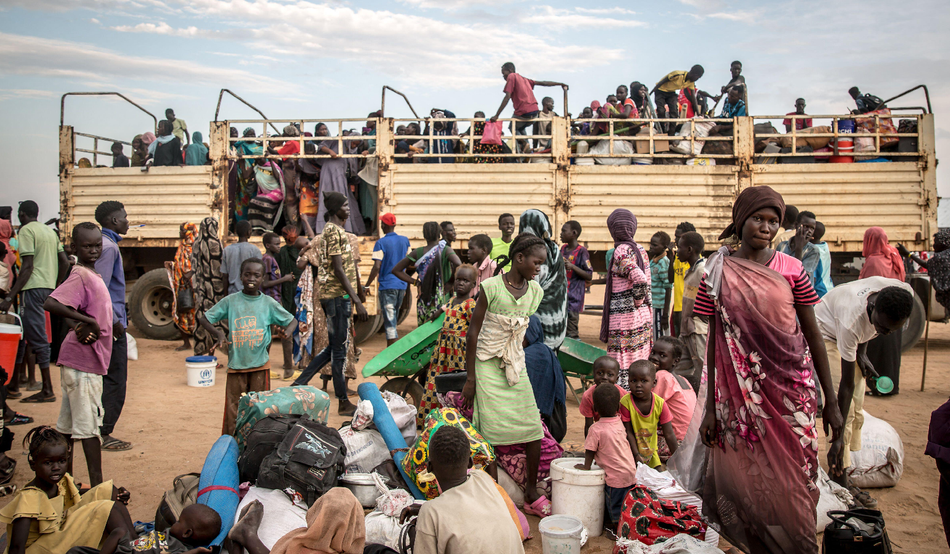
You might have heard the conflict in Sudan described as a “civil war”. Other adjectives used include “forgotten”, “invisible”, or according to the Atlantic, “the most nihilistic [conflict] on earth”.
All of these descriptions are either false or, at the very least, deeply misleading. But in order to understand what is happening today we have to go back in time, to when Sudan was not home to what humanitarian organisations have called the worst humanitarian crisis ever recorded, but was instead an example of a successful and peaceful civilian-led uprising.
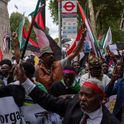
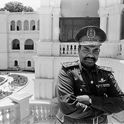
Much has happened since the “December Revolution”, the non-violent movement that began in 2018 and, within months, toppled Omar al-Bashir, who had been the country’s military dictator for almost 30 years. But it is important to know that it happened: this grassroots movement began in the peripheries and swelled towards the capital; it was a tsunami of people power that culminated in a momentous sit-in outside the military’s headquarters.
The Khartoum sit-in was an inspiring exercise in the practice of democracy. It was visited by diplomats from across the globe, a site where art, culture and education flourished and where the hopes of youth took root. Nobody thought that the Sudanese people’s movement would prevail—after all, none of their neighbours had succeeded, and the failures of the Arab Spring were recent. However, it did.
For a while.
Following Bashir’s ousting, a transitional government was founded, a council composed of civilian and military leaders which was due to hand over power to civilians in late 2021. In predictable fashion, however, when the time came, the military leaders refused to cede power. Through a coup they re-established military rule.
Which leads us to where we are now.
Last month, reports emerged that the Rapid Support Forces (RSF) paramilitary had been trying to cover up mass killings in El-Fasher, the capital of North Darfur, by burying and burning bodies. Low estimates from the International Development Committee indicated that at least 60,000 civilians were killed in the space of three weeks, making it the worst single mass murder event since the Rwandan genocide in 1994. Up to 150,000 people are still unaccounted for.
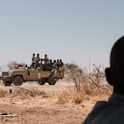
The RSF is the UAE-backed and rebranded Janjaweed, the group responsible for the Darfur genocide of the early 2000s. The RSF moved into El-Fasher after more than 500 days of siege, but its quest for control and power has not abated. The paramilitary force has already moved onto densely populated cities in the neighbouring state of Kordofan. UN human rights high commissioner Volker Türk warned last month that Sudan risked “another El-Fasher” if action was not immediately taken to halt fighting and stop arms flowing into the country.
This is not “nihilistic” chaos, nor is it a “civil conflict”. What is happening, and what the international community is flagrantly allowing—even enabling—is a war against civilians. This is a counter-revolutionary war; brutal punishment for the people’s audacity in standing up to the military regime.
Anyone who believes in civilian self-determination, or that every human being has the right to a free and peaceful existence, should pay attention to Sudan. Not only because of the scale of the horror, but because the inaction of the international community is telling despots and tyrants around the globe (some in military fatigues, some in suits) that mass murder and genocide of civilians is acceptable. That so long as the economic interests of elites and trade partners are protected, the human cost is simply the price of doing business.
Thus, we return to one of the oldest causes of war in history: the battle over control of resources.
Reforms proposed by the civilian leadership in 2021 “threatened the economic power of the security agencies and former Bashir elites” and were a key reason behind the military coup, according to research into Sudan’s military-industrial complex by Chatham House. Livestock and gum arabic, used in everything from Coca-Cola to M&Ms, continue to be smuggled out, feeding the coffers of the various warring parties.
For states like the United Arab Emirates (UAE), widely understood to be backing the RSF, Sudanese gold and land are key commodities. According to the Observatory of Economic Complexity, the UAE purchased almost all of the $1.03bn of Sudanese gold exported in 2023. The Emirates’ support of the RSF is emblematic of its political strategy in the region, a “cheap” imperialism through which economic interests are secured without the need to get the UAE’s hands dirty.
Calls for a cultural and academic boycott of the UAE are growing. This momentum is bolstered by research illuminating the UAE’s attempts to whitewash its reputation through soft power, obscuring its complicity in the war against civilians in Sudan. Countries like the UK are also complicit; with the British government continuing to approve arms sales to the UAE, British military equipment is finding its way onto the battlefield.
More than £15m worth of UK arms were reportedly exported to the UAE throughout 2024, and in the second quarter of 2025 alone the government issued military export licences worth £172m to the country. Unless stronger action is taken, it seems that RSF soldiers and recruits will continue to wield British military equipment against an innocent population.
So, what can be done? Ensuring the war is not made invisible, ignored or shoved into the corners of broadsheets as just another “war in Africa” will make it more difficult for the mass murders to continue.
Placing pressure on the UAE—either through cultural boycott or political leverage via elected officials—could help stem the flow of arms and resources that is fuelling the ongoing war. Financial support for organisations such as the twice-Nobel prize nominated Emergency Response Rooms, an exemplar of civil humanitarian action, could also help invest in the grassroots movement that represents the only hope of a truly sustainable future.
This chapter of Sudan’s story is tragic, but the country’s story is far from a tragedy. Sudanese people are determined to live lives of dignity, freedom and peace, and have demonstrated their commitment to this ideal time and time again. But they cannot achieve a just peace on their own. The question is, who will heed their calls?