Hopes for more money to address climate change were “dead in the water”, according to EU climate chief Wopke Hoekstra, even before COP31 had begun. Managing expectations, then, was top of the agenda from the outset.
Most people I spoke to at the annual UN climate summit, held this year in Antalya, Turkey, were clear that this was “an implementation COP” that wouldn’t produce any big announcements. That proved a fitting assessment. When the summit closed this weekend, countries had failed to reach a new deal on climate action.
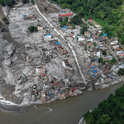
For those unfamiliar with COPs and their lingo, implementation means getting world leaders to agree how to turn words about climate action, which are usually gavelled off into closing agreements, into real-world policies. Climate finance should have been at the heart of discussions. A year of extreme weather events everywhere from Canada to Indonesia had, according to many policymakers, put climate change front and centre of people’s minds.
At the same time, though, the US—traditionally one of the biggest funders of moves to help poorer countries adapt to the worsening impacts of climate change, from torrential rain to droughts—was absent. One of Donald Trump’s first actions after being elected US president for a second time was to withdraw his country from the UN climate process.
Still, US Democrats turned up in droves in Antalya. But they did not have a seat at the negotiating table. The EU did but, as former Irish president Mary Robinson told me, the bloc is more concerned about increasing its defence budget than financing climate action. “Ukraine is very worrying and I understand that, but [the EU] has pushed climate too far down the agenda,” she said.
The US absence wasn’t just a problem for finance. Several attendees I spoke to in the sprawling halls of the Antalya Expo Center commented on America’s ability (when it has a “constructive president”) to rally the troops, notably China and Saudi Arabia, in times of trouble. This is a power Europe does not possess. A surprise bilateral agreement between Washington and Beijing at COP26 in Glasgow helped save then British prime minister Boris Johnson’s climate summit. This year’s president, the Turkish environment minister Murat Kurum, had no such luck.
Two weeks and two days after the meeting began, Kurum accepted defeat. COPs are governed by consensus. Both he and Australia, which had campaigned for over three years to hold COP before negotiating an unprecedented deal to jointly host this year with Turkey, had failed to create a final text that bridged the gap between oil-producing countries and nations wanting more ambitious phrasing on addressing the cause of climate change—the burning of oil, coal and gas.
The need to phase out fossil fuels, first mentioned in a COP text in Dubai three years ago, remained conspicuously absent from the last-ditch agreement proposed, and rejected, on Sunday. Meanwhile, controversial carbon capture and storage technologies, seen by many as a way for fossil fuel industries to prolong business-as-usual, were conspicuously present. The EU said it could “not accept a COP that greenwashes fossil fuels”; the UK said the proposed text did not meet the moment.
The outcome was deemed by many attendees as a chaotic failure. Delegates’ mood was not helped by night after night of little sleep, a diet of conference venue food (frozen sandwiches and cake that needed reheating before consumption in the press room) and an erratic shuttle service that led to hours wasted in traffic,.
But others insisted the rejection of a bad proposed agreement was democracy in action. They focused on the support won from 90 countries to boost electricity’s share in energy production and consumption, a move which the International Energy Agency says could reduce global oil use by as much as 18 million barrels a day.
Glass-half-full attendees also cited progress outside the main negotiations, where companies, financial institutions and cities signed deals and pledged to take climate action together. Apart from stumping up cash to protect tropical forests, though, public finance for climate action was largely absent. However, multilateral development banks, including the World Bank, restated commitments to deliver $120bn a year and mobilise $65bn in investments for less well-off countries by 2030. Over 260 businesses pledged to boost electrification. Their glass-half-empty counterparts said COP has become little more than a trade fair. However, it is real-world action, not political statements, that will ultimately determine whether emissions fall in line with the science and the worst impacts of climate change are avoided.
What happens next will be decided in the world’s capitals. UK prime minister Andy Burnham was one of the few leaders to show up in Antalya. His government said it would work with partners to “speed” the transition away from fossil fuels and make “meaningful progress” on climate finance. However, as Eliot Whittington, executive director at Cambridge University’s Institute for Sustainability Leadership, told me, such promises “have implications for domestic policy”. He asked: “If the UK wants to build collaboration around electrification, what will its partners think if it weakens efforts around electric vehicles?”
On climate change Burnham, like other politicians, can’t have his cake (frozen or otherwise) and eat it. Fine words in Turkey mean nothing if his government moves forward, as expected, in watering down EV targets. Mixed signals on supporting heat pumps in the autumn budget and the UK government’s approval of more extraction from the Jackdaw gas field also raise questions about its commitment to climate leadership.
Many left Turkey questioning whether in a world of fraught geopolitics, multilateral discussions that require everyone to agree can ever deliver. Former UN climate chief Christiana Figueres insisted that “COP remains critical as a platform to accelerate solutions, drive accountability and ensure a just transition”. It was time, she said, “to learn the lessons of Antalya, get back up and get back to work”.