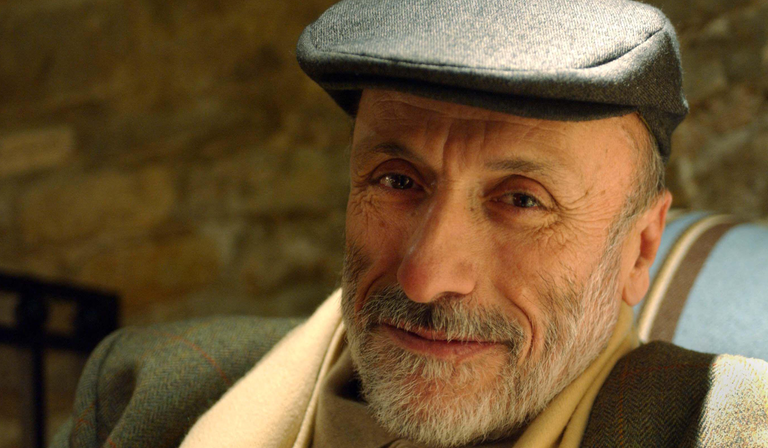
Carlo Petrini, who died aged 76 on 21st May, was a political activist, writer, public intellectual, gastronome and visionary. For the last 40 years of his life he led the Slow Food movement, with its headquarters in his hometown of Bra in Piedmont, northern Italy, and with members in more than 160 countries. This movement, founded in 1986 following a demonstration against the siting of a McDonald’s near the Spanish Steps in Rome, defied the usual characteristics of political organisations. Its “Slow Food Manifesto”, published in Paris on the bicentenary of the French Revolution in 1989, warned that “we are enslaved by speed and have all succumbed to the same insidious virus: Fast Life.” The remedy was to recover the simple pleasures of enjoying local food and respect for the knowledge, skills and heritage of those who produced it. Its philosophy exuded a straightforward egalitarianism: there should be a “universal right to pleasure”. Its membership, made up of food producers, farmers, environmentalists, chefs, fisherfolk and discerning consumers, would belong to “convivia” not “branches”.
I first met Petrini while working on a book on Italian politics. Looking for another idea of Italy to the one presented by Silvio Berlusconi (who had just won a decisive majority), I came across a Slow Food banner at the G8 summit in July 2001—notorious for the violent confrontations between police and demonstrators—and visited Bra to learn more. My initial interest was in its status as a different kind of political movement. I discovered that the origins of Slow Food were to be found in the radical politics of the 1970s, when disaffection with mainstream political parties prompted a range of new ideas and grassroots associations.
As a political activist in Bra, Petrini was the catalyst for several cultural interventions. In 1975 he and his comrades launched Radio Bra Onde Rosse (Radio Bra Red Waves), an independent (pirate) radio station to counter the domination of the local press. In the late 1970s, they participated in Club Tenco (a group of left-leaning musicians) at the well-known Sanremo music festival. In the 1980s Petrini and his group continued to embrace music as a vehicle for their distinctive cultural politics through the Cantè j’Euv international festival, reviving a long folk music tradition of singing for eggs outside farmhouses in the Langhe hills near Bra. In the same period, they set up the “Free and Meritorious Association of the Friends of Barolo”, an attempt to democratise the renowned (and expensive) Italian red wine of the region.
These interventions gave Petrini and his group a foothold in local politics where, as members of a small group to the left of the Italian Communist party, they opposed the latter’s “historic compromise” with the ruling Christian Democrats. Petrini himself was elected to the town council. They were on the margins and brought heresy and humour to their politics (sometimes calling themselves the “philoridiculous” bunch), but Petrini’s important legacy was his ability to bring this radicalism from the margins to the mainstream without diluting the strength of its arguments. Arcigola, a section of a left-wing cultural association devoted to food which had organised the McDonald’s demonstration, anticipated the kind of local network later inherited by Slow Food. But to have deeper influence, it had to take its philosophy well beyond the declining fortunes of the Italian left.
To change the food system and halt the crisis, Petrini warned, we need food that is ‘good, clean and fair’
Petrini did this by ensuring that Slow Food would be an international association. As it grew as an influential movement, internationalism—and what he called “virtuous globalisation”—became ingrained in its ethos. Its philosophy was expressed in simple terms that could be communicated across languages and cultures. To change the food system and halt the crisis, Petrini warned, we need food that is “good, clean and fair”. “Good” by virtue of its taste and quality, “clean” through the environmentally sustainable way it has been produced, and “fair” in securing a just price for the producer.
Slow Food’s central organisation remained in Bra, where it provided jobs for more than 100 people and became one of the town’s leading employers. At the same time, the Slow Food HQ, looking outwards, extended its responsibilities to address the concerns of the global food crisis. This included the Ark of Taste, a project to identify foods of notable heritage and quality deemed to be at risk, and the Slow Food Presidia, food communities made up of farmers, shepherds, winegrowers and artisans who sought to protect traditional craft production methods and the sheer variety of vegetables, fruit and native breeds. These were supported by the Slow Food Foundation for Biodiversity, which was active in more than 100 countries in providing practical support for small producers who faced innumerable economic problems.
At the heart of what Petrini called “virtuous globalisation” was Terra Madre, a huge gathering of food communities held every two years at Lingotto, the former site of the Fiat car plant in Turin. At its first meeting in 2004, 1,200 food communities from across the world came together to discuss biodiversity, poverty, aquaculture, animal husbandry, the role of women in food production and forgotten foods. As a mark of the breadth of its appeal, keynote speakers included Prince Charles and Frei Betto, an undersecretary to President Lula of Brazil, alongside Petrini. He reminded everyone (including a large international press contingent) that “people are here from the Amazon jungle to the Chiapas mountains, from the Californian vineyards to First Nation Reserves, from the shores of the Mediterranean, to the seas of Northen Europe, from the Balkans to Mongolia, from Africa to Australasia.”
This brought Slow Food a significance and relevance beyond Italy. In the United States, his friendship with like-minded restaurateur, chef, writer and activist Alice Waters was vital in growing opposition to the dominance of fast food. Slow Food USA did this by adopting the organising principle of the “Slow Food Nation”, reviving an idea of the counterculture. In Italy, Petrini could call on the backing of influential politicians (he was once even touted as a future minister of agriculture) and enjoyed support from figures across culture and the arts. His international recognition grew and his work on the environment brought invitations to several United Nations conferences. In 2004, Time magazine named him as a European Hero and in 2008 the Guardian included him in its list of “50 people who could save the planet”.
Terra Madre was the inspiration for the more recent Slow Food Gardens in Africa project, which has inspired a growing network of smallscale farmers committed to developing sustainable agriculture in the face of major economic challenges from genetically modified organisms and landgrabbing. Here, Slow Food has encouraged the development of agroecological gardens and the necessity of planting seeds of many traditional varieties as an alternative to intensive farming. Petrini knew that the success of this ambitious project will depend upon raising awareness among new generations of the importance of the land and biodiversity.
That appeal to the new generation was always pivotal to Petrini’s approach, perhaps unsurprisingly given his own youth radicalism. In 2004 he established the University of Gastronomic Sciences in Pollenzo, near Bra, where students can study food history, gastronomic tourism, sensory evaluation, the sociology of consumption, and carry out archival research on the geography of wine at the onsite wine bank. The university campus also hosts a hotel and restaurant where I have fond memories of discussing the ideas of Antonio Gramsci with Petrini over dinner. As his friends said, “Carlin” was not content to merely talk about new projects but to deliver them. One of his favourite phrases was “he who sows utopia can reap reality”. He leaves a sister, Chiara.