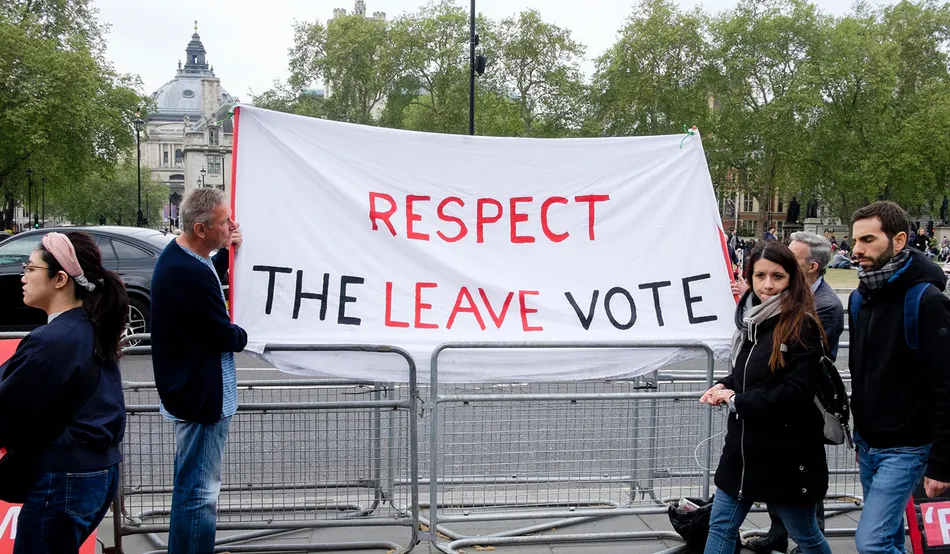
It’s all kicking off again. Even before the “national conversation” called for by the British prime minister has begun, Brexit—and more specifically the question of its reversal—is back on the national agenda. As that possibility hoves into view, interest in what joining the European Union might entail is intensifying.
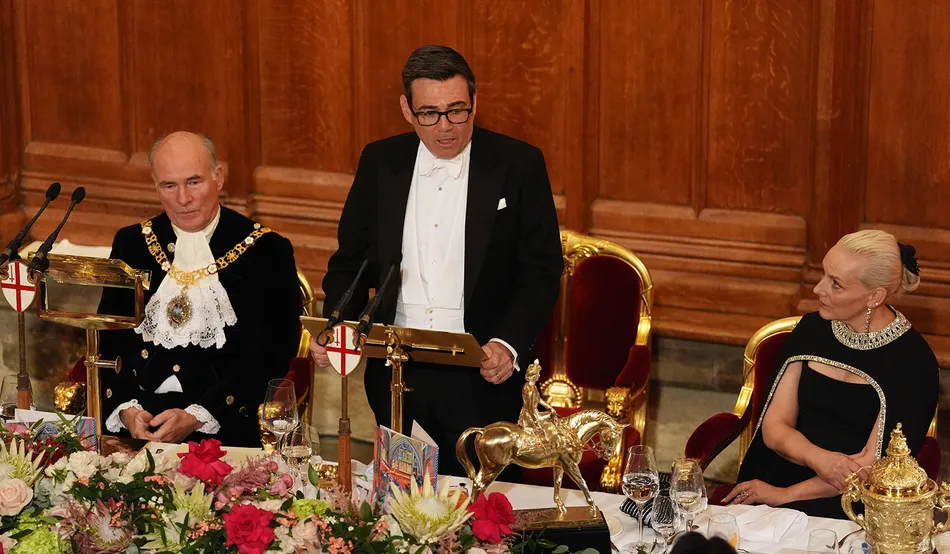
I should say at the outset that it’s not clear membership is actually on the government’s agenda. Andy Burnham himself has strongly suggested that it is, hinting, in a series of interviews after his Labour conference speech, that the UK could “go all the way” and rejoin the EU. Yet some reports say that, having teased the Labour party, he is in no rush to decide which form of UK-EU relations to pursue and does not yet have a preferred option.
This is a function of politics rather than personal preference. It is clear the prime minister thinks it was a mistake to leave. Equally clear, I think, that he intends to use the recent UK-EU summit as a means of dipping his toe into the Brexit waters. Should Nigel Farage, leader of Reform UK, enjoy a massive poll bounce, that might be enough to put the government off going any further. If reactions are more positive, we may see the much vaunted 10-year plan saying something ambitious on Brexit.
While we still don’t know Burnham’s intentions, we do know that words have consequences—particularly when one is prime minister as opposed to, say, mayor of Greater Manchester. Burnham has let the genie out of the bottle, and debates on social media are already eerily reminiscent of 2016. Both Vote Leave and Leave.EU are relaunching.
Meanwhile, the words of prominent “Europeans” are parsed for cues about their intentions towards us. Michel Barnier, the EU’s former Brexit negotiator, warns about cherry-picking. David McAllister, chair of the European Parliament’s foreign affairs committee, argues the EU would treat the UK more leniently than other candidates for membership. Kaja Kallas, the EU’s foreign policy chief, retorts that, because Brexit “traumatised” the EU, negotiations will be tough.
So, who to believe? What might rejoining look like? I’m afraid what follows is largely speculative. There are too many variables to allow much else. What is clear is that, while talk of “going all the way” might land well at Labour party conference, the process of acceding to the EU will be complex, difficult and lengthy.
That said, there is one way in which a decision to join would offer some clarity. Unlike other Brexit options—negotiating a customs union, say, or attempting to join the European Economic Area and hence the single market—the EU would be constitutionally bound to consider an application for membership using well-developed procedures.
According to those procedures, there are, to simplify a little, four stages to the process of becoming a member state (the EU’s website divides it into nine, but frankly life’s too short). In my condensed version, these are: the application itself, candidate status, negotiation and accession. Once an application is submitted, member states ask the European Commission to consider whether the applicant meets the political, economic, legislative and administrative criteria for membership. If the Commission decides it does, those same member states, via a unanimous vote, can recommend that it be granted candidate status. At which point, both the EU and candidate state draw up negotiating mandates.
Subsequently, the negotiations proper begin. These cover 35 chapters of EU law, clustered into six groups. Successful completion of negotiations over each cluster must be signed off unanimously by member states. Once all clusters have been approved, the Commission recommends candidate countries for membership. The accession treaty—translating the outcome of talks into treaty form—must then be approved by a majority in the European Parliament, unanimously in the European Council (where member state heads of state and government meet) and by each EU member according to its own domestic constitutional processes (in some cases—including France, which would be a real treat—this might involve a referendum).
Accession gives the EU the whip hand, because it wields a veto that can prevent a state getting something it really wants.
So much for the constitutional details. It’s worth bearing in mind that “negotiations” on the various chapters of EU law are not really negotiations at all. Ultimately, a candidate state must comply with the so-called acquis—the whole body of accumulated EU laws and regulations. It is possible to negotiate short-term derogations and exemptions, though these are hard to come by. What is less possible is avoiding any of the obligations of membership.
This is not down to spite or vengeance or a desire to punish the UK. It’s due diligence. Many in the EU feel they got their fingers burned by allowing countries like Hungary, Romania and Bulgaria in too early—leaving the Union to deal with states that many saw as administratively or politically unprepared for membership.
This due diligence is necessitated by weakness. The EU is a confederation of sovereign countries. Consequently, it has few powers to compel states to do things they do not want to do (which is why several countries formally committed to joining the euro—think Sweden or Poland—have failed to do so).
Brussels, in fact, enjoys its greatest leverage over candidate countries. Accession gives the EU the whip hand, because it wields a veto that can prevent a state getting something it really wants. Indeed, precisely because it is easier for member states to ignore the strictures of Brussels, the EU has a strong interest in ensuring that future member states are as compliant as possible before they become members.
So, let’s think about how this might play out. Several issues have already sparked debate in the UK. Budgetary contributions are particularly sensitive, and already the focus of the reincarnation of Vote Leave. Meanwhile, the government’s new webpage, dedicated to “myth busting” ahead of November’s EU summit, doesn’t attempt to explain the point of contributions but, rather, goes out of its way to stress that nothing in the current negotiations involves UK payments to the EU budget.
This hardly bodes well for the debate to come, even more so as Brussels is not about to do us any favours. In particular, they are not going to offer us the rebate on UK budget payments that Margaret Thatcher (in)famously negotiated at the 1984 Fontainebleau summit. The EU came to dislike the very principle of rebates as other member states (Austria, Germany, Sweden and the Netherlands) tried the UK trick; now, the EU needs money for an ever more ambitious policy agenda and payments to poorer member states. The only states that have received a rebate have been members with vetoes (though I wouldn’t recommend Rejoin campaigners promise to deploy a future veto to secure a rebate during the accession process).
Consequently, UK budgetary contributions would be calculated according to the rules—as a function of the country’s gross national income, its VAT receipts, and the customs duties and import levies collected on behalf of the EU at its borders. They would be higher than they were when we were last a member state.
Then there’s the euro. All countries that join the EU commit to joining the euro. Yet, as mentioned, several member states that meet the criteria for euro membership have not joined. There is no reason why the UK could not follow them.
But—and it’s a big but—things aren’t that straightforward (when are they?). It is hard to see the EU allowing London to dodge signing the euro commitment. All other recent aspirants have had to do so. If UK ministers were to respond, perhaps during a referendum campaign, with “don’t worry, we’ve no intention of honouring that commitment,” this would not go down well in Brussels or member state capitals. It would be reminiscent of the Brexit debates in 2016 around the supposed threat of Turkish accession. David Cameron could have pledged to veto Turkish accession, but his European partners would have (to put it mildly) looked askance at such a promise.
The final live issue is membership of the Schengen border-free zone. Here, I think, there are reasons for the UK to be hopeful. It is, after all, linked to the Republic of Ireland via a Common Travel Area, crucial to the functioning of the Good Friday Agreement which only makes sense if either both or neither state is in Schengen (a common travel area in which one had passport-free travel within the EU, and the other did not, would be an absurdity). Absent a change of heart on this point from Dublin, my hunch would be that, because the UK request for an opt-out would have the strong backing of a member state, it would be granted.
Beyond these totemic issues, it is inconceivable that London would secure the kinds of opt-outs—say on justice and home affairs—that it enjoyed while a member state. The new conditions of membership, then, would be different—and less to London’s liking—than those rejected in 2016 (space precludes more than a passing reference to the EU being a very different organisation to the one we left, and far less attuned to UK preferences).
Then there’s the politics. Member states must give unanimous consent to a candidate state’s progress through accession, which means one national capital can delay the whole process or even derail it completely. France famously vetoed two British applications—in 1963 and 1967.
Burnham told parliament this week that it would be “unthinkable” to rejoin without a referendum.
The veto need not be wielded for reasons related to the candidate state itself. Its existence creates opportunities for blackmail—using accession to achieve unrelated goals. In 2002, the Greek government threatened to veto the whole “big bang” enlargement of 2004 unless Cyprus was admitted alongside other accession states. It is not hard to imagine populist right-wing governments seated round the EU Council table (on which more in a moment) using their moment of maximum influence to try to extract concessions on anything from sanctions against Russia to their own membership terms.
So much for what might happen on the EU side. But enlargement will be a long, complicated and iterative process whose negotiations will impact opinions and politics in the UK.
How precisely these opinions matter depends mainly on how the UK decides to go about joining. Emily Thornberry, chair of the Commons foreign affairs select committee, has argued that if the Labour party included rejoin as a manifesto commitment before the next election, a subsequent Labour government could legitimately negotiate accession without another referendum.
This is doubtless legally true, but hardly the basis for a sustainable outcome. Having had a referendum to keep us in in 1975 and one to leave in 2016, it would be hard to argue that we should rejoin without consulting the UK public. Burnham told parliament this week that it would be “unthinkable” to rejoin without a referendum.
It is not impossible that the EU, scarred by its recent experience with the UK, and anxious that Article 49 negotiations (the Treaty article specifying the process of joining) are not succeeded by another tangle with Article 50 (which Brits will remember all too well as the article covering leaving the bloc), insists on evidence of “democratic consent” as a condition of membership.
Henceforward, I’m going to assume that we hold a referendum on joining and, in order not to complicate matters, that that referendum is held at the end of the accession process rather than the start.
Much is being made of the shifts in public opinion since 2016. The poll of polls, aggregating polling carried out in October and November, puts support for rejoining the EU at 63 per cent, versus 37 per cent for remaining out. For a Labour government, there is a reassuring ideological skew to these numbers—Labour supporters are overwhelmingly likely to back rejoining—not to mention “Rejoin” offers the enticing prospect of tempting back some of those progressive voters it lost under Keir Starmer. Polling from Best for Britain, the pro-European campaign group, suggests that Labour could increase its vote share by 11 points (compared to polling in June before Burnham became prime minister) if it committed to EU membership, mainly through consolidating votes from Liberal Democrat and Green supporters behind Labour.
But this is before the debate has begun. What is less clear is how the public will react once the difficult decisions ahead become clear, and when faced with Brexit again dominating the national debate. On the first, polling shows that some who express support for joining might change their minds when confronted with the reality of, say, significant budget payments.
On the second, reversing Brexit is not one of the public’s priorities. Any hint that it is drawing political attention away from those priorities could be damaging. The genius of Farage lay in taking an issue precious few people cared about before the referendum (Europe) and linking it to one with enormous political salience (immigration). Any putative campaign to rejoin must think seriously about how to do the same. The obvious candidates would be growth and the cost of living. However, tying economic outcomes to European integration, as we have learned, is far from straightforward (not least as cash payments resonate more with the public than diffuse aggregate gains from trade, even though the latter would dwarf the former).
The lengthier the process, the greater the risk of fatigue. And how long accession talks take is anyone’s guess. The Commission took almost three years to decide Bulgaria met the criteria for candidate status. Then again, the UK is not Bulgaria and was a member state relatively recently. Finland managed to complete the process in around the time it took Bulgaria to be accepted as a candidate.
But equally, the UK is not Finland, and this is not 1992—when Finland applied to join. The technical aspects might prove relatively straightforward. It’s conceivable that a British government committed to joining might acquiesce to EU demands simply to shorten the domestic debate. Experience suggests, however, that ticking clocks tend to favour the EU.
Then there are the imponderables. First, developments in the world at large will set the context for negotiations.
It’s not uncommon to hear British observers and policymakers argue that the current geopolitical landscape gives the EU an incentive to cut the UK a deal—perhaps watering down some of its strictures on the indivisibility of the four freedoms (of movement of goods, services, capital and persons) because of the UK’s heft in foreign and security policy.
More broadly, it needs to be clear that membership promises economic benefits—an argument much easier to make if the UK economy is struggling while the EU’s seems more successful.
I’ve always considered such arguments wishful thinking. The UK is hardly going to refuse to help an ally under attack because it hasn’t secured access to the single market for its chemicals sector. The security interests it shares with its neighbours have led to highly effectively cooperation on, for instance, support for Ukraine, without the UK being in the EU. Meanwhile, the fate of the UK’s attempt to join the Security Action for Europe (SAFE) programme spoke eloquently of the EU’s determination to secure its own interests regardless of the implications for security cooperation. Ultimately, negotiations collapsed because of the price tag imposed by the EU.
This could, of course, change. A sudden shocking development—Russian military action against Nato or an EU member state, or who knows what hostile action from the Trump White House—might alter the EU’s calculation, although it’s probably best not to hope for such an eventuality.
Second, the debate on joining will be shaped by the performance of the UK economy. The tail end of the eurozone crisis allowed Brexiters to argue the UK was “shackled to a corpse”, and a repeat (and potentially a larger-scale one driven by a French default) would hardly make joining seem appealing. More broadly, it needs to be clear that membership promises economic benefits—an argument much easier to make if the UK economy is struggling while the EU’s seems more successful.
Opposition might also spring up during the process. A credible move to rejoin might have an immediate positive impact in terms of business confidence, business investment, gilt yields and so on. As important in terms of the political debate, however, would be, say, US tech firms publicly questioning some or all of their investments because of the need for the UK to align fully with EU rules (some of those firms might, incidentally, be happy to bankroll a campaign for remaining out). Brexiters would, of course, make hay with any negative and visible economic consequences such as this.
Finally, there’s the politics hinted at earlier. Those who favour staying out of the EU have already begun to argue that a Europe in which Marine Le Pen is in power is not one the UK should aspire to join. And there seems little doubt that victories by hard-right parties on the continent would make membership a tougher sell. The progressive case for joining would feel less compelling. It might also make the process more difficult, given the opposition of Le Pen’s Rassemblement National to further EU enlargement and hostility to the influence of “the Anglo Saxons”. That hostility harks back to French president Charles de Gaulle’s second veto of 1967, which invoked the danger of the UK acting as a Trojan horse for American influence in Europe.
In short, trying to predict the process of rejoining is a mug’s game. We can say that any such process will be difficult and uncertain, and during it opinions on the UK side might shift. There may be a case for reversing Brexit, but we cannot simply press a button marked “let’s go back to where we were before”. Burnham has said the status quo is untenable. He’s about to discover that, when it comes to Brexit, there really are no easy options.