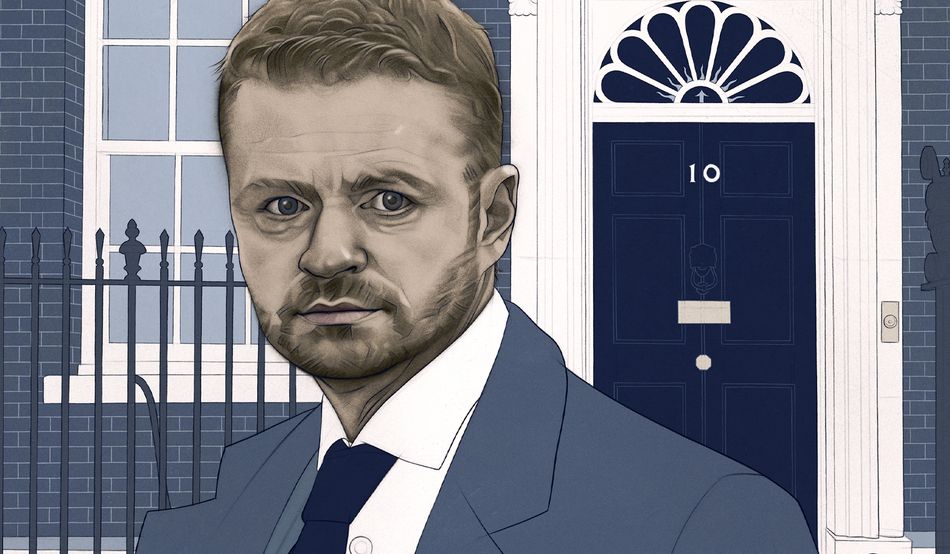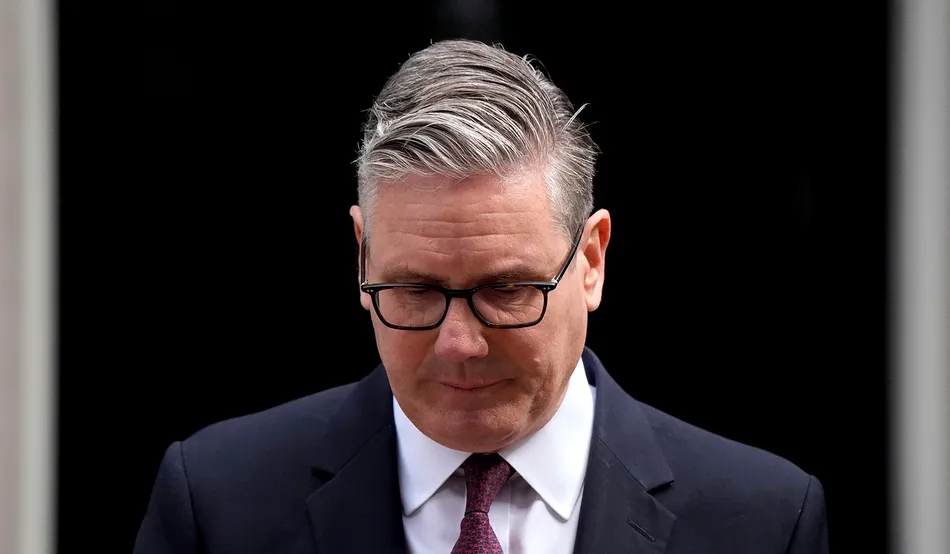
Keir Starmer has left Andy Burnham with an unfortunate parting gift. It is the legacy of Labour’s failed attempt to fight a war on two fronts.
Over the past month, the party has been playing a game of “pass the bomb” with the proposed Defence Investment Plan. The DIP is almost certain to leave the Ministry of Defence short of its targets, and ever further from the ambition of spending 3.5 per cent of national income on defence by 2035.
The outgoing prime minister has been unable to choose between guns and butter and Burnham, his replacement, has inherited the consequences: a fiscal hole of almost £5bn to fill in his first budget. This is not Starmer’s only parting gift—Labour also remains trapped at around 20 per cent of the intended vote, lagging behind Reform UK and often even the beleaguered Conservatives.
Both these military and electoral messes are legacies of the same problem. The Starmer government was unable to make choices. To stick with our military analogy, following its 2024 election victory, Labour appeared to adopt a “reverse Schlieffen plan”, and then crumbled on both fronts.
You may recall, from history lessons or avid podcast consumption, that the original German Schlieffen plan was drawn up to combat the combined threat of France and Russia in the First World War by attacking both west and east. Germany hoped to knock out its enemies before they could gang up on it.
Morgan McSweeney and Starmer’s reverse Schlieffen plan seems to have been for Labour to get simultaneously attacked from left and right with the hope of—well, perhaps victory on points. The party veered to the right to pick up Reform voters through harder rhetoric and policy on immigration, leading to major incursions on its left from the Liberal Democrats and the Green party. The Greens are now a major player in Labour’s once safe urban seats, where it now faces guerilla warfare.
At the same time, Reform voters have proven to be largely unmoved by Labour’s rightwards march. Rather than peeling off socially conservative voters, Labour’s head-nodding about English flags and “legitimate concerns” seems rather to have emboldened those voters in their support for Reform, or indeed the breakaway militia of Restore. Still Labour advanced, engaged in its own doomed march on Moscow, if I may briefly change wars.
The failure of this strategy became apparent throughout 2025, but Labour’s retreat was gradual. The commander claimed regret over his ill-phrased rhetoric, such as the infamous “island of strangers” speech. But the immigration policy that ended asylum as we know it and extended settlement times to decades remained essentially intact.
Even now, as the commander has succumbed to mutiny, there is dissent in the ranks over immigration policy (see, for instance, Mike Tapp, the under-secretary for immigration, falling out with home secretary Shabana Mahmood). As in all failed battles, the officers and soldiers soon turn on one another or go Awol.
Perhaps the government’s biggest failing has been to misunderstand the electorate. Rather than seeking to support its allies and voter base, Labour’s focus has been on appeasing people who would never vote for the party. This has been most obvious with the draconian immigration strategy. Immigration numbers are now in rapid decline, the lowest they have been outside of Covid since 2012. Are anti-immigration parties happy? No, they now want deportations or remigration.
Meanwhile, immigration is not top of mind for historic Labour voters. Ahead of the 2026 local, mayoral and devolved races, the economy was the most important issue for those who voted Labour in the 2024 election. Potholes came second.
What about a sortie to deprived towns? The past decade has been marked by desperate promises to improve the lives of those in “left behind” areas of the country—those who voted to leave the European Union because no one was listening to them. And so, government place-based regeneration initiatives have proliferated. But the beneficiaries, such as Hartlepool—per head England’s highest recipient of regeneration funding—don’t appear any happier. They voted almost uniformly for Reform in national and local elections, just like the biggest recipients of EU structural funding, the Welsh valley towns, voted for Brexit. Some people don’t want to be appeased.
Still, there is a new general in town, down from the northern marches. Burnham, in his Zelensky-esque tight-fitting T-shirts, must think hard about what strategy to adopt when dealing with the recalcitrant electorate.
There is a military adage about the seven P’s—“Proper Planning and Preparation Prevents Piss Poor Performance”. In a recent interview, Labour’s very own Clausewitz, Morgan McSweeney, remarked that: “Preparation matters more than strategy… I’d like to tell you it’s the other way around, but I think preparation counts more.”
McSweeney was a brilliant electoral strategist, at least in the short term. But there’s no point conducting daring sorties into occupied territory looking for “hero voters” if you can’t do the boring stuff, such as mollifying allies and preparing for peace.
Burnham now risks the same dilemma. His bid for election as the MP for Makerfield was a risky and heroic gambit. But he cannot expect to rest on his laurels and enjoy his triumph.
He will soon have choices to make with precious little preparation. Best hope there’s no mutiny.