Imagine waking up to the chill of a damp, unfamiliar room hundreds of miles from home. Two strangers watching you from the shadows. You reach for your phone—it’s gone. Your bag? Gone. You bolt for the door, but the click of the lock tells you there is no escape. Desperation sets in as you scan the room for anything to defend yourself or aid an escape. You grab at a chair, but it is bolted to the floor. You tug at the table, but it, too, won’t budge. Every object is a permanent part of this dark dead end. The larger of the two strangers lunges toward you, pinning you to the dirty carpet, his breath is in your ear: “Calm down, you’re escalating.” This isn’t a nightmare; this is the reality of a child under a Deprivation of Liberty (DoL) order.
A DoL order is a restrictive legal mechanism that places a child under constant control, suspending fundamental freedoms for the sake of immediate safety. Though designed as a rare intervention for children facing high-risk exploitation, substance misuse, chronic absconding or life-threatening self-harm, the truth is somewhat more appalling. These orders—often the final result of complete educational and emotional breakdown—put the systematic restriction of children ahead of holistic support. They are billed as brief, protective, emergency measures. But they are neither rare, nor temporary, nor safe.
In fact, DoLs have been on the rise over the past seven years. Last year, 1,440 applications to deprive children of their liberty were made, the highest ever application year on record.
Under the United Nations Convention on the Rights of the Child, DoLs are meant to be used for the “shortest appropriate period of time”. Yet, in the UK, they have no legal limit. A six-month study by the Nuffield Family Justice Observatory revealed a harrowing reality: 68.3 per cent of the children surveyed were still subject to these orders when the study closed. Hundreds of our most vulnerable children are being locked away for indeterminate periods—but at least they’re “safe”, right?
Actually, they aren’t. By viewing social care through a bureaucratic lens, we risk seeing children with complex needs as “high resource” burdens, rather than children. This focus on fiscal frugality often pushes those with the greatest needs to the back of the queue for safe, Ofsted-regulated homes, putting them at most risk. We must dismantle a cold, self-interested system that reduces our most vulnerable children to mere line items on a balance sheet. A child with complex needs is not a dangerous package, to be passed from one agency to another. Many homes are reluctant to accept these “packages”, with managers worrying that they could negatively impact the home’s Ofsted inspection judgement.
As a result, the young people seen as complicated and costly—those at greatest risk of suicide, sexual exploitation, gang violence, grooming—are the ones dumped into illegal children’s homes. These desperately vulnerable children are deposited into caravan parks, A&E wards, holiday camps, barges, canal boats and AirBnBs, manned by untrained staff and unmonitored by Ofsted. Unqualified agency staff are being left in charge of our most at-risk children. Without the oversight of psychologists or social workers and the lack of therapeutic support, these workers are free to restrain, lock up and medicate young people behind closed doors.
These desperately vulnerable children are deposited into places manned by untrained staff and unmonitored by Ofsted
You might think this is horribly uncommon, but 1 in 10 children in residential care in the UK in September 2024 had been placed in illegal homes.
Beyond the scandal of illegal children’s homes lies the predatory exploitation of a system in crisis. In 2025 alone, unregistered providers siphoned £353m from the public purse. This profiteering drains vital resources: 14 per cent of the entire social care budget is now consumed by 1,500 children with complex needs, costing £1bn annually.
The reality of the DoL system is a choice between abandonment and institutionalisation. When we place a child under these orders, we prioritise containment over care. Constant supervision and restraint don’t heal trauma—they compound it. This is a profound therapeutic failure: we are managing the “risk” of these young people while completely failing to address the suffering that drives it.
Nagalro—the professional association for children’s guardians and family court advisors—summarises the current crisis bluntly: “In many cases keeping the child safe actually means keeping the child alive.” With survival as the only metric, social workers and judges are forced to sanction draconian care plans. It is a constant “trolley problem”, where they must choose the perceived lesser evil, knowing it may leave a child traumatised, distraught, and—crucially—in a different, dangerous environment. Despite the fact that this “lesser evil” usually takes the form of DoLs, they remain a hidden issue. The average person has no idea that the UK’s most vulnerable children are being restrained by strangers in shadowy AirBnBs. We like to think that if the public knew, they’d be outraged by what the children’s commissioner calls a “national scandal”.
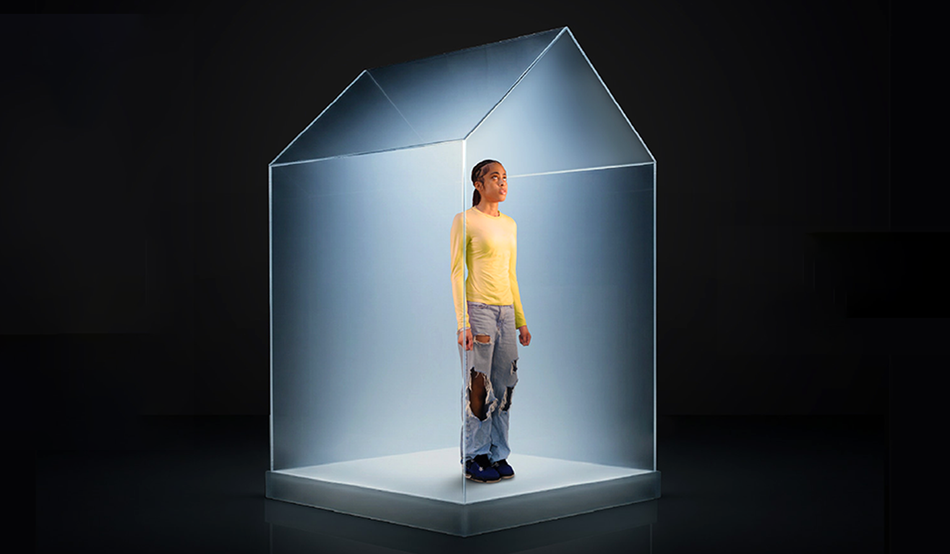
But to address this hidden crisis, we must blow its lid off. The Big House began this process by listening to its young people. As an arts organisation providing long-term support and opportunities for the care-experienced, we have seen the reality of DoLs first-hand: young people moved miles from home, education disrupted, internet access banned, cut off from loved ones with no promise of return. To give these young people a voice, we have created A DoL House—a play that explores their collective journey, while safeguarding their individual stories. We have also spoken to judges, social workers and local authorities to create unflinching look inside this hidden system.
The play asks hard questions. What does “safety” really mean? When does protection become control? And is there another way? We believe there is. That’s why we have partnered with Reset, a bold new initiative designed for children on or at risk of DoLs. Together, we reject “containment” as a temporary fix, instead working with families and communities to address trauma over time.
Why are The Big House doing this? Because while vulnerable children are being locked away in unsafe, unregulated settings, policy is moving in the wrong direction. With the recent passing of the Children and Wellbeing Act, there is growing concern that Section 25 could normalise unregistered children’s homes—embedding a system in which the most traumatised children are locked away without oversight, accountability or care. This is not reform, it is regression.
See the play. Let’s change the narrative.
The Big House’s production of “A DoL House” runs from 17th June to 11th July. Tickets can be purchased here