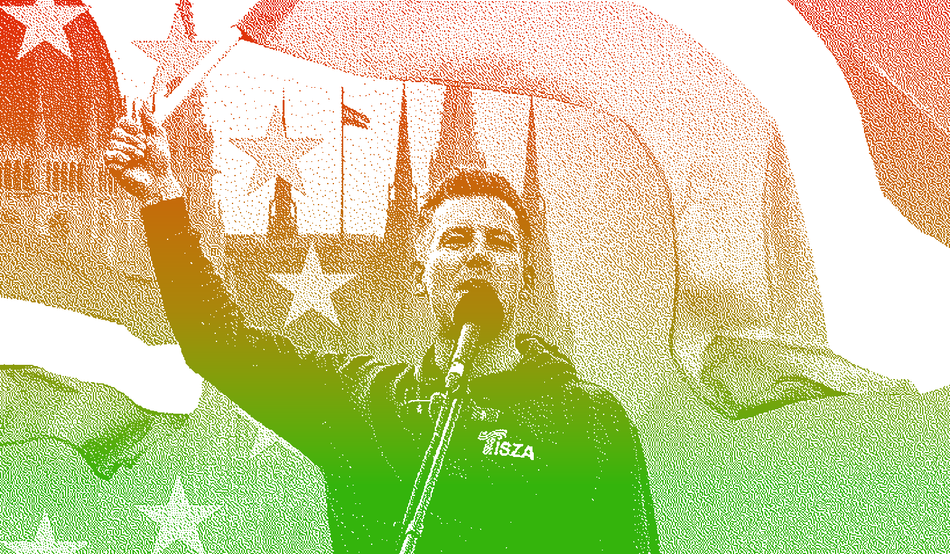
A cry of relief went out at Viktor Orbán’s crushing defeat in the Hungarian elections. Hungary had been the promised land of “national conservatism”, a vision of what politics could look like shorn of liberals, do-gooders, immigrants, procurement rules and electoral norms. It was a political philosophy set up to favour anyone aligned with Orbán and to handicap opponents. A vision of conservatism that pitted a group who the laws protected but did not constrain against a group who the laws constrained but did not protect.
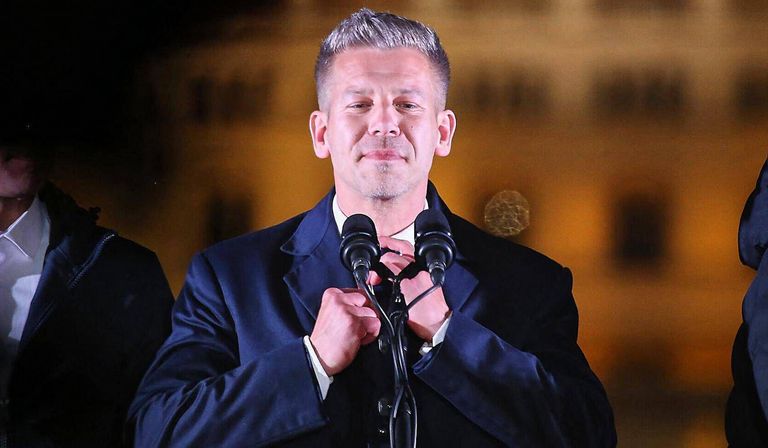
There are other kinds of conservatism, however. Orbán was not defeated by a socialist or a liberal but by one of his own—Péter Magyar, not long ago a major figure in Orbán’s own party, Fidesz. Hungarian liberals had little choice but to vote for Magyar if they wanted to remove Orbán. But their new leader is still a conservative. Magyar is strongly against immigration, and his likely cabinet includes former executives from major multinationals. Magyar is the kind of conservative you might remember from the pre-Trump, pre-Orbán world: fiscally restrictive, market-promoting, anti-Russian. A Hungarian so patriotic he wears a traditional nobleman’s coat and has a last name that literally means Hungarian.
We have become so used to the populist takeover of conservatism, that we sometimes forget this is a recent aberration rather than an inevitability. The history of conservative parties and politicians in Europe and the United States since 1945 has, for the most part, been more like reading Debrett’s than Breitbart. “Well-born” scions of elite families mixed with plucky grammar-school grinds, with political ambitions largely confined to the orderly adjustment of society in order to keep the establishment alive and healthy. Yes, there have always been Nixons. But more commonly there have been the likes of Bush senior and junior.
Look at the current scene in continental Europe. Mainstream, rather grey, button-down and pin-striped conservatives are doing well for themselves. Friedrich Merz, a millionaire corporate lawyer and son of a judge, is Germany’s chancellor. Ulf Kristersson, formerly a chief of marketing at a free market thinktank, is Sweden’s prime minister (though both have low favourability ratings). Kyriakos Mitsotakis, previously employed by McKinsey and in private equity, is the Greek prime minister, just as his father was. Given his similarly gilded background, it almost makes one feel sad for George Osborne that he never became British prime minister. Still at least he has his dozen current jobs.
Even leaders who did not advertise themselves as traditional conservatives have veered in that direction. Giorgia Meloni rose to power as the scion of the post-fascist Italian Social Movement. In power, she has tacked away from firebrand right-wing populists such as Matteo Salvini, and towards a more broad-church conservatism. Emmanuel Macron was formerly a member of the French Socialists but his once liberal party, Renaissance, has arguably become centre-right. His foreign policy looks ever more like that of France’s old conservative lion, Charles de Gaulle.
At the same time, Europe’s more crudely populist right-wing parties have found the wave of populism is foundering on the shoals of actual elections. The spectacularly coiffed Dutch populist Geert Wilders lost a third of his party’s seats in the most recent election. The National Rally had relatively disappointing recent municipal elections in France, failing to win its targets of Marseille, Nîmes and Toulon. And Reform, though likely to do well in May’s local elections, has had less success in recent Westminster and Senedd byelections than it had anticipated.
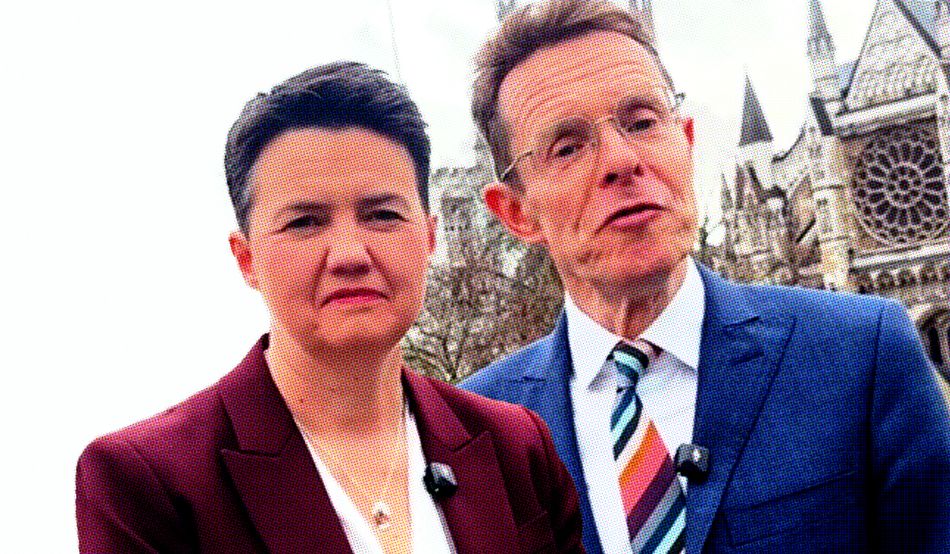
The possibility that Reform has crested in the polls, and that the party’s sense of inevitability is wearing off, is good news for that most establishment of all European conservative parties: the Conservatives. After a very rough start, Kemi Badenoch appears more confident. She has steered away from the Reform-lite stylings of ex-Tory Robert Jenrick and to the more traditional territory of tax and spend. In turn that has produced several dozen “whisper it quietly” articles in the right-leaning press, whispering it not at all quietly that they think Badenoch is now succeeding.
In my own experience of the groundswell of desperation for some “Kemi-mentum”, I posted on X that I thought her recent questioning of Keir Starmer had been impressive and she would probably lead the Conservatives into the next election. Within hours, I found my post had been reshared by Michael Gove and was receiving hundreds of likes. That sound you hear is the gears creaking in the old political machine that is the Conservative establishment.
And just as with Magyar’s decimation of Orbán’s so-called illiberal democracy, this bodes well for the survival in the UK, and elsewhere, of…well... liberal democracy. Yes, mainstream conservative parties are not natural liberals, at least outside free market economics. They are more nationalist than their peers in the left and centre. But establishment conservatives conserve the establishment, which includes the institutions of democracy.
The Harvard political scientist Daniel Ziblatt has long argued that moderate conservatives are the key players in securing democratic stability. When conservatives fracture and the populist right dominates, these institutions—the rule of law, fair elections, freedom of speech—are in peril, just as we see today in Trump’s America, just as occurred in Orbán’s Hungary. Establishment conservatives may sometimes be dull and button-down, but maybe democracy needs a bit of buttoning-down. Perhaps even in a Hungarian nobleman’s coat.