The elections on 7th May look set to be the most significant of this Westminster parliament. They will produce new governments for Scotland and Wales, and they will show whether Reform UK has started to slip back in popularity—and if the Greens can match their recent polling performance in actual votes. Further, they might just determine Keir Starmer’s fate as prime minister.
Here is what to look out for:
Scotland
Will the SNP win an outright majority in Scotland? Two years ago, it lost 39 of its 48 seats in the House of Commons and seemed destined to lose power in Scotland after 17 years in office. That has all changed. The party has benefitted from the collapse in Labour support, and will remain the largest party by far in Holyrood.
If it wins an outright majority—at least 65 out of 129 seats—the SNP will demand a new referendum on independence. This is tricky: the power to legislate for one resides at Westminster and all recent polls show that the combined support for the two independence parties—SNP and the Greens—falls well short of 50 per cent. Still, the SNP is on course for a majority, or something close to it, for the same reason that Labour enjoys a huge majority at Westminster with barely a third of the vote. The SNP will win the great majority of constituency seats under Scotland’s voting system because of the splintering in support of its rivals. The government in London might hesitate to argue that the SNP lacks a mandate if it, too, enjoys a majority with only 35 per cent of the vote.
Wales
Will Plaid Cymru be the largest party in the Welsh Senedd? Recent polls show a close race between Plaid and Reform UK. Under the Senedd’s new, proportional, voting system, no party is likely to win the 49 seats needed for outright victory. However, there is certain to be a “progressive” majority if we add together the Senedd members from Plaid, Labour, the Greens and the Liberal Democrats. What if Plaid needs Labour’s support? How will Labour react to being relegated to a distant third place after being top dog in Wales for more than a century?
If Plaid is the largest party, it will mean that, for the first time, all three devolved administrations will be headed by nationalists. Recent SNP and Plaid conferences have given warm welcomes to visitors from Sinn Fein. If they all wield power, will they form a united nationalist front in their dealings with the government London?
England
More than 5,000 seats will be contested, covering London (1,817), most big cities (1,419), including Birmingham and Newcastle, and some counties (430), districts (781), unitary authorities (405) and new authorities (162). The chart below suggests some yardsticks for judging each party. It looks perverse: if Labour loses 800 seats it will feel triumphant; if Reform gains 1,400 seats it will be sunk in gloom. In any other years these would be ridiculous verdicts. But the dramatic shake-up in British politics has made a nonsense of traditional ways of judging elections. For a host of reasons, these figures are subject to wide margins of error. Having noted that caveat, I offer these broad judgements.
Labour
Labour is defending more than half of the seats being voted on this May. It has already lost three-quarters of the seats it has defended in local byelections since May last year. The same share of losses this time would leave it with around 640 seats. Anything around that would be bad news. In more normal times, losing even half their seats would be disastrous. Now it would be greeted with relief—not as evidence of Labour heading for victory in 2029, but as an early sign that the party has begun the long march on the road to recovery.
Whether the councillors and council leaders who lose out will feel the same is another matter. Starmer has reason to worry that a statistically decent result may fail to counter the noise of traditional Labour strongholds collapsing, however hard he argues that recovery is underway.
Conservatives
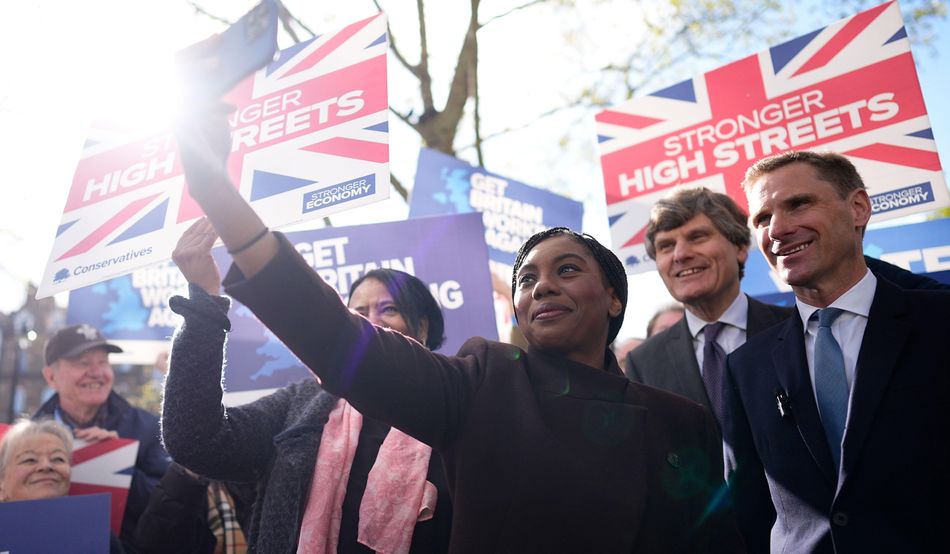
As with Labour, hundreds of lost seats could still be comparatively good news, given the party’s manifest unpopularity. The difference is that it has travelled choppy waters for years. The Tories’ fundamental challenge will remain how to combat Reform, which is virtually certain to win far more seats this year. Kemi Badenoch should survive the aftermath of next month’s elections, unless her party loses an even higher proportion than Labour of the seats it is defending. We could see a precise rerun of the 1990 local elections, which were fought immediately after the introduction of the wildly unpopular poll tax. The national story was bad for the party, but it did well in Wandsworth and Westminster. The Tories crowed about these two boroughs as if no other result mattered. Watch out for them singing a similar song next week.
The Lib Dems and the Greens
The Lib Dems have become the masters at punching above their weight, targeting voters in winnable seats, both in councils and for parliament. The party is hoping to do the same next week. One of the unknowns is whether the surge in support for the Greens will split the progressive anti-Labour vote and leave the Lib Dems falling short in seats they would otherwise win. On the other hand, if the Lib Dems do really well, there is an outside chance that they could end up with more councillors in England than any other party, taking account of those who are not up for election this year.
The wider question for the Greens is whether they are able to concentrate their support enough to gain 500 seats or more, or spread their support thinly and make more limited gains. A sign that they have broken through would be if they can top the poll in London boroughs such as Hackney, Lambeth and Waltham Forest.
Reform
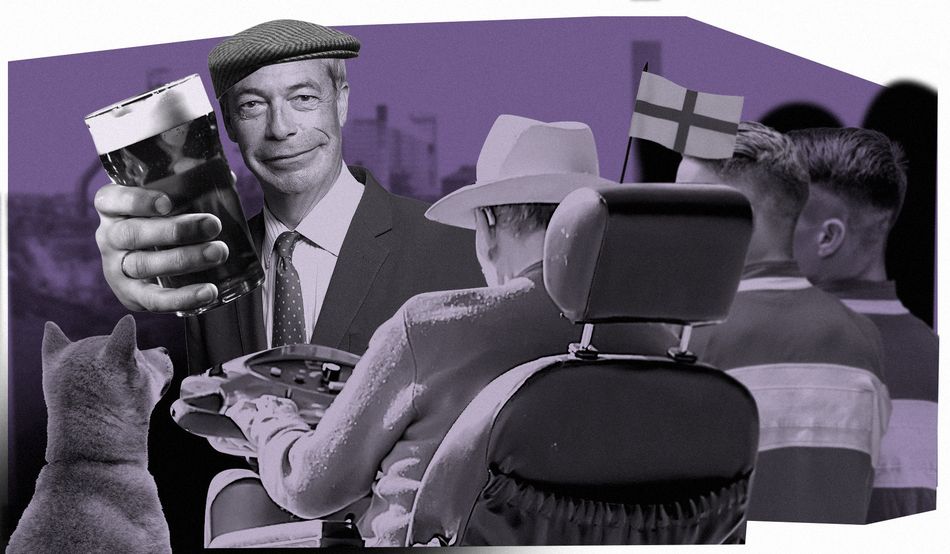
Nigel Farage’s problem is the exact opposite of Starmer’s. Reform could underperform statistically while looking triumphant politically. Among the seats up for grabs, the party is defending only two, both of which were won by the Brexit Party last time.
Everything above that is the electoral equivalent of pure profit. If they remain as popular as they were last May, they should win more than 2,000 seats. Much less, and this would mean that they are slipping back. If they win, say, 1,400 seats, this would be an astonishing achievement for a party starting from scratch. Yet it is likely to mean a fall in their projected share of the national vote. Last year this was more than 30 per cent according to separate estimates for the BBC and Sunday Times, One of the most significant numbers from next week’s election will be the change in Reform’s overall support since last May: will it have fallen and, if so, by how much?.
Next week will also show whether Reform is still able to triumph in completely different parts of England—capturing traditional Labour strongholds in the northeast, such as Gateshead and Sunderland, and also normally Tory London suburbs such as Bromley.
Deal or no deal?
The arrival of five-party politics means that many English councils will end up as NOC—under no overall control. Deals will often be needed to ensure stable administration. On what terms would the Conservatives be willing to work with Reform, or Labour with the Greens? Will such decisions be left to local councillors or directed by the parties nationally? These are thorny matters that may confront the parties in the House of Commons after the next general election. How each party handles the challenges after 7th May in Wales and Scotland, not just England, might give us a glimpse of political life in the next Westminster parliament.