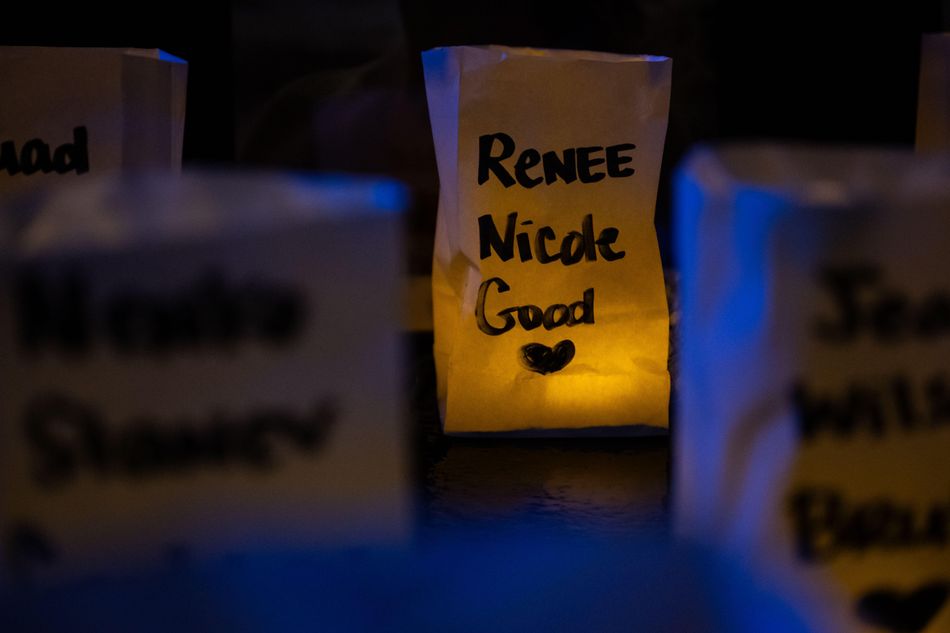
When Renee Nicole Good was killed on 7th January 2026 by a United States federal agent it showed something cruel and dishonest about what is going on in Minneapolis. It was cruel because the footage of the killing showed it was needless and callous: one could see a public, extra-judicial execution of an innocent person.
And it was dishonest because the federal government and those who support it immediately sought to tell us to disbelieve what we could see with our own eyes.
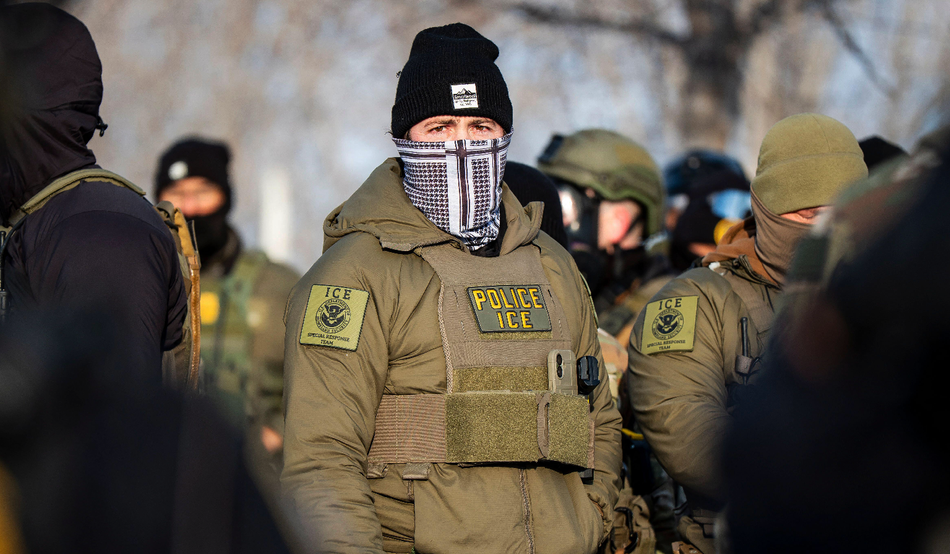
The casual entitled attitude of what appeared to be murder by the Immigration and Customs Enforcement (ICE) also showed that there was a far wider problem. This alleged exercise in immigration law enforcement was out of control and out of its senses. Something horrific and barbaric was happening in the US —and we could watch it in real-time.
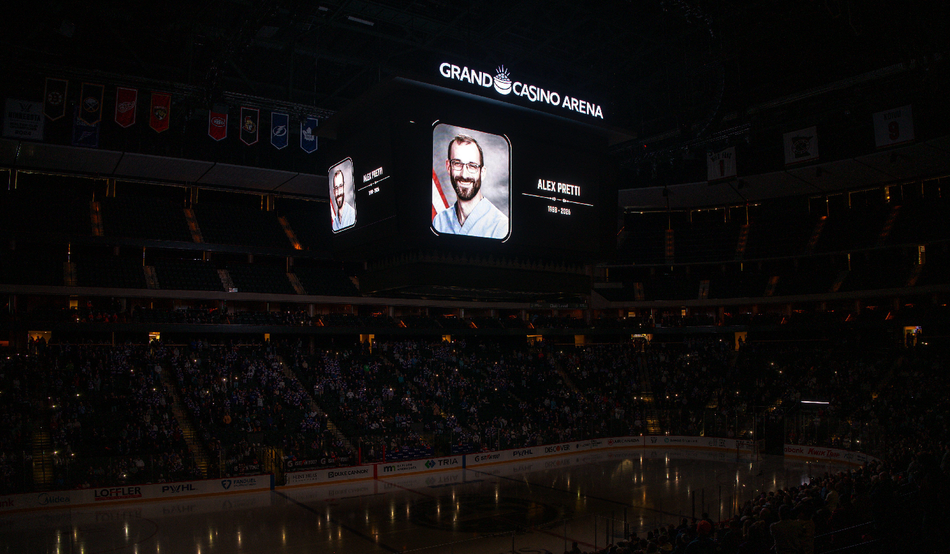
And now there has been another public, extra-judicial execution of an innocent person: Alex Pretti on 24th January 2026. In one way it was similarly significant to the murder of Good, though this time the government agency—or death squad—was Border Patrol, not ICE. It, too, showed the cruelty and dishonesty of what is happening.
Again, a dead citizen was defamed by those with public power. We are being told not to believe what we can see in the footage of the summary killing. We are told that we should follow a contrived government narrative instead.
But this second such killing indicates that we are now dealing with serial murderers: that the federal agencies feel they can kill not just once or twice with impunity. There is a federal refusal to cooperate with local police for an investigation. A local court even had to order that the evidence be preserved.
Of all public functions, policing and local enforcement relies on the consent or at least the forbearance of the community. Policing a large population is not an easy task. Even the most notorious examples of police forces, such as the East German Stasi or the Nazi Gestapo, sought cooperation from the population they dominated. Indeed, both were often overwhelmed by the cooperation—informants and accusations—they received.
To actively and brazenly alienate any community is not a wise move for those responsible for law enforcement. In Northern Ireland, part of what became the Troubles flowed from the failure of the (then) Royal Ulster Constabulary (RUC) to have any legitimacy in the eyes of the nationalist and Roman Catholic communities.
The Northern Ireland peace process required this to be addressed, if not solved, by a discredited RUC being replaced by a police service of Northern Ireland. Legitimacy matters.
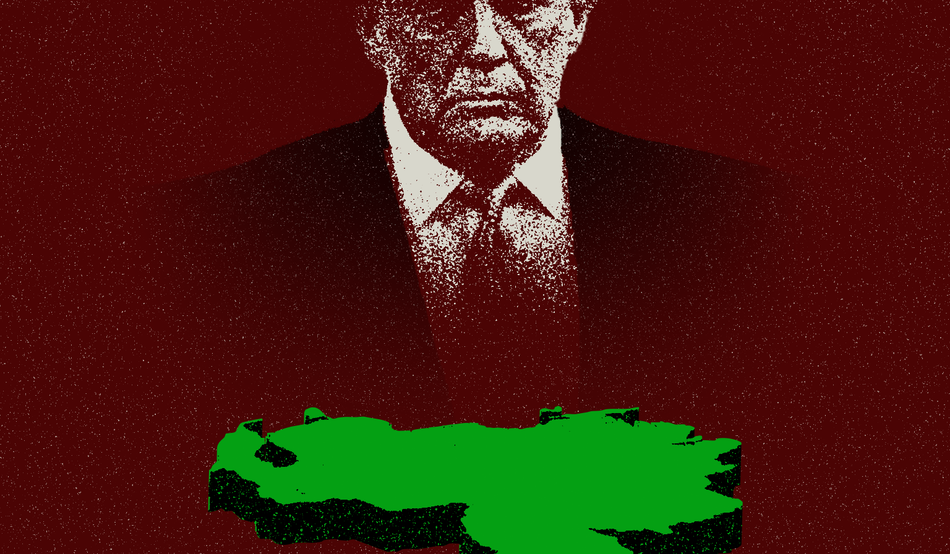
Of course, there are wider political issues with what is happening in Minnesota. One suspects part of this rampant lethal aggression by ICE and Border Patrol officers in the US state is to provoke disorderly reactions. If so, then President Donald Trump and his ally Stephen Miller step nearer to what seems to be their prized objective: invoking the Insurrection Act. It is an odd thing for a government to be seeking to encourage a civil disturbance; usually governments want to prevent them.
But those who seek conflict do not get the results they are hoping for. Unstable situations create more variables, and not just variables that the provocateurs want. That is why wise political leaders—especially conservatives—do not relish situations the outcome of which one cannot predict.
And here those fomenting the ICE and Border Patrol violence are finding that even Republican supporters are now not all clapping and cheering. Some are not even nodding along. A few are going so far as to call for an independent investigation and for ICE and Border Patrol to step back. This could not be what Trump and Miller wanted.
The false pretext that Pretti had to be killed because he legally possessed a firearm has fallen flat, especially with conservatives who cherish their right to bear arms. The footage shows he did not brandish any weapon and he was shot repeatedly after it had been taken from him. Some lies are too much, even for those hitherto well-disposed to believe and repeat falsehoods.
This means that not only are ICE and Border Patrol agents getting carried away in what they can do, those politically responsible for this violent spree have perhaps gone too far with what they thought they could get away with justifying. Their hubris may have met its nemesis.
And the community in Minnesota is creating its own private channels and methods of cooperation and protest as equal and opposite reactions to the onslaught of ICE and Border Patrol. It was foolish of those in charge of these agencies to think that things would only go in their favour. Minnesotans are standing firm.
Trump and Miller and their supporters should recall that all policing takes place in a context: all law enforcement is an ongoing balance between the police and the policed. Excesses in policing have not only direct, but also often powerful indirect, effects. A policy of indiscriminate killing and thuggery is not, by itself, a sustainable method of policing a large community.
Perhaps ICE and the Border Patrol will try to continue their reign of terror in Minnesota. Perhaps their political patrons will continue to confer effective immunity a little longer. But the cruelty and dishonesty that was obvious in respect of the death of Renee Nicole Good earlier this month can now be seen as an explicit pattern.
And the political consequences of this cruelty and dishonesty becoming obvious may not be within the control of the federal government. For that is the thing about disorder: it is disorderly. And often those who promote violent disturbances become, one way or another, the victims of what they wanted.